

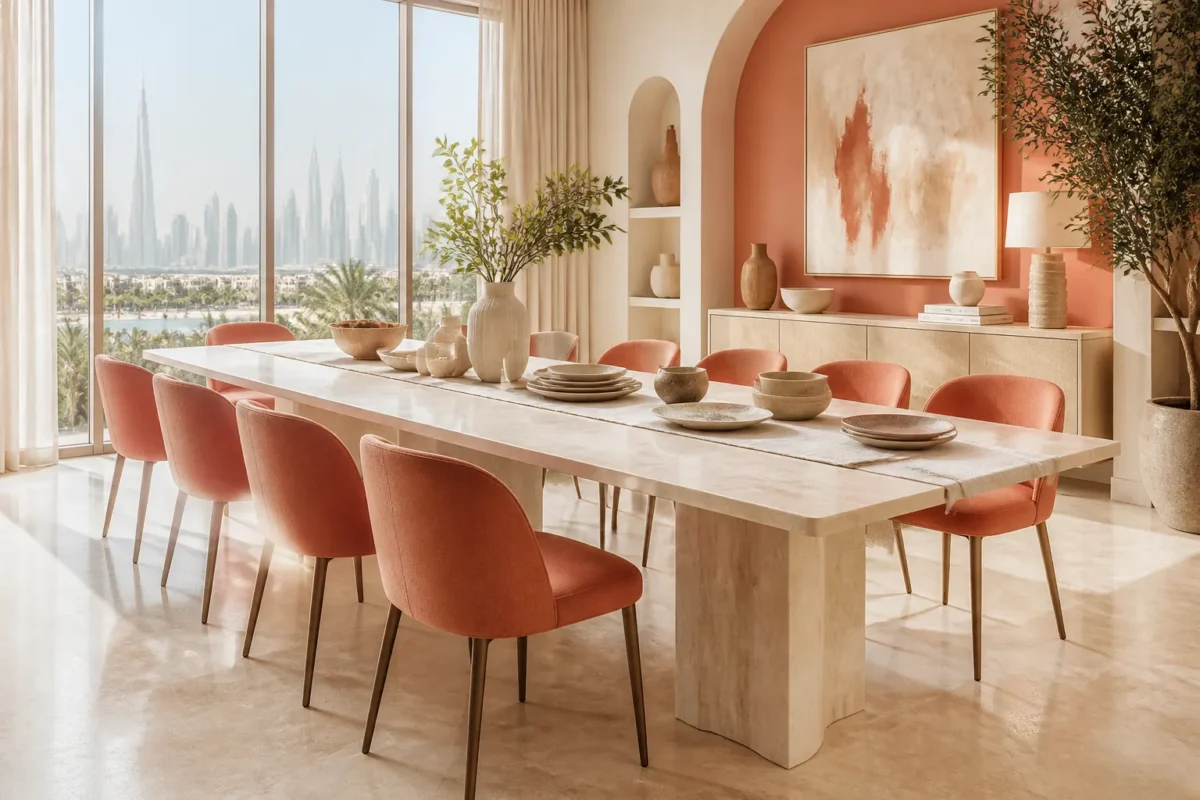
TL;DR: An extendable dining table works well in a Dubai home when the closed size suits daily life, the open size preserves circulation and the mechanism is easy enough to use regularly.
Key takeaways
- Buy for the table's fully open footprint, including occupied chairs, not only its neat showroom pose.
- Match the extension mechanism to who will operate it and where the loose leaves will be stored.
- Check lifts, corridors, doors and turns against the packed dimensions before ordering.
- Inspect the top, base and extension leaves together because colour, grain and alignment are most visible when the table is open.
- Specify everyday seats and occasional seats separately rather than treating one maximum number as the whole brief.
Is an extendable dining table right for a Dubai home?
Yes, if the room needs to serve a smaller household most days and a larger group often enough to justify the mechanism. It is less convincing when the table must remain extended permanently or when opening it blocks the route to a balcony, kitchen or majlis.
The useful question is not simply how many people the table can seat. Ask how the room behaves before dinner, during dinner and after chairs are pulled back. A table that technically seats ten while trapping the person nearest the wall has achieved capacity in the most literal and least helpful sense.
Dubai apartments often combine dining, living and circulation in one open plan space. Villas may have more floor area, but doors, serving routes and adjacent furniture still set the practical limit. FCI's live guide to Dubai open plan living rooms shows why zones and movement should be planned together.
How should you measure the open table?
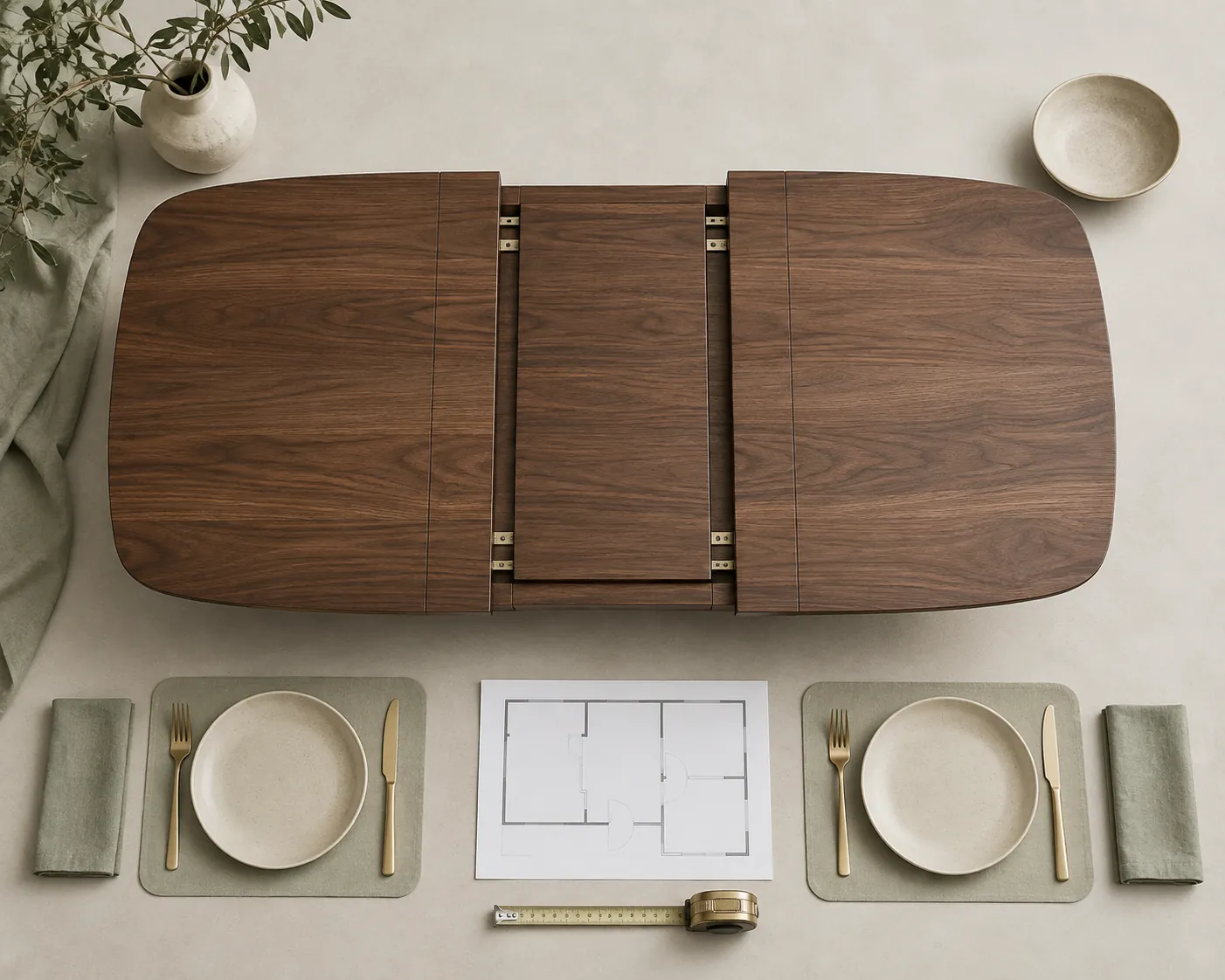
Measure the tabletop, chairs in use and the walking route as one complete footprint. Put masking tape on the floor for the closed and open positions, then place existing chairs or boxes around it.
Record four conditions:
- the table closed with chairs tucked in;
- the table closed with chairs occupied;
- the table extended with every intended chair;
- the table extended while someone serves or walks behind seated guests.
Do not rely on a generic clearance number when a physical rehearsal is possible. Chair depth, arm shape, door swing and serving habits vary. Measure the narrowest real point and photograph it for the design brief.
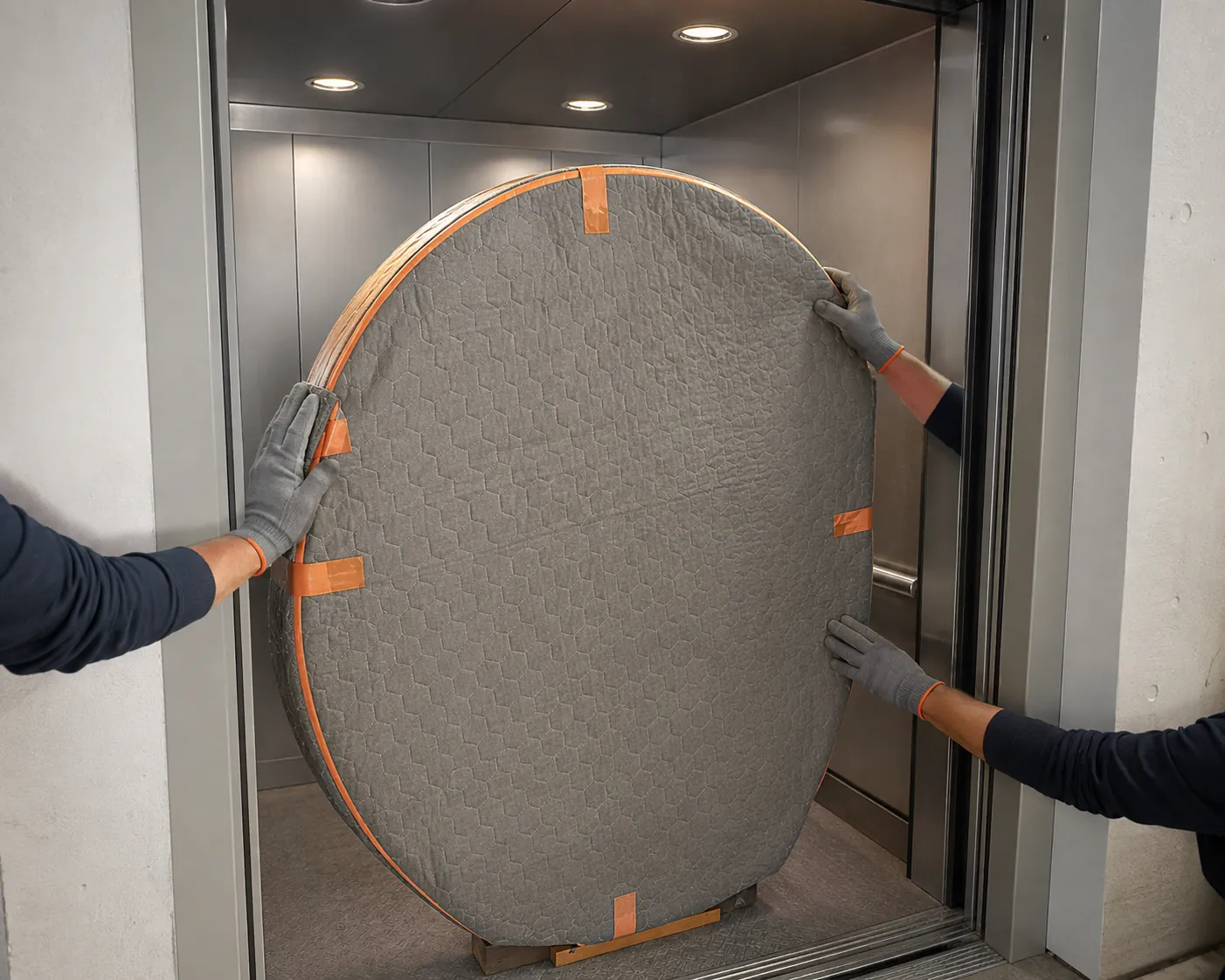
The same discipline applies to delivery. FCI's Dubai furniture delivery access checklist explains why lift doors, corridor turns and packaging dimensions matter before installation day.
Which extension mechanism is best?
The best mechanism is one that the intended user can open safely, smoothly and without reorganising half the room. Test it in person where possible.
Common formats include a central butterfly leaf, leaves stored beneath the top, pull-out end leaves and separate insert leaves. Integrated storage is convenient, but it can add weight and complexity. Separate leaves can preserve a slimmer structure, but only if the home has a dry, protected place to store them flat and safely.
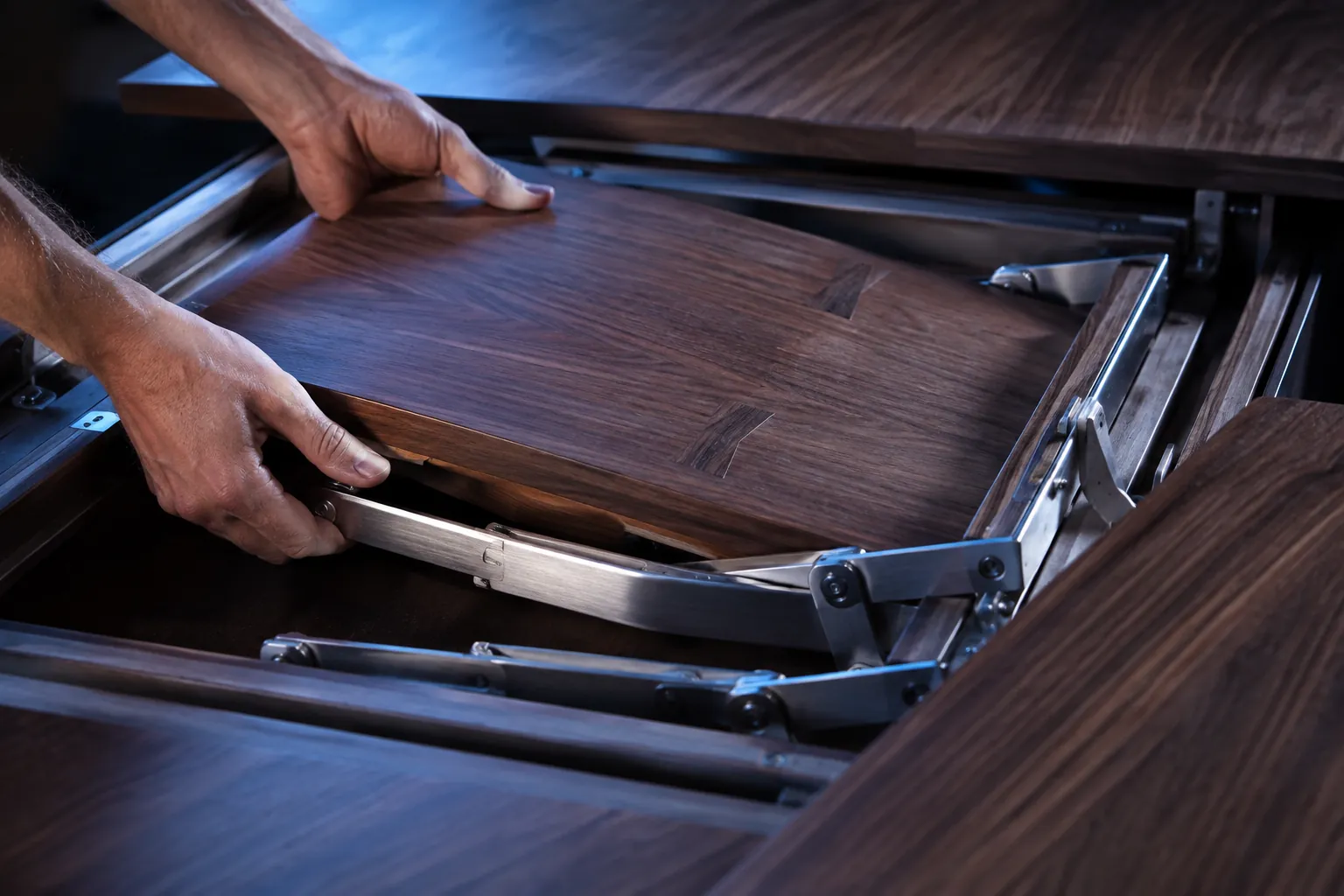
Ask the supplier to demonstrate the full sequence. Check whether one person can operate it, whether the floor needs protection, whether the leaves lock into place and how the join lines align. A mechanism demonstrated only by a heroic showroom expert may be less charming on a Thursday evening.
How many people will it really seat?
Usable seating depends on the base, chair width and where the extension joins fall, not only on the table's advertised maximum. Pedestal bases can free leg space, while wide legs or a central support may remove a nominal seat.
Bring the dining-chair dimensions into the table decision. Armchairs need more width and may not tuck beneath the apron. Broad upholstered chairs can turn an eight-seat claim into six comfortable places and two negotiations.
Decide which arrangement is the priority: everyday dining, family weekends or larger formal hosting. If occasional guests will use slimmer chairs, specify where those chairs live and confirm that their seat height works with the table.
Which tabletop material works best?
Choose the surface around actual use, maintenance tolerance and the extension design. Veneer, solid timber, ceramic, glass and stone each create different weight, joint and care considerations.
For a timber or veneered top, view the table open so you can inspect grain direction and colour across the leaves. For stone or ceramic, ask how the extension panels are supported and how edges are protected in use. For glass, consider fingerprints, reflections and the visibility of the mechanism beneath.
Request the maker's written care instructions. Heat, abrasives and cleaning chemicals affect surfaces differently. A luxury finish should not require household members to pass a small practical exam before putting down a glass.
What should you inspect before ordering?
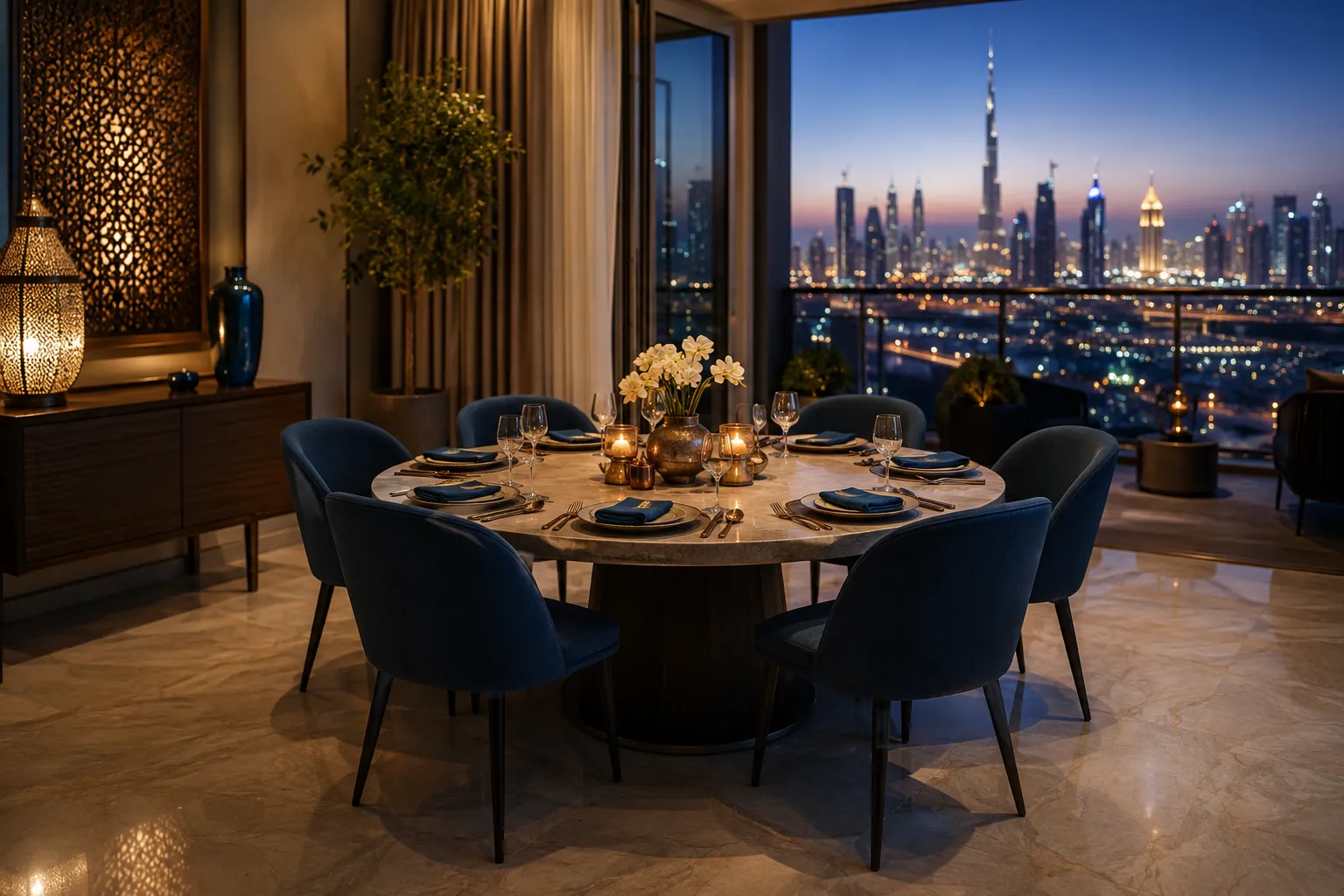
Inspect the open table, not just the closed display model. Look along the surface for alignment, operate every lock and apply gentle pressure at the extension edges to understand stability.
Confirm in writing:
- closed and open dimensions;
- packed dimensions and component weights;
- number and width of usable seats in both positions;
- mechanism type and operating sequence;
- leaf storage requirements;
- finish samples and care instructions;
- installation, floor protection and snagging responsibilities.
If the table is part of a wider project, coordinate it with pendants, rugs, sideboards and sockets. FCI's Dubai villa furniture procurement checklist provides a practical framework for managing those interfaces.
When is a fixed table the better choice?
A fixed table is usually better when the same number of people dine regularly and the room can support that footprint every day. It removes moving parts, leaf storage and setup time.
A round fixed table may also serve a compact circulation pattern better than a rectangular extension design. Conversely, a console-to-dining transformer may suit a genuinely occasional dining space. The right answer comes from the room and routine, not from the longest guest list anyone can remember.
What is the next step?
Build a measured brief before comparing finishes. Mark the open footprint, list everyday and occasional seat counts, and record the access route.
Review FCI's current luxury furniture buying process or discuss the table within a coordinated interior procurement brief. Take room measurements, access photographs and preferred chair dimensions to the conversation.
Limitations
This guide cannot confirm whether a particular table fits your home without its current technical drawing, packed dimensions and a measured site survey. Mechanisms, materials and installation requirements vary by maker. Building access rules can also change, so confirm them with the relevant property manager before delivery.