

Written by: Emma Cyrus, Senior Copy, Content & Editorial Writer
Reviewed by: Benjamin Ibanez, General Manager & Interior Designer at FCI
Edited by: Zoona Sikander, Interior Design Writer & Social Media Content Creator
Summary
A luxury majlis in a Dubai villa works best when seating, flow, rugs, tables, lighting and storage are planned as one hospitality system. This guide explains how to create a composed, practical room that feels generous for guests while staying refined, comfortable and easy to reset after real use.
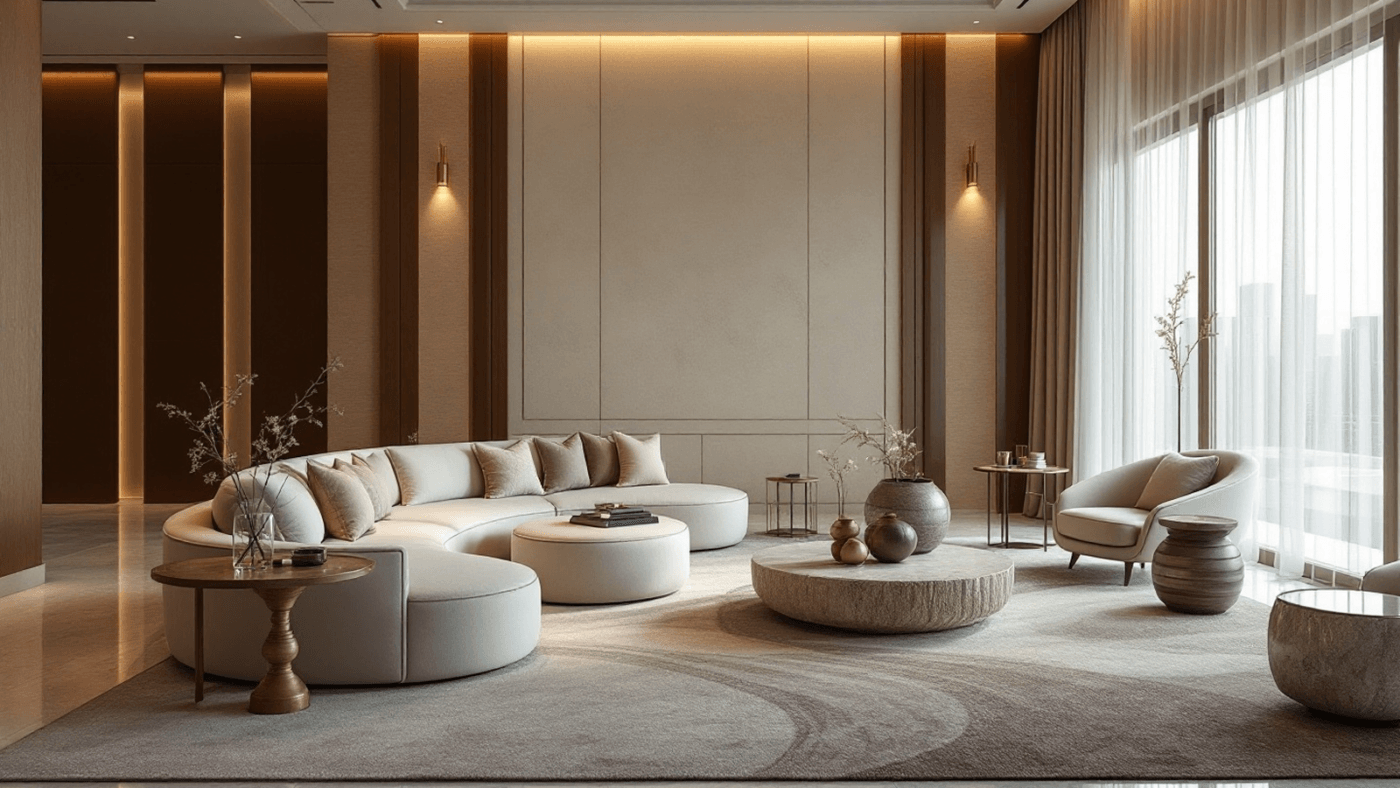
A luxury majlis in a Dubai villa should feel generous, composed and ready for hospitality without becoming a showroom of expensive objects. The best rooms balance comfort, proportion, privacy, conversation and service flow. They look impressive when guests arrive, then work quietly once the evening begins.
For villa owners, designers and procurement teams, the majlis is one of the rooms where planning discipline matters most. Seating, rugs, lighting, tables, storage and circulation all need to be resolved before furniture is ordered. If the room is planned only by catalogue choice, it will look furnished rather than designed.
Start with the purpose of the majlis
Not every majlis needs to behave the same way. Some are formal reception rooms for guests. Some are family rooms with a more relaxed rhythm. Some sit near the entrance and make the first interior statement. Others connect to dining, garden terraces or secondary lounges.
Before choosing furniture, define the use:
- Formal guest reception.
- Family gathering.
- Mixed-use hosting.
- Business entertaining.
- Ramadan and Eid hosting capacity.
- A quieter ladies or family majlis zone.
The purpose shapes everything else. A formal majlis needs more controlled symmetry and service access. A family majlis can be softer, more layered and more forgiving.
Plan seating for conversation, not just capacity
The seating plan should make conversation feel natural. A room that seats twenty people badly is less successful than a room that seats twelve with proper proportion.
Key planning points:
- Keep sightlines open between guests.
- Avoid placing every seat against the wall unless the room genuinely needs that traditional perimeter layout.
- Use modular seating only when the scale and upholstery quality justify it.
- Mix sofas, lounge chairs and occasional chairs for a more refined rhythm.
- Leave enough clearance for service, movement and side tables.
In larger Dubai villas, the majlis can carry generous seating. The restraint is in editing. Too many pieces can make the room feel busy before anyone enters.
Make the rug do architectural work
A rug in a majlis is not an accessory. It defines the conversation zone, softens acoustics and gives the room visual weight.
For a luxury majlis, the rug should be large enough to hold the main seating group. A small rug floating under the coffee table makes the furniture feel disconnected. Materials, pile height and pattern need to suit the way the room is used.
Consider:
- A large wool or silk-blend rug for a formal reception room.
- A lower-pile performance rug for higher-use family hosting.
- A quieter pattern when the walls, lighting or furniture are already detailed.
- A stronger rug when the architecture is minimal and needs warmth.
The rug should support the room, not compete for applause. For more detail on scale, material and pattern, FCI London UAE’s guide to luxury rugs in Dubai is a useful companion read.
Choose tables with service in mind
Majlis tables need to be beautiful, but they also need to work. Coffee, dates, water, trays, flowers, books and decorative objects all need surfaces that feel natural to reach.
A single central table can work in a compact majlis. In a larger room, several smaller tables may serve guests better. Side tables should be positioned for use, not simply because the layout looked symmetrical in a plan.
Good options include:
- A central stone or lacquer coffee table.
- Nested occasional tables for flexible hosting.
- Side tables beside lounge chairs.
- Console storage for service items.
- Discreet trays that can be moved when hosting style changes.
If the table is too precious to use, it is the wrong table.
Layer lighting for hospitality
Lighting decides whether the majlis feels warm or overexposed. A single chandelier can be beautiful, but it cannot do the whole job.
Use layers:
- Architectural ceiling light for general brightness.
- Decorative pendant or chandelier for presence.
- Wall lights for softness and rhythm.
- Table lamps for evening warmth.
- Accent lighting for art, shelving or textured wall panels.
Dubai villas often have strong daylight and large openings. Curtains, sheers and blinds should be coordinated with lighting so the room works in afternoon glare and at night.
Use materials with restraint
A majlis can handle rich materials, but not all at once. Marble, brass, timber, lacquer, leather, silk, glass and textured wall finishes each bring their own weight.
The most refined rooms choose a clear material hierarchy:
- One dominant warm material, such as timber or upholstered wall panels.
- One cooler counterpoint, such as stone or metal.
- One softening layer, such as rugs, curtains or textured fabric.
- One or two decorative accents, not six competing statements.
Luxury in Dubai does not need to shout. The room should feel considered, not loud.
Build storage into the room quietly
A majlis needs hidden storage more than people expect. Hosting creates objects: serving pieces, extra cushions, candles, games, scent, chargers, prayer items, spare throws and seasonal decorations.
Storage can be integrated through:
- Low cabinets.
- Wall panelling with concealed compartments.
- Console units.
- Joinery around niches.
- Sideboards placed outside the main conversation line.
The storage should not interrupt the room’s formality. It should simply make the room easier to reset. If the room needs bespoke cabinetry, FCI London UAE’s article on joinery companies in Dubai explains how high-end joinery is evolving across the city.
Respect privacy and circulation
The majlis often sits near important circulation routes. Guests may arrive through one route while family movement continues elsewhere. Plan the room so privacy and hospitality can coexist.
Check:
- Entry view from the villa door.
- Route to dining or washrooms.
- Service route for refreshments.
- Relationship with garden, terrace or pool views.
- Acoustic separation from family spaces.
- Sightlines into private rooms.
A beautiful majlis that exposes the wrong part of the house is not well planned.
What FCI London UAE would plan before procurement
Before specifying furniture, resolve the operating brief:
- Guest capacity.
- Formal or family use.
- Seating geometry.
- Rug scale.
- Lighting layers.
- Table and service strategy.
- Storage needs.
- Material palette.
- Delivery and installation access.
This is where procurement support matters. The right brands, finishes and lead times need to match the design intent and the project programme. For a broader view of how FCI London UAE approaches luxury interior design in Dubai, start with the interior design service page.
Conclusion
A luxury majlis in a Dubai villa should make hospitality feel effortless. Seating creates the social rhythm, the rug anchors the room, lighting sets the mood and storage keeps the space composed after real use begins. Plan the room as a hosting system first, then select the furniture.
Speak with FCI London UAE about sourcing and specifying luxury seating, rugs, tables, lighting and finishes for a Dubai villa majlis.