


TL;DR: A round dining table suits a Dubai home when its full chair zone fits the room, the base leaves useful leg space and the delivery route accepts the tabletop.
Key takeaways
- Measure the table and every chair in its pulled-out position.
- Check the pedestal or legs against the intended seat count.
- Judge capacity using the actual chairs, not a hopeful product label.
- Approve stone, timber, glass and metal from physical samples.
- Survey lifts, corridors and door turns using packed dimensions.
Is a round dining table good for a Dubai home?
A round dining table can improve conversation and soften circulation, but only when its complete working footprint suits the room. With no corners, people can move around the perimeter more naturally. That advantage disappears if pulled-out chairs fill every route.
Round tables work especially well in square dining zones, breakfast areas and open-plan rooms where several paths meet. Long, narrow rooms may use a rectangular or oval table more efficiently.
FCI UAE's current guide to luxury dining tables for Dubai villas gives broader context on table scale, materials and how dining connects with a majlis or entertaining space.
How much room does a round dining table need?
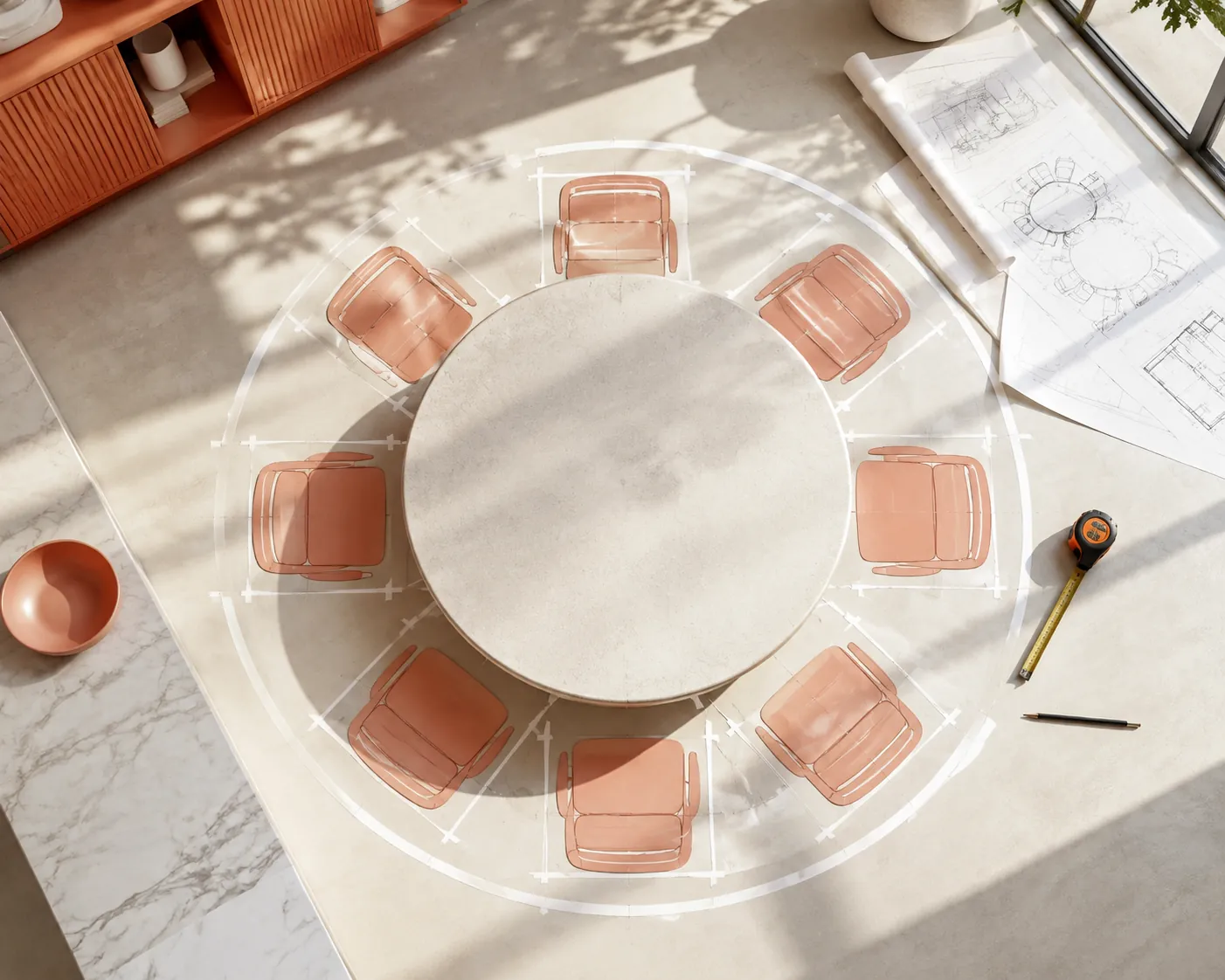
It needs the tabletop footprint plus enough usable space for chairs to pull back and people to pass. Measure the narrowest route, not the most generous side of the room.
Mark the table circle and each occupied chair on the floor. Open nearby doors, sideboard cupboards and curtains, then rehearse the route between the kitchen, dining area and terrace. FCI UAE's open-plan living room guide explains why movement routes should be resolved before individual pieces are ordered.
A diameter written on a product page describes the top. It does not include diners, chairs or the relative who stands behind one for a long conversation.
How many people can sit comfortably?
Comfortable capacity depends on the usable perimeter, chair width, base position and the space each diner needs. Do not rely on a seat-count claim without testing the actual chair and table combination.
A central pedestal can remove corner-leg conflicts, but a broad pedestal may still compete with feet. Four separate legs can work well when each chair has a clear bay. Armchairs usually need more width and may not tuck beneath a low apron.
Ask for a dimensioned plan showing the intended chairs around the table. If larger gatherings are occasional, consider whether a different room layout or an extending design is more practical than crowding the everyday arrangement.
Is a pedestal better than table legs?
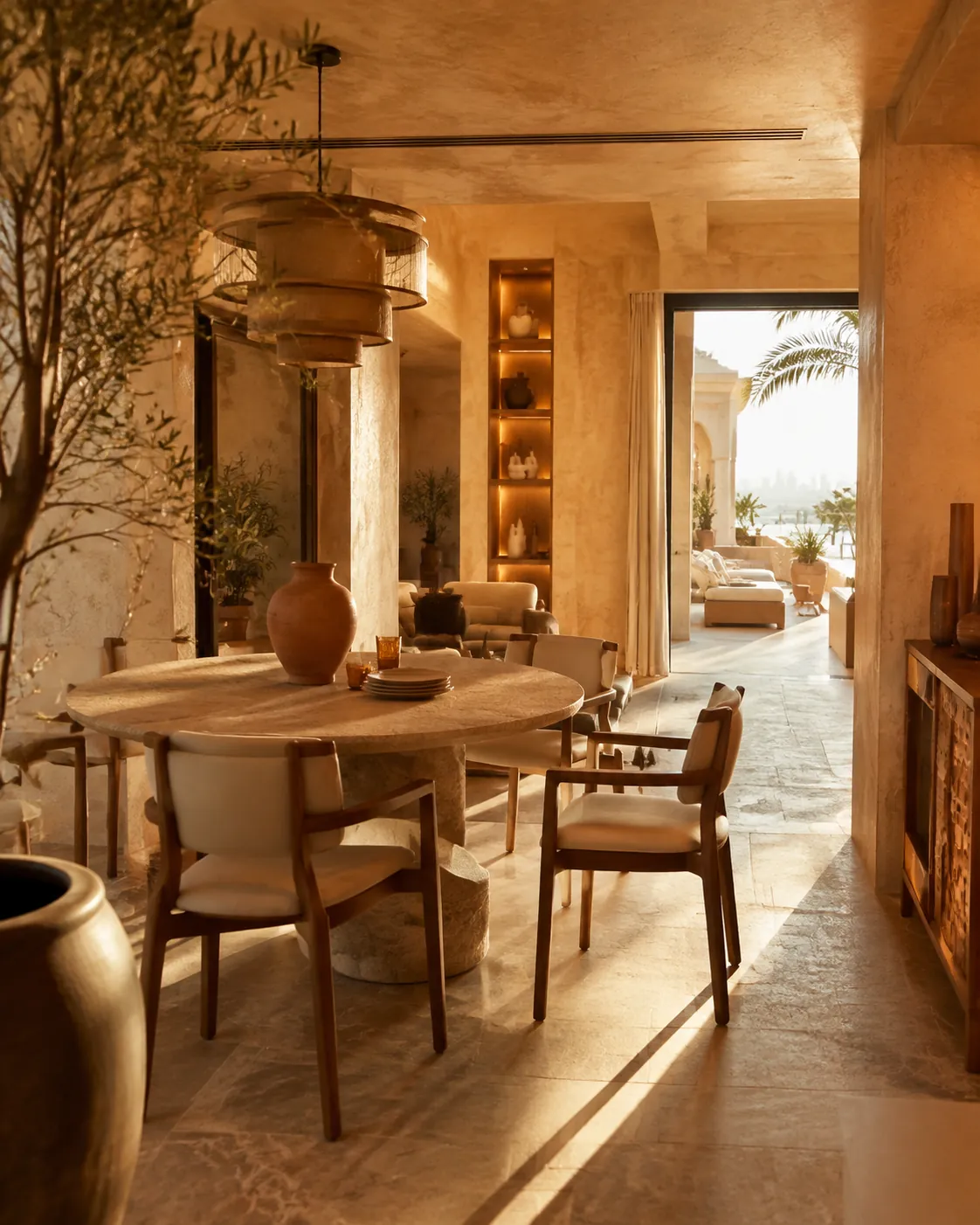
A pedestal often offers more flexible chair placement, while separate legs may provide a lighter appearance or suit a particular construction. Neither format is automatically better.
Inspect how the base meets the floor, where diners place their feet and whether the table remains stable under normal use. For an extending round table, ask where the mechanism, leaves and supports sit in every configuration.
A sculptural base is allowed to be beautiful. It should also avoid becoming an elaborate obstacle course below the tablecloth.
Which material should you choose?
Choose the material by care requirements, household use, room light and the maker's technical guidance, not by appearance alone. Natural stone, timber, veneer, glass, ceramic and lacquer have different responses to impact, heat, liquids and cleaning products.
Review physical samples in daytime and evening light. Ask what variation is natural, whether coasters or mats are recommended and which cleaners are permitted. Confirm how a heavy top is supported and assembled for the exact model.
A screen can introduce a finish. It cannot show texture, reflectivity or the full variation of a stone slab with courtroom reliability.
Should the chairs match the table?
The chairs need to fit the table physically before they need to match it visually. Check seat height, arm height, overall width and how far each chair projects when occupied.
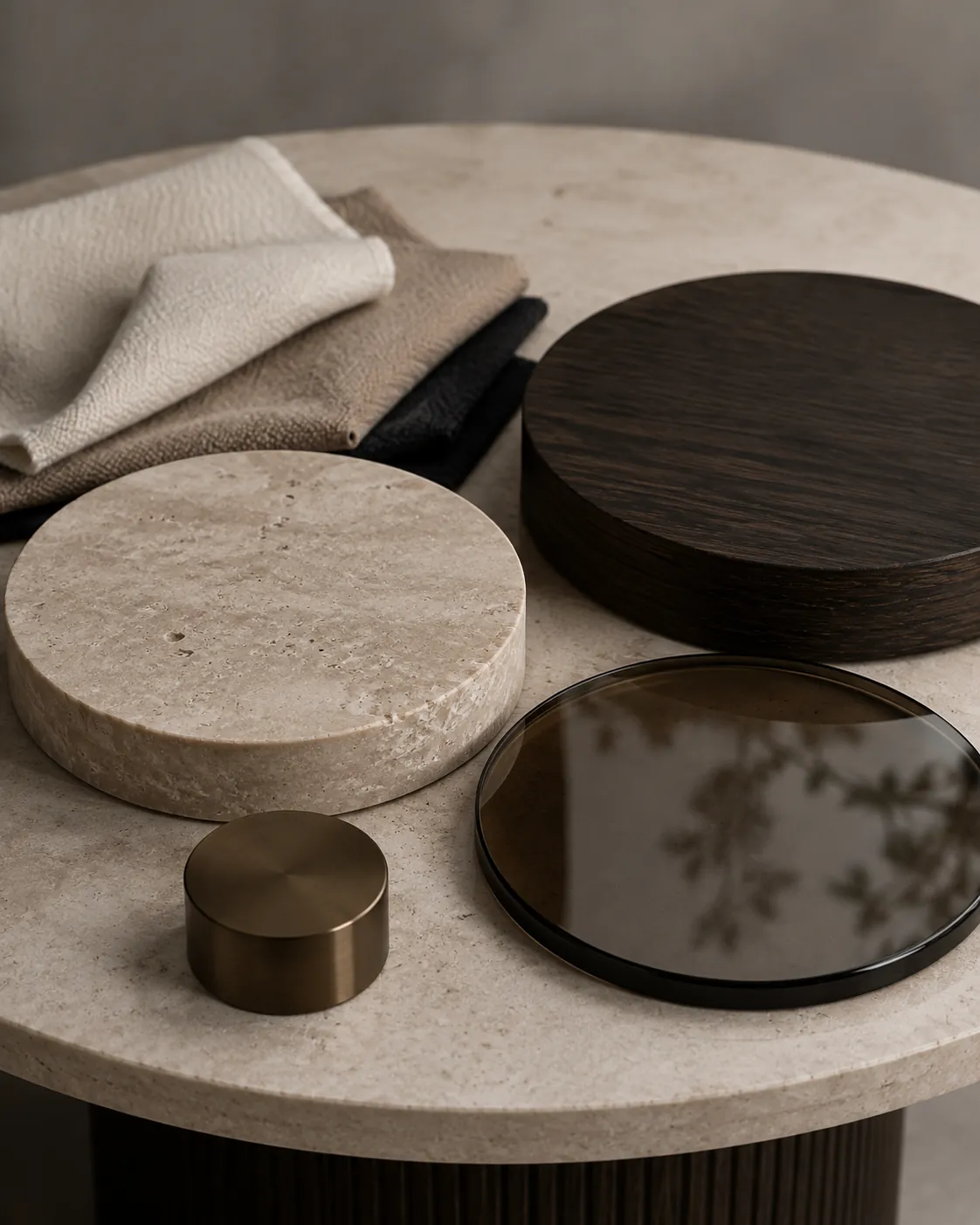
Matching materials can look calm, while contrast can give the dining zone definition. Repeat one element, such as a timber tone, metal finish or curve, so the combination feels deliberate.
Test comfort at the actual table height where possible. A chair can feel excellent alone and still sit awkwardly against a deep apron or wide pedestal.
Will a round tabletop fit through the building?
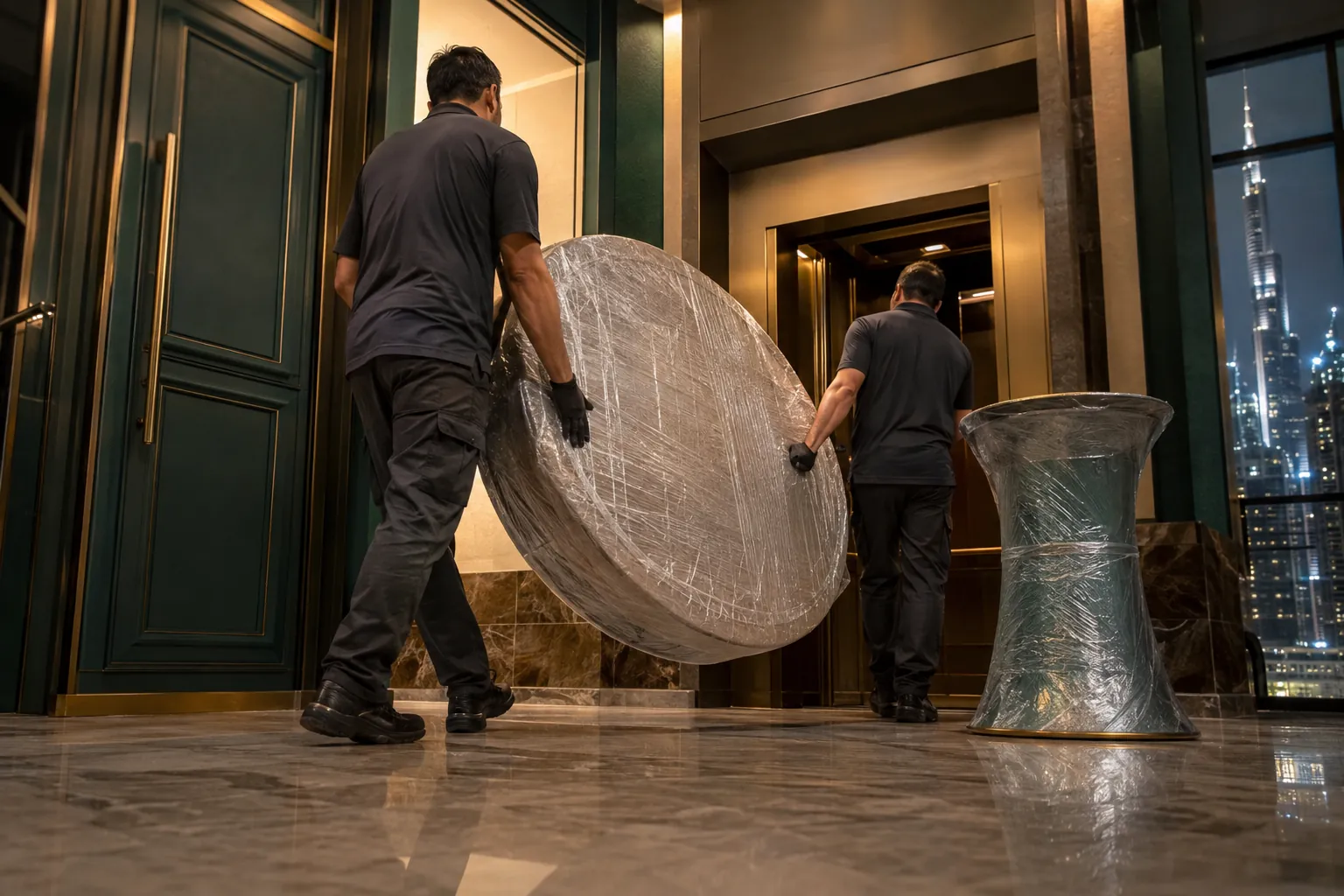
Only a route survey using the packed dimensions can answer that. A round top may be wider than the narrowest lift opening even when the finished table fits the room.
Confirm whether the top and base travel separately, how they are protected, where packaging can be removed and who assembles the piece. FCI UAE's verified Dubai furniture delivery access checklist covers lifts, corridors, turns and building coordination.
Photograph tight points and record lift and doorway dimensions before ordering. Geometry is much less charming when discovered between two lift doors.
What should you approve before ordering?
Approve the diameter, height, base, chairs, finish references, access plan and installation responsibility in writing. Include a scaled room plan and the table's extended dimensions if it changes size.
Use FCI UAE's verified contact page to discuss a round dining table or a complete dining scheme. Bring room measurements, route photographs, chair preferences and material samples to make the consultation specific.
Limitations
This guide cannot confirm capacity, stability, material performance or property access for a particular table. Models, chairs, finishes and buildings vary. Use current manufacturer specifications, physical samples and a measured site survey for the actual order.