


TL;DR: The right home office desk for a Dubai home fits the user, equipment, room and delivery route, while supporting a neutral working posture and tidy cable plan.
Key takeaways
- Desk width alone is not enough, depth, leg clearance and equipment position affect daily comfort.
- Measure the user and workstation tasks before choosing a fixed desk height.
- Plan power, data, charging and heat around the actual devices that will be used.
- Test glare and video-call backgrounds at the hours when the room is normally occupied.
- Confirm packed dimensions and building access before ordering a large executive desk.
How big should a home office desk be?
A home office desk should be only as large as the work requires while preserving comfortable movement around it. Start with the equipment, not a fashionable width. A laptop-only setup needs less surface area than two monitors, drawing materials or confidential paper storage.
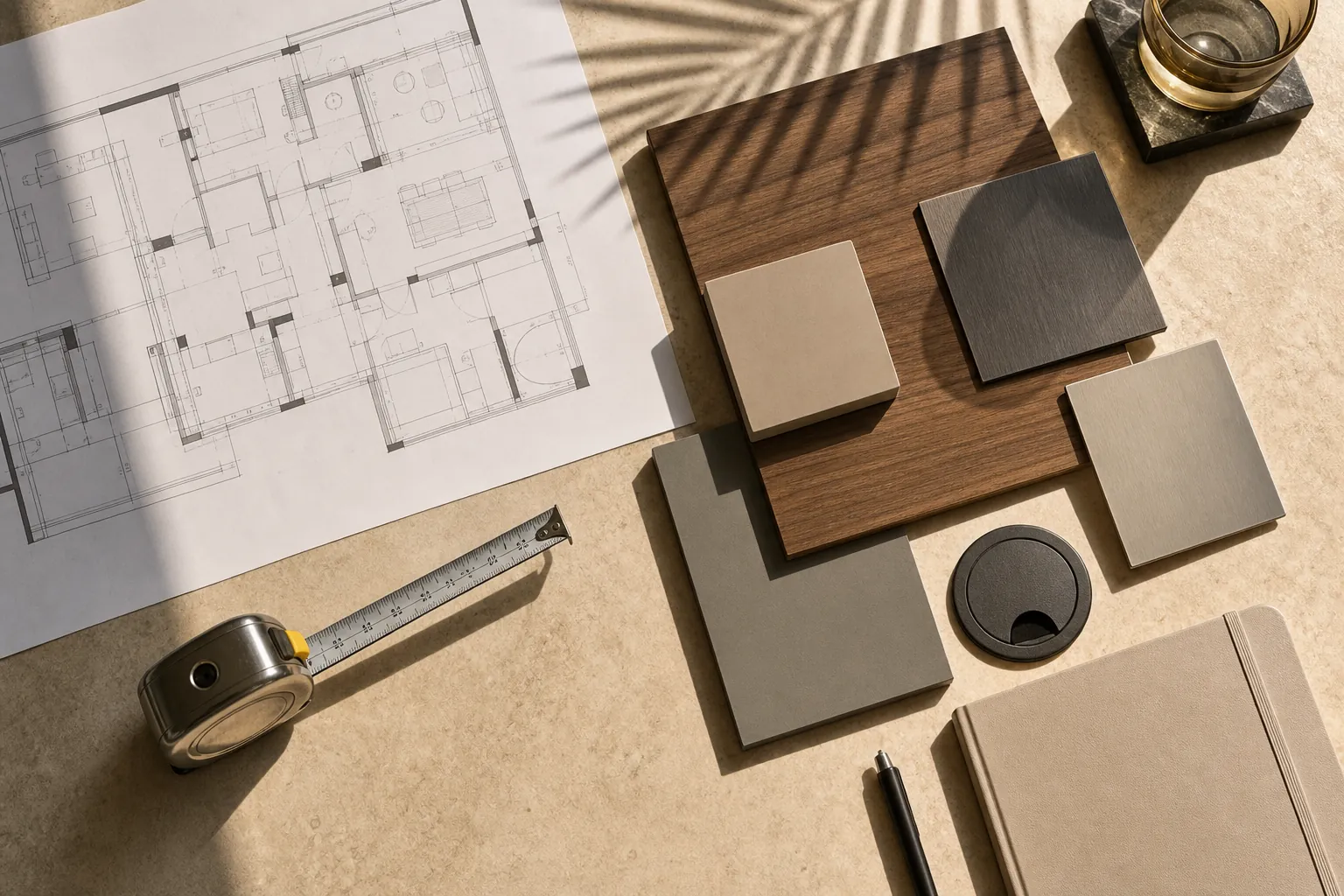
List every item that must remain on the desktop. Place paper templates for the monitor base, keyboard, pointing device, task light and notebook. Then add space for the hands to work without pushing equipment to the edge.
Depth is often the hidden constraint. A shallow console may look elegant but force the screen too close or leave no forearm support. An oversized executive desk can consume a compact room and put drawers beyond easy reach.
FCI's article on luxury home office furniture in Dubai villas shows the wider room elements. This guide focuses on the desk as the anchor.
What makes a desk ergonomic?
An ergonomic desk allows the chair, input devices and screen to be adjusted around the individual user. A premium material does not correct a poor working position.
The US Occupational Safety and Health Administration advises that the desk should provide adequate clearance for the legs, allow frequently used items to remain within easy reach and avoid contact stress from sharp edges. Its computer workstation desk guidance also notes that a fixed-height work surface may require an adjustable chair and foot support.
The Canadian Centre for Occupational Health and Safety says there is no one office layout that serves every worker. Its working-space guidance supports designing around tasks, reach and movement rather than copying one universal number.
The practical decision is to test the full system. Sit in the intended chair. Position the keyboard and mouse. Check shoulder relaxation, elbow position, wrist alignment, screen distance and leg clearance. If several people share the room, adjustable elements become more valuable.
Should you choose a fixed or sit-stand desk?
Choose a sit-stand desk only if its adjustment range, stability and cable plan suit the actual user. Movement during the day matters more than owning a motorised mechanism that is rarely used.
For a fixed desk, verify the finished height with the intended chair. For an adjustable model, check the lowest and highest positions, control placement, anti-collision behaviour, base depth and load rating. Test monitor movement at full height and listen for motor noise if calls are frequent.
A sit-stand base can conflict with deep drawers, rugs, wall panels or floor sockets. A bespoke fixed desk can integrate storage beautifully but may be harder to adapt for another user. Neither option is automatically superior.
Where should the desk sit in a Dubai room?
Place the desk where daylight can be controlled without creating screen glare or turning the user into a silhouette on calls. Floor-to-ceiling glazing can produce a striking view and a difficult workstation at the same time.

Visit the room during the working hours that matter. Check direct sun on the screen, reflected brightness on polished surfaces and the effect of curtains or blinds. Avoid blocking air-conditioning supply and return paths. Keep the chair route clear of door swings and circulation to the rest of the room.
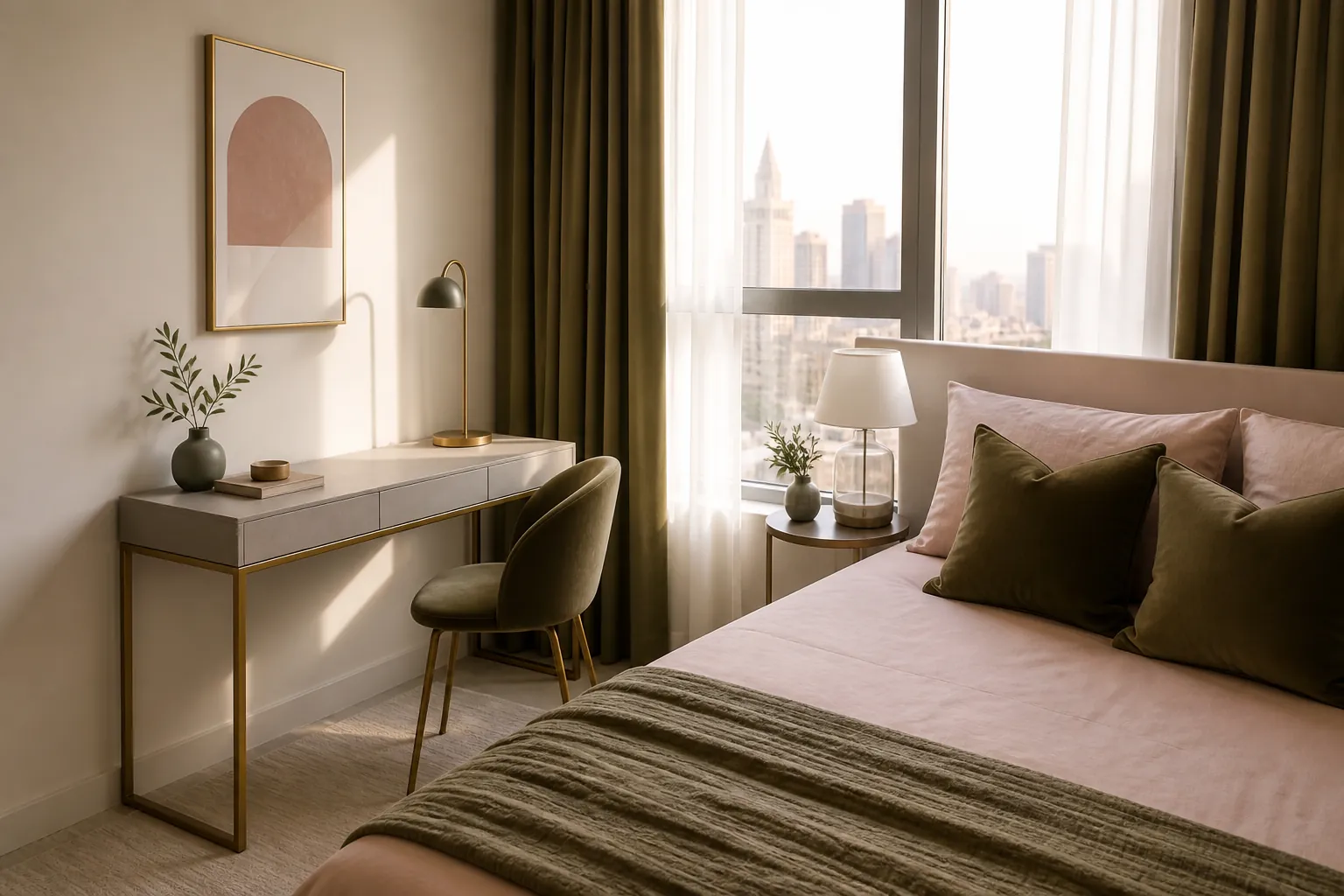
For a guest-room office, protect the bed route and luggage space. A slim desk may be preferable to a deep executive model if the room must still function comfortably for visitors.
How much storage should the desk include?
Desk storage should hold frequently used work items, while bulk archives belong in separate cabinetry. Loading every function into the desk often creates thick pedestals and poor legroom.
Separate items into daily, weekly and archived groups. Daily items can use a shallow drawer or mobile pedestal. Weekly files may sit in nearby cabinetry. Sensitive documents need an appropriate lock and a clear retention process.
Before specifying drawers, check knee width, opening direction and handle position. A return desk can create more working surface, but it also fixes the user's orientation and needs a wider turning area.
How should cables and power be planned?
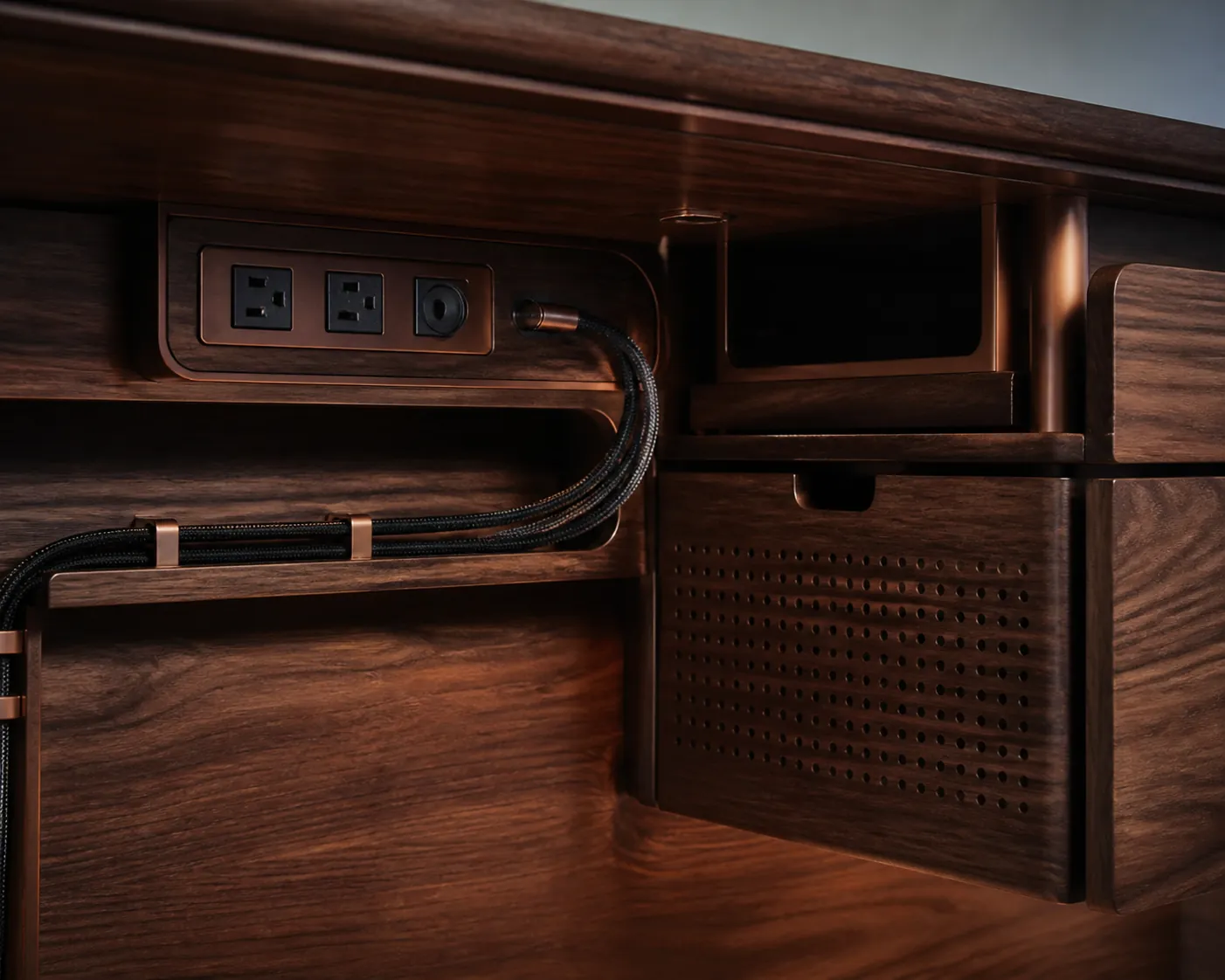
Plan the cable route from wall or floor outlet to every device before approving the joinery. A single decorative grommet is not a complete power strategy.
Create an equipment schedule with plugs, power bricks, charging cables, data connections and devices that may be added later. Decide where adapters will sit, how heat can escape and which components need service access. Keep cables away from moving sit-stand parts and chair castors.
Ask whether integrated power modules can be replaced independently. International equipment may have different plugs or power requirements, so use approved electrical products and qualified installation. Furniture drawings do not replace electrical design.
Which finishes work best?
The best desk finish balances appearance, touch, maintenance and the equipment placed on it. High-gloss surfaces can show fingerprints and reflections. Deeply textured surfaces may make handwriting less comfortable. Natural timber can vary and should be assessed from a representative sample.
Review the sample under the room's daylight and evening lighting. Put a keyboard, mouse mat and writing pad on it. Ask for the exact care instructions and test whether common desk accessories could mark the surface.
If the office forms part of an open-plan interior, use the measured zoning principles in the Dubai open-plan living guide to keep work visually contained.
Will the desk fit through the building?
The packed desk, base and return must fit every doorway, lift and turn between the loading point and the room. A desk that can be assembled on site is easier to deliver, but only if the manufacturer permits disassembly and the installation team has the correct instructions.
Request the packed dimensions and component weights. Record lift doors, cabin size, corridors, apartment door, stair alternatives and protection requirements. FCI's Dubai apartment furniture delivery checklist gives a practical access sequence.
What should you take to a consultation?
Bring a measured room plan, user measurements, equipment list, access dimensions and finish references. These inputs turn a style conversation into a usable specification.
Include photographs taken at working hours, socket locations, the intended chair and the preferred screen arrangement. Mark what must be concealed and what must remain easy to reach.
Book a focused discussion through FCI London UAE once those inputs are ready. Ask for a dimensioned drawing before approval.
What are the limitations of this guide?
This guide cannot prescribe a workstation for an individual medical need or confirm a desk without a site survey. Body dimensions, tasks, devices and rooms vary. Occupational health requirements may apply to employer-provided workstations.
Use product specifications, a qualified ergonomics assessment where needed and approved electrical advice as the controlling evidence. No single desk dimension is correct for every user.