

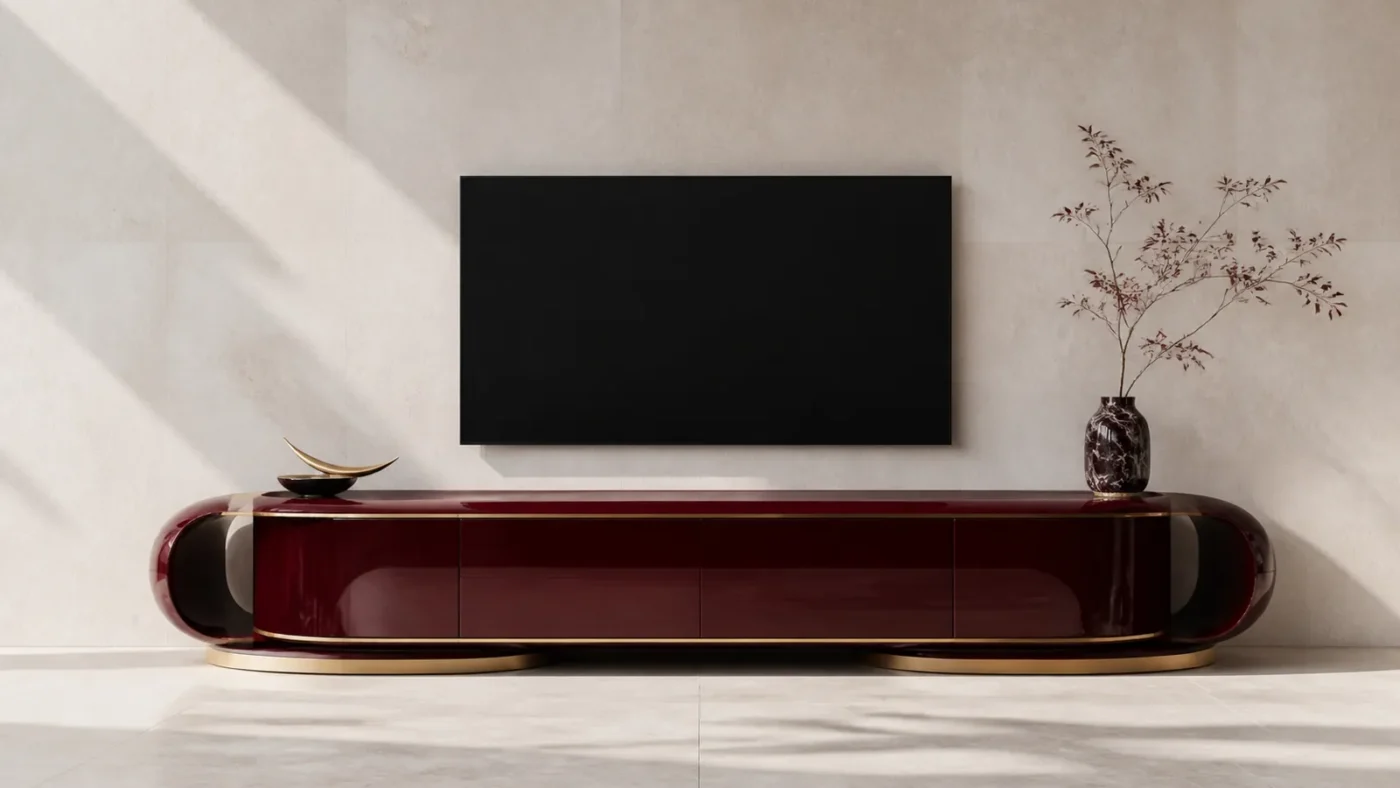
The TV unit is easy to treat as an afterthought, yet it quietly has to solve some of the hardest problems in the room. It carries the screen, hides the cables, keeps the devices cool and still has to reach its place through the building. Choose it well and all of that disappears into a calm interior; choose it badly and every compromise stays on show. This guide walks through the decisions that get it right the first time.
TL;DR: The right TV unit for a Dubai home fits the screen and room, ventilates every device, hides cables safely, and can be delivered, fixed and serviced without damaging the finished interior.
Key Takeaways
- A TV unit should be specified around the actual screen, devices, sockets, wall construction and viewing seats.
- Closed cabinets need planned airflow and cable access, not just attractive doors.
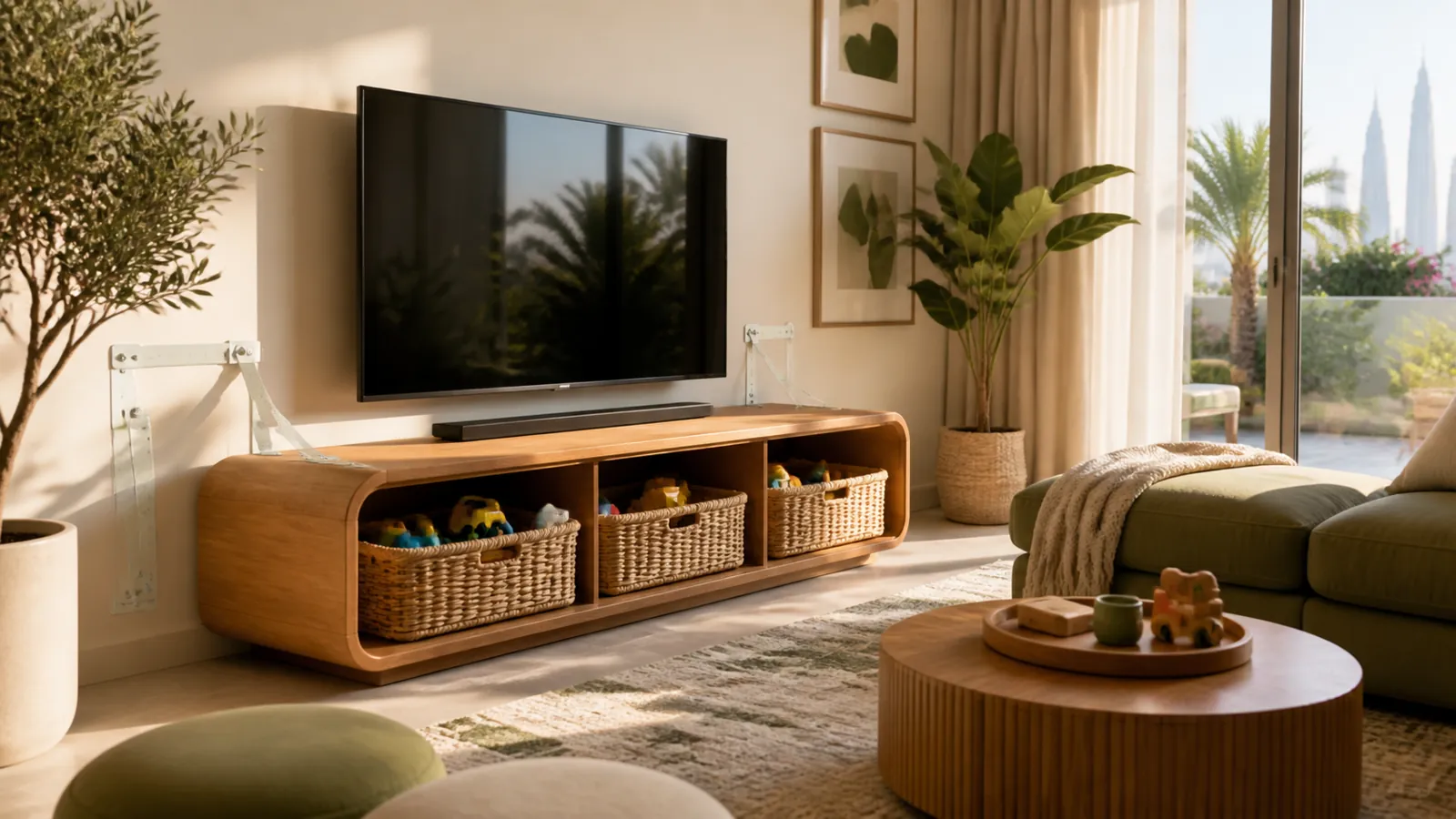
- Freestanding TVs and tall storage should be secured against tip-over where the product and wall allow it.
- Measure the full delivery route before approving a large one-piece console or media wall.
- Custom media furniture earns its cost when it solves real interfaces, not when it merely fills a wall.
How wide should a TV unit be?
A TV unit should normally look wider than the television, but the correct width is set by the wall, circulation and speaker layout. Start with the television's physical width, not its advertised diagonal size. Add space for the feet if the screen will stand on the console, then allow visual breathing room on both sides.
Do not size the unit from a showroom photograph. Mark its proposed outline on the wall and floor with low-tack tape. Check the view from the main sofa, the route past the coffee table and the swing of nearby doors. In an open-plan Dubai apartment, an oversized console can turn the route to a balcony or dining area into a pinch point.
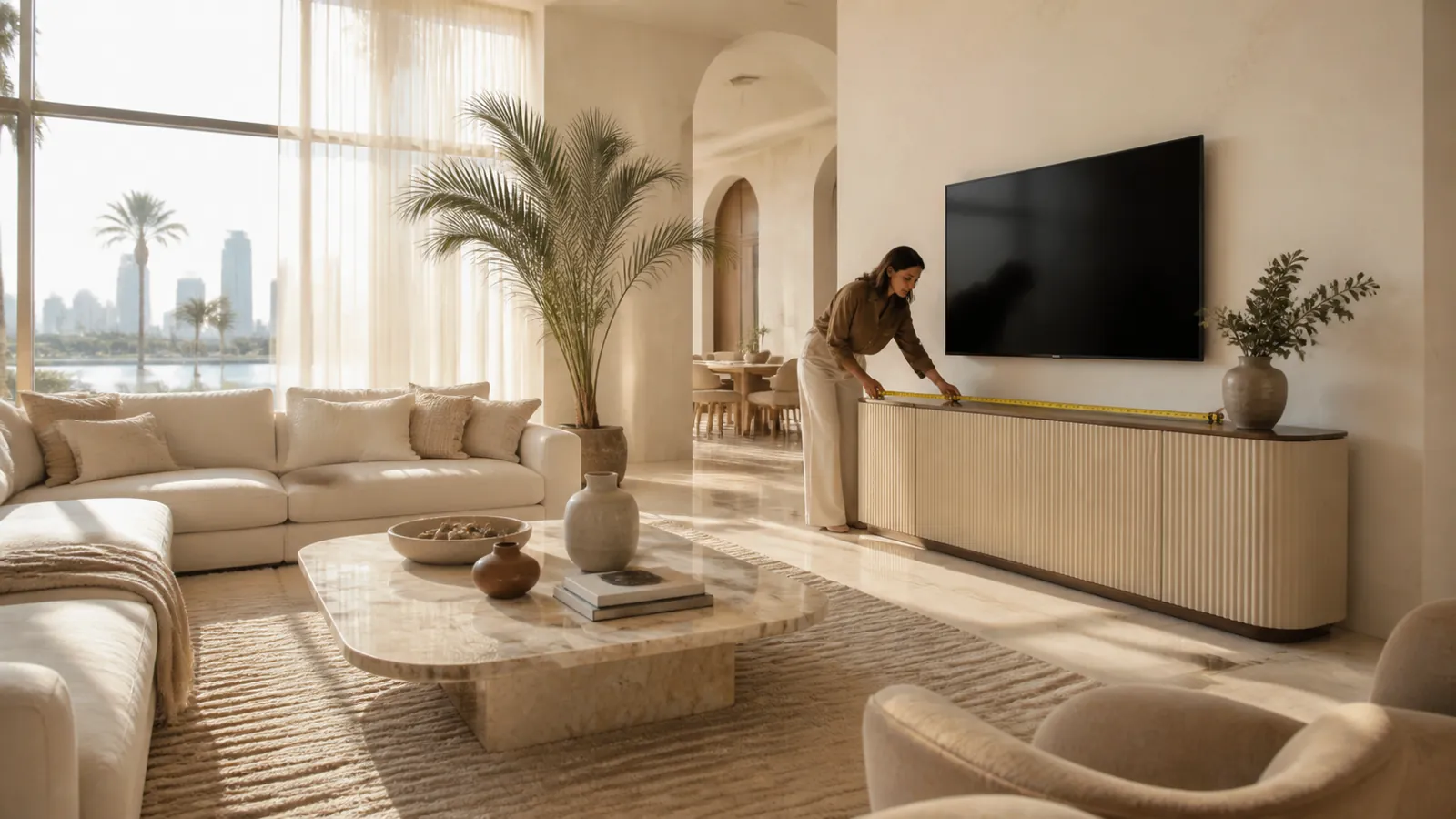
Our judgement is simple: a slightly restrained console usually looks more intentional than storage stretched across every available centimetre. Use a full media wall only when the storage brief, proportions and architecture justify it.
Should the TV sit on the unit or wall?
Wall mounting creates a clean result, while a stand-mounted screen is easier to move, but either option needs a verified support plan. Confirm the television's mounting pattern, weight and manufacturer instructions. For a wall-mounted screen, identify the wall build-up and use a competent installer who selects fixings for that substrate.
Never assume a decorative panel, gypsum lining or unknown backing can carry the load. Keep access to power and data points after installation. A removable panel or service void is more useful than a perfectly seamless finish that must be broken open when a cable fails.
If children visit or live in the home, treat stability as a design requirement. The US Consumer Product Safety Commission advises anchoring TVs and heavy furniture to prevent tip-overs. Local installation conditions still need project-specific assessment.
How much ventilation does media storage need?
Every heat-producing device needs the clearances and airflow stated by its manufacturer. A router, games console, amplifier and set-top box can make a beautiful closed cabinet run hot. Heat can shorten component life or trigger performance problems.
List every device before drawings are approved. Record its dimensions, cable bend space, remote-control method, ventilation instructions and likely replacement size. Use grilles, open backs or quiet active ventilation only where the equipment brief supports them. Do not push a device against upholstery, a closed rear panel or a tangle of power leads.
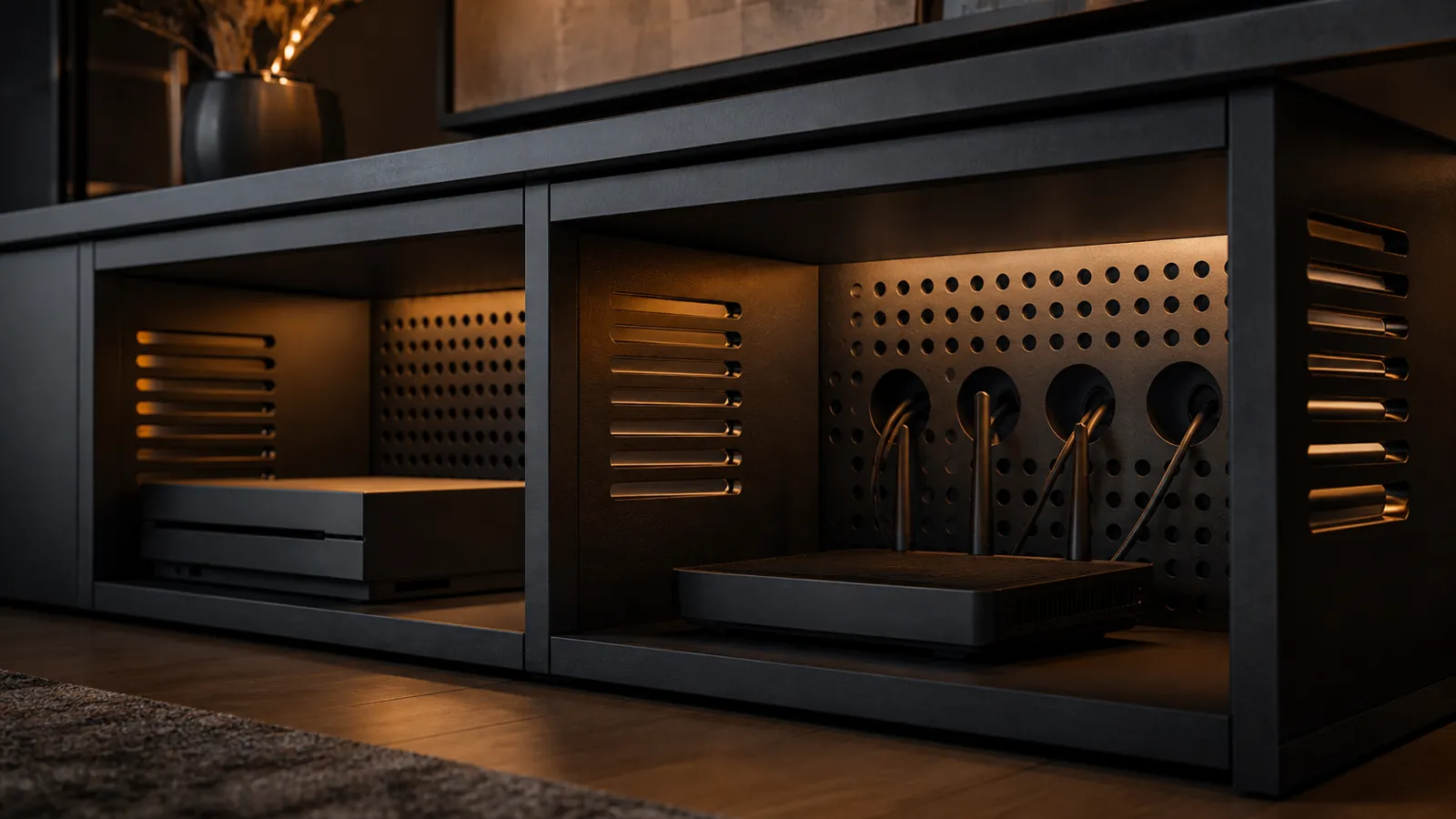
Dubai air conditioning changes room temperature, but it does not remove the need to follow equipment instructions. A cabinet should also allow dust to be removed without dismantling the joinery.
What cable management actually works?
Good cable management provides separate, reachable routes for power, signal and future replacement. Decide where the internet router, television point, power sockets and sound system will sit before the furniture is made.
A useful drawing shows:
- socket and data locations;
- cable entry and exit points;
- the largest plug that must pass through each opening;
- service loops behind movable equipment;
- access panels and ventilation paths;
- separation required by the equipment or installer.
Do not permanently trap extension leads inside inaccessible joinery. Avoid sharp cable bends and overloaded sockets. Electrical work should be completed by an appropriately qualified professional under the applicable UAE requirements.
Which storage belongs in a media unit?
Store only objects used in the media zone, then give each category a measured home. Deep cupboards often become dark holding areas for unrelated possessions. Begin with an inventory: remotes, controllers, discs, board games, speakers, books and occasional display objects.
Drawers suit small loose items. Adjustable shelves cope with changing equipment. Open niches can improve access but collect visible dust. Push-to-open fronts look minimal, although handles may be easier for frequent use. If a robot vacuum operates in the room, decide whether the console is floor-standing, wall-hung or raised high enough for verified clearance.
See FCI UAE's guide to making an open-plan living room work before treating the media wall in isolation.
Will the TV unit fit through the building?
The delivery route must accommodate the largest packed component, not just the finished unit shown on a drawing. Measure the loading area, service lift, corridors, apartment door, turns and final wall. Record lift rules and permitted delivery times with building management.
Modular construction can solve a difficult route, but joints and installation tolerances must be designed rather than improvised on site. Protect floors, stone, wall finishes and existing furniture. FCI UAE's Dubai furniture access checklist gives a practical survey sequence.
When is a custom TV unit worth it?
A custom TV unit is worth considering when standard furniture cannot resolve awkward dimensions, integrated equipment, storage or architectural finishes. It is not automatically better. Bespoke work creates more decisions and more interfaces to coordinate.
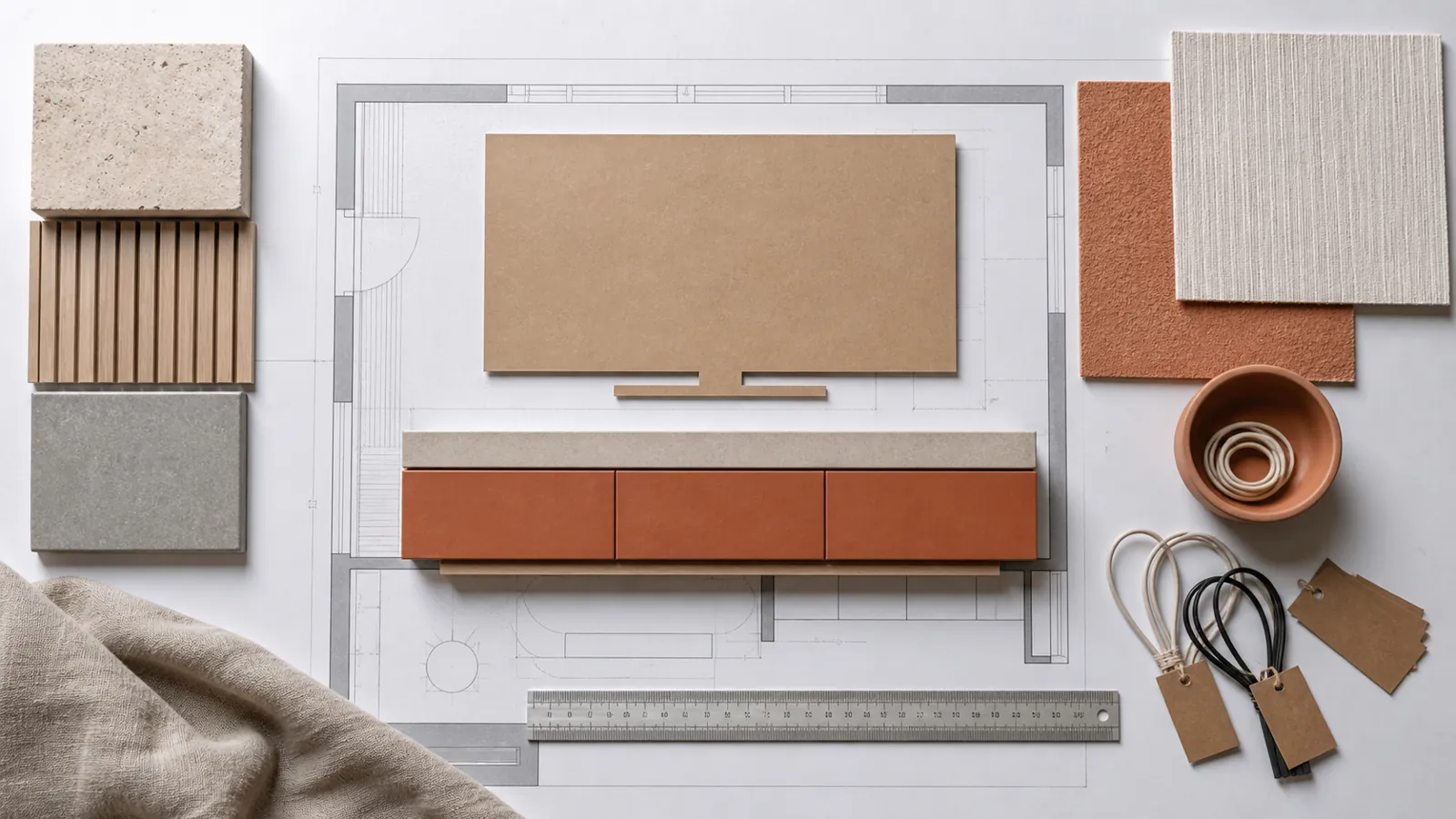
Before commissioning, approve a dimensioned drawing, material samples, finish sheen, hardware, ventilation, cable routes, lighting, wall fixing responsibilities and a snagging method. Ask what can be removed for servicing and who makes good the wall after future changes.
For a coordinated brief, review FCI UAE's luxury interior procurement service or book a consultation. Bring the screen model, device list, room plan and site photographs to make the first conversation productive.
What are the limitations of this guide?
This guide cannot specify a safe fixing, electrical layout or viewing geometry for an unseen room. Television manufacturers set product-specific clearances and mounting instructions. Wall construction, landlord rules and community procedures vary across Dubai.
Viewing comfort is also personal and depends on screen resolution, content, eyesight, seat height and distance. Test the proposed position in the real room. Treat generic ratios as a starting point, not a warranty of comfort.