

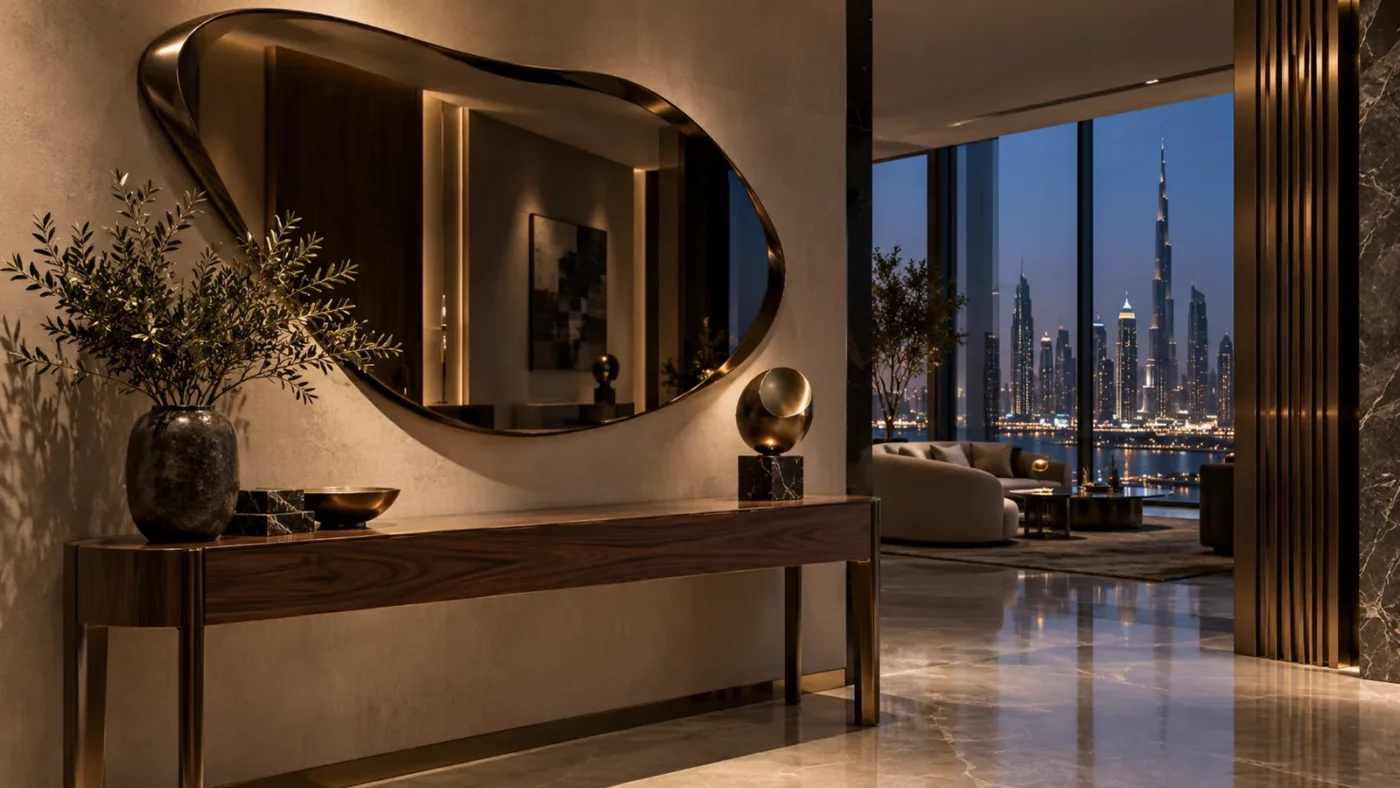
TL;DR: Choose a luxury mirror by planning what it reflects, how it relates to the room and furniture, and how it will be delivered and fixed safely.
Key takeaways
- Judge the mirror against the complete wall and nearby furniture, not an isolated product image.
- Stand at the room's main viewpoints and check exactly what the glass will reflect.
- Review daylight and artificial light before selecting tint, finish and position.
- Obtain the exact weight, fixing instructions and installation responsibility in writing.
- Compare the packed mirror with every lift, doorway, turn and final handling zone.
How large should a luxury mirror be?
A luxury mirror should feel proportionate to the wall, the furniture beneath it and the distance from which it is seen. Record the available wall width and height, then draw the proposed outer dimensions at full scale with low-tack tape.
If it sits above a console or sideboard, review both pieces as one composition. The verified sideboard planning guide explains why furniture depth, openings and circulation belong in the same room test. A mirror can look perfectly centred on an elevation while its reflected view reveals a doorway, cable or storage door that the drawing politely ignored.
Check the top edge from normal standing and seated viewpoints. In a double-height entrance, a larger piece may hold the wall better than a small decorative mirror. Size still needs to follow the actual architecture, not a universal ratio borrowed from another room.
What should the mirror reflect?
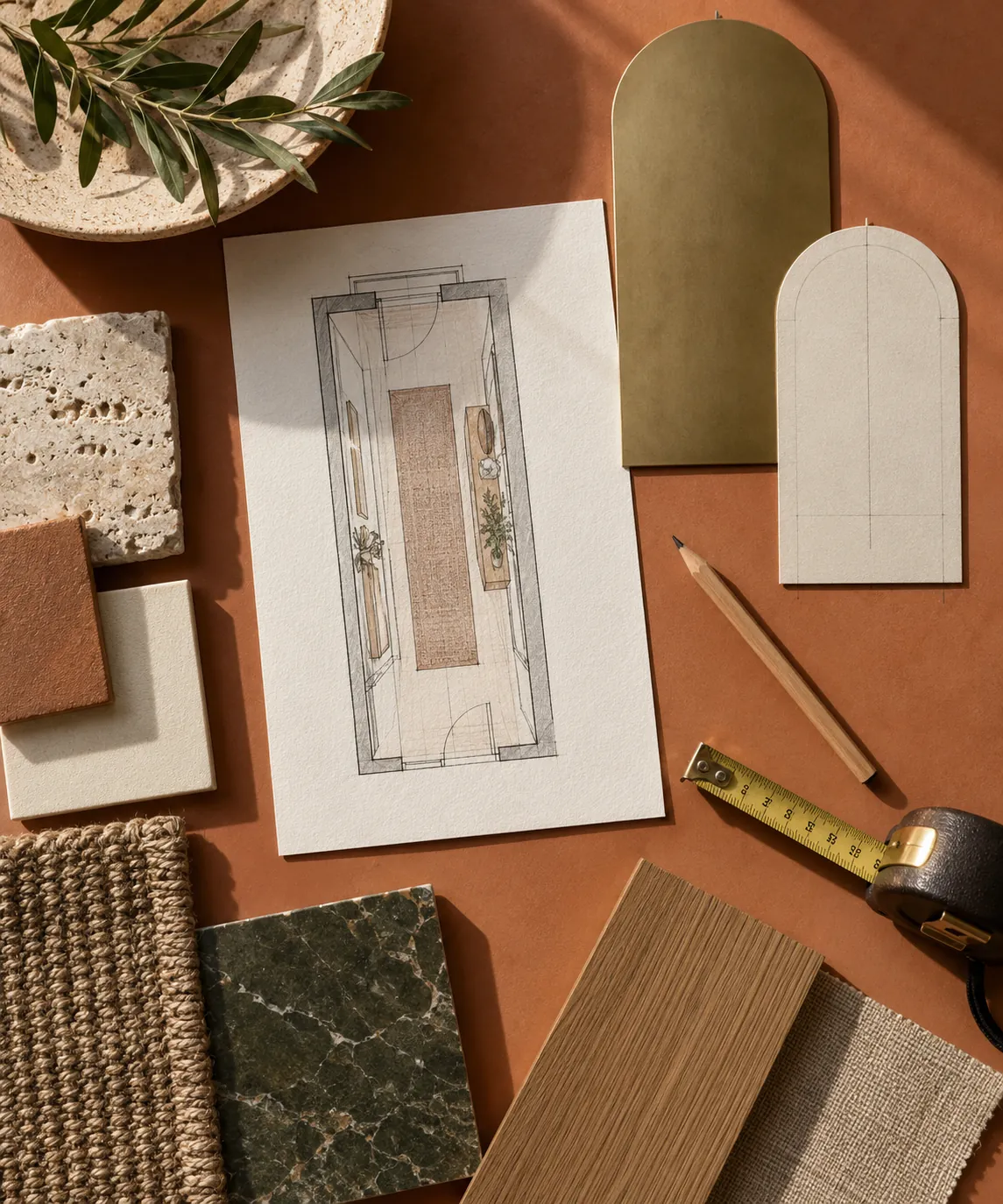
The mirror should reflect a deliberate view such as daylight, artwork, planting or a composed part of the room. Stand where people enter, sit and move, then photograph the wall from those positions before finalising the location.
A mirror does not merely occupy its own wall. It edits the wall opposite. That is marvellous when the opposite view is calm, and rather less marvellous when it is the utility door.
Check whether the reflection exposes private areas or creates distracting movement beside a television or work zone. In an entrance, include the open front door, staircase and route towards the living room or majlis in the review. FCI UAE's published console table guide likewise treats the entrance as a sequence of views rather than one decorative surface.
How do light and mirror finish interact?
Light changes how a mirror reads, so review the proposed position in daytime and after dark. Direct sun, chandeliers and wall lights can create glare, while tinted or antiqued glass may soften reflection but also alter colour and clarity.
Place a temporary reflective sample in the intended position. Check it from the main approach, from seats and beside any strong fitting. A mirror selected under showroom lighting may behave differently opposite full-height Dubai glazing. The laws of reflection are stubbornly unmoved by an excellent moodboard.
If lamps or wall lights flank the piece, coordinate their centre lines, projections and wiring before ordering. Confirm whether the frame shadows the light or whether the glass catches visible bulbs from common viewpoints.
Which frame and edge details matter?
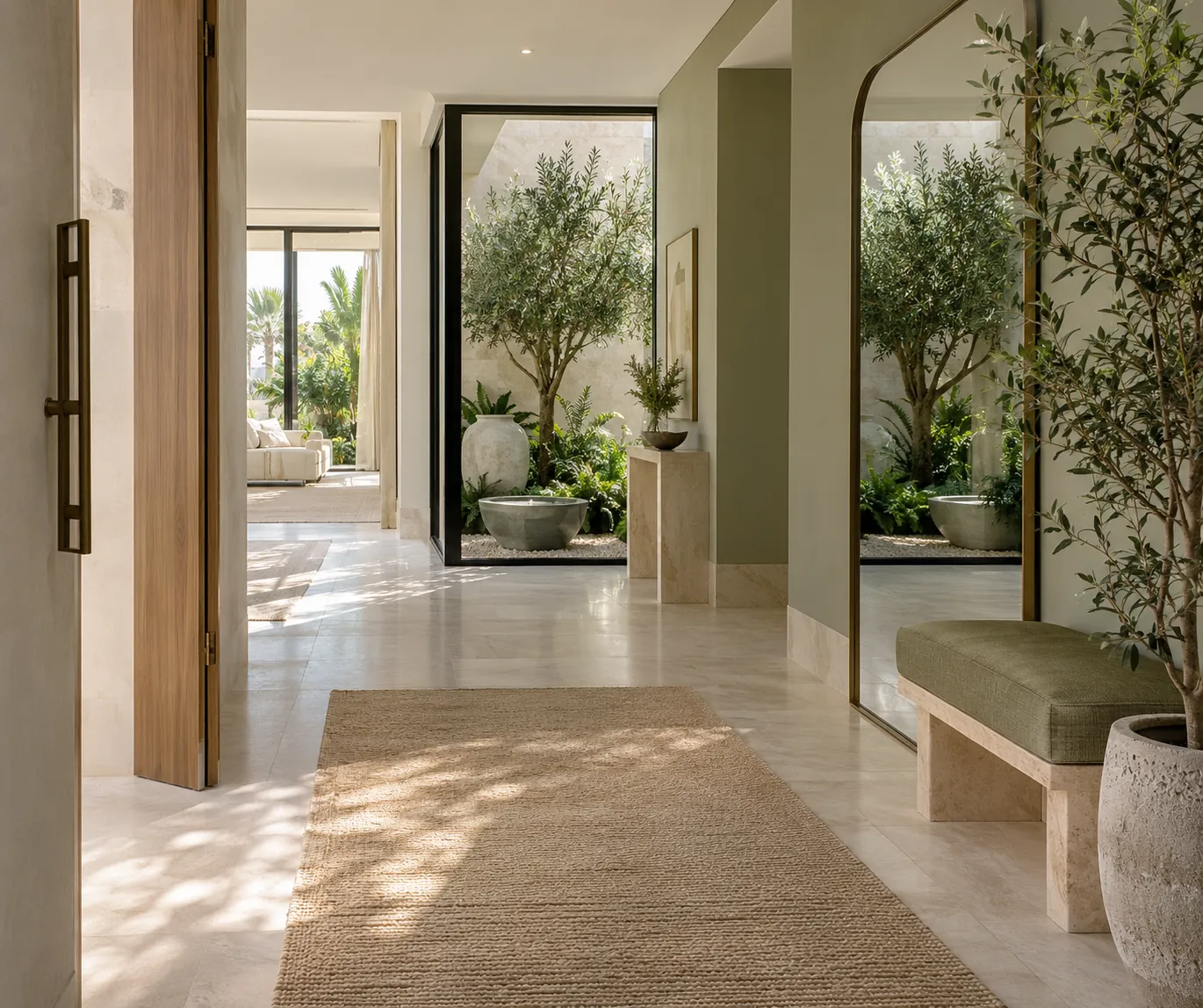
The frame and edge should suit the room's material language and the level of daily handling. Timber can connect with joinery, metal can repeat door or lighting details, and a frameless bevel can appear lighter on a busy wall.
Ask for physical samples where colour and sheen matter. Bright metal, smoked glass, stone and lacquer can all shift noticeably between cool daylight and warm evening light. Record the approved finish name, sample reference, outer dimensions and visible glass dimensions on the order.
For a full-length mirror, check skirting, sockets, switches and floor junctions. For a mirror above furniture, draw the lamp, flowers or objects likely to sit below it. Styling needs space too, although it need not stage a small accessories convention.
How should fixing be specified?
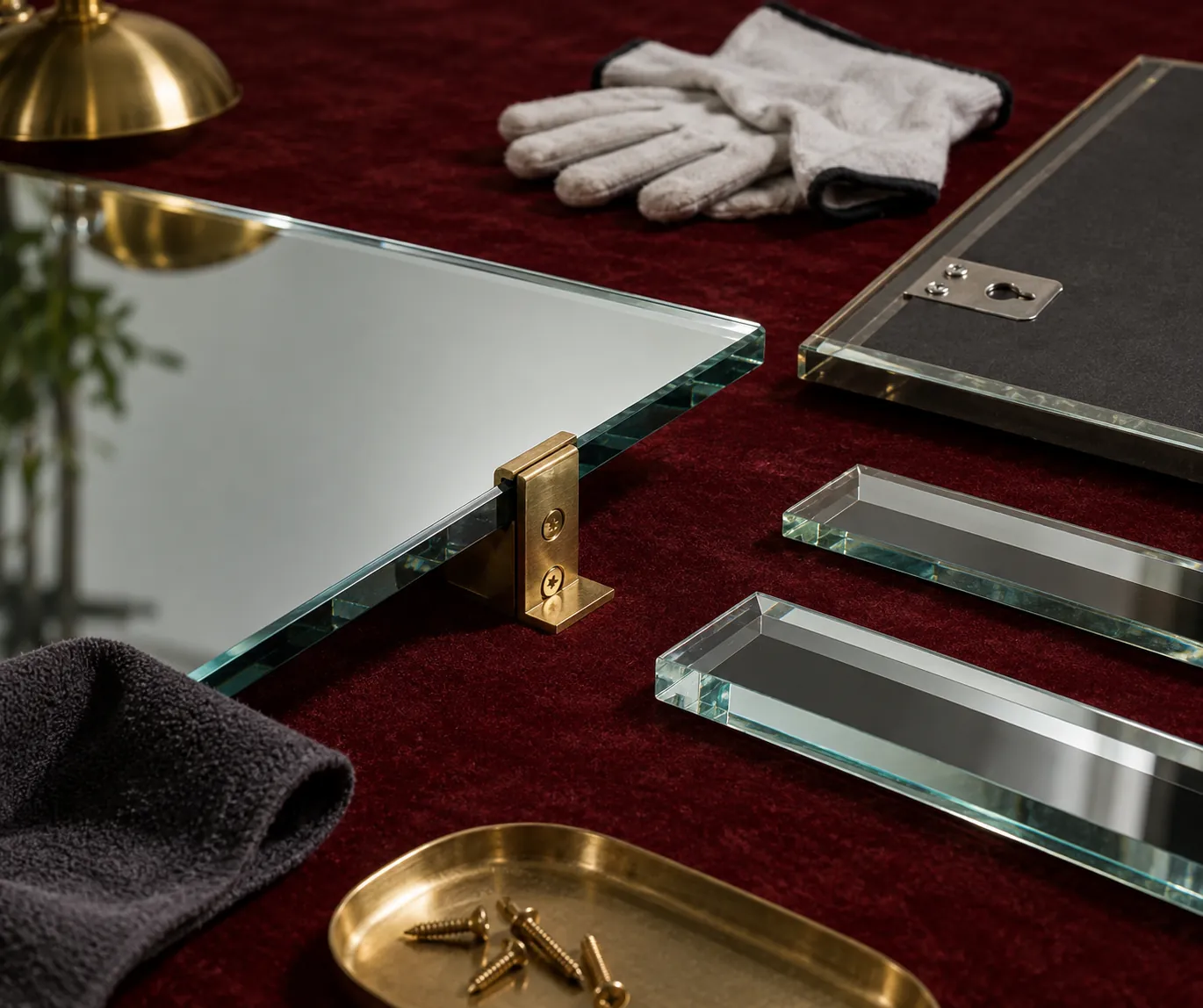
Fixing should follow the exact manufacturer's instructions and a site assessment of the proposed wall and finishes. Obtain the mirror's weight, fixing points, backing detail and installation requirements before approving the position.
Do not infer a suitable fixing from appearance. A framed mirror, a frameless panel and a large leaning design may impose different requirements. Decorative wall panels, stone cladding, concealed services and landlord or building rules can also affect the proposal.
The project brief should state who verifies the wall, supplies the fixing method, protects nearby finishes and signs off the installation. If the required installation cannot be provided, choose another mirror or location rather than quietly deleting the inconvenient part of the instructions.
Will the mirror reach the room intact?
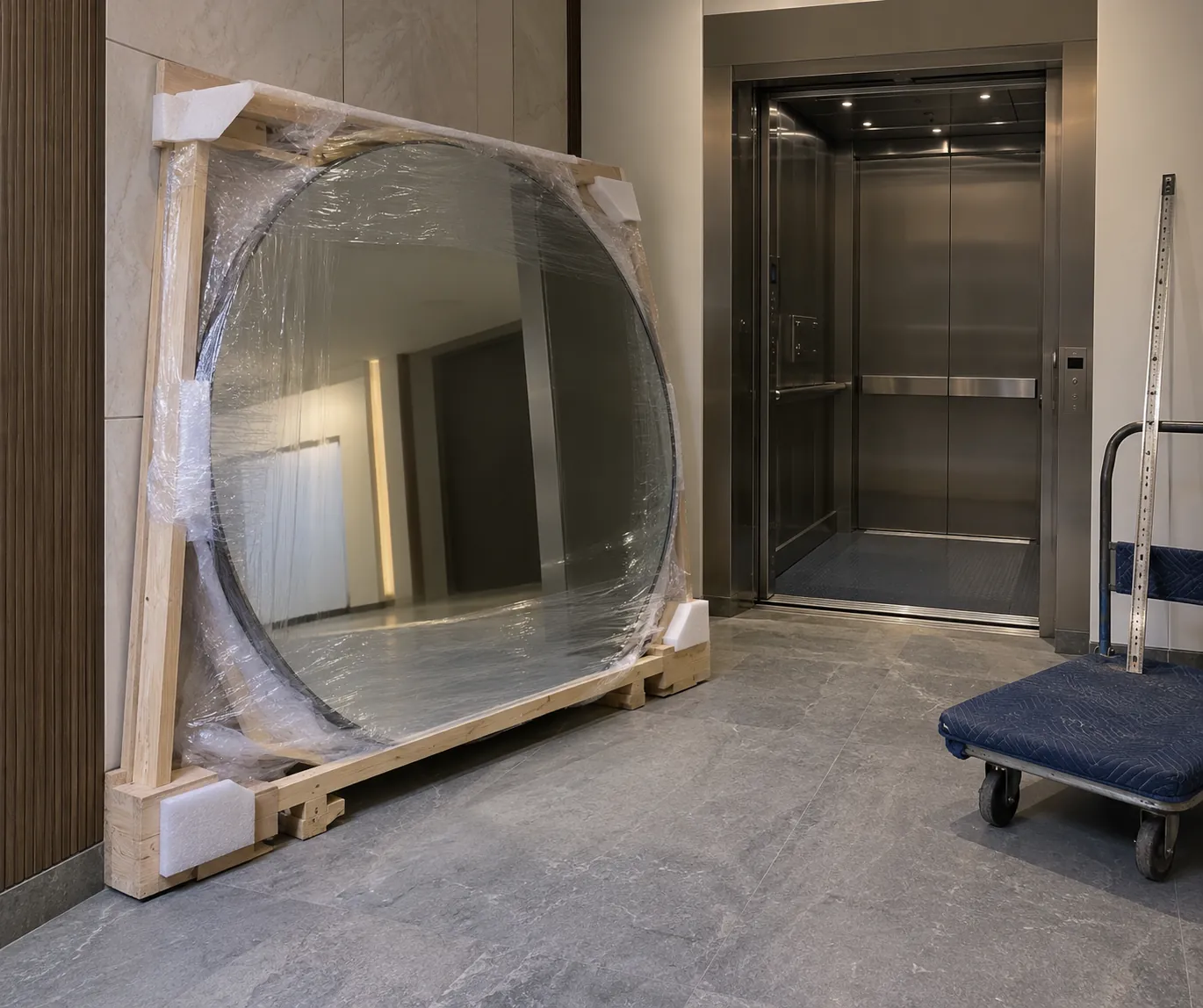
A large mirror needs a delivery route for its packed dimensions, weight and handling orientation. Measure the loading route, service lift, corridor, doorway, ceiling height and final turn, then identify a safe unpacking area close to the installation wall.
Ask whether the frame and glass arrive as one piece, whether any stand or bracket is separate, and what protection remains during handling. A mirror that fits the wall but not the lift has achieved only half of its brief.
Record responsibility for delivery inspection and damage reporting. Check the glass, frame, corners and finish under good light before installation, following the supplier's process.
When is a bespoke mirror worth considering?
A bespoke mirror is worth considering when the wall, furniture alignment, finish palette or reflected view demands exact proportions. It is less useful when the site dimensions, wall build-up or adjacent furniture are still changing.
FCI London UAE describes its current work as furniture, lighting, finishes and interior specification for Dubai projects on its main site. Bring a dimensioned wall elevation, room photographs, reflection views and access survey to the discussion. That gives a designer something firmer than “large, but elegant”, which is a mood rather than a specification.
Limitations
This guide is a planning framework, not structural, glazing or installation advice. The correct glass specification, safety treatment, fixing method, wall suitability and installation process depend on the exact product and property. Product availability and project scope must be confirmed directly.
What is the next sensible step?
Tape the proposed mirror outline on the wall and photograph what it reflects from every important viewpoint. Then ask FCI London UAE to coordinate the dimensions, finish, fixing information and delivery route for the exact selection.
Sources
- Luxury Furniture and Interior Design Dubai, FCI London UAE. Current furniture and interior specification scope.
- Luxury Console Tables for Dubai Villas, FCI London UAE. Entrance scale, reflection, lighting and circulation context.
- Sideboard Dubai: Make It Earn Its Space, FCI London UAE. Furniture clearances, material sampling and delivery planning.