

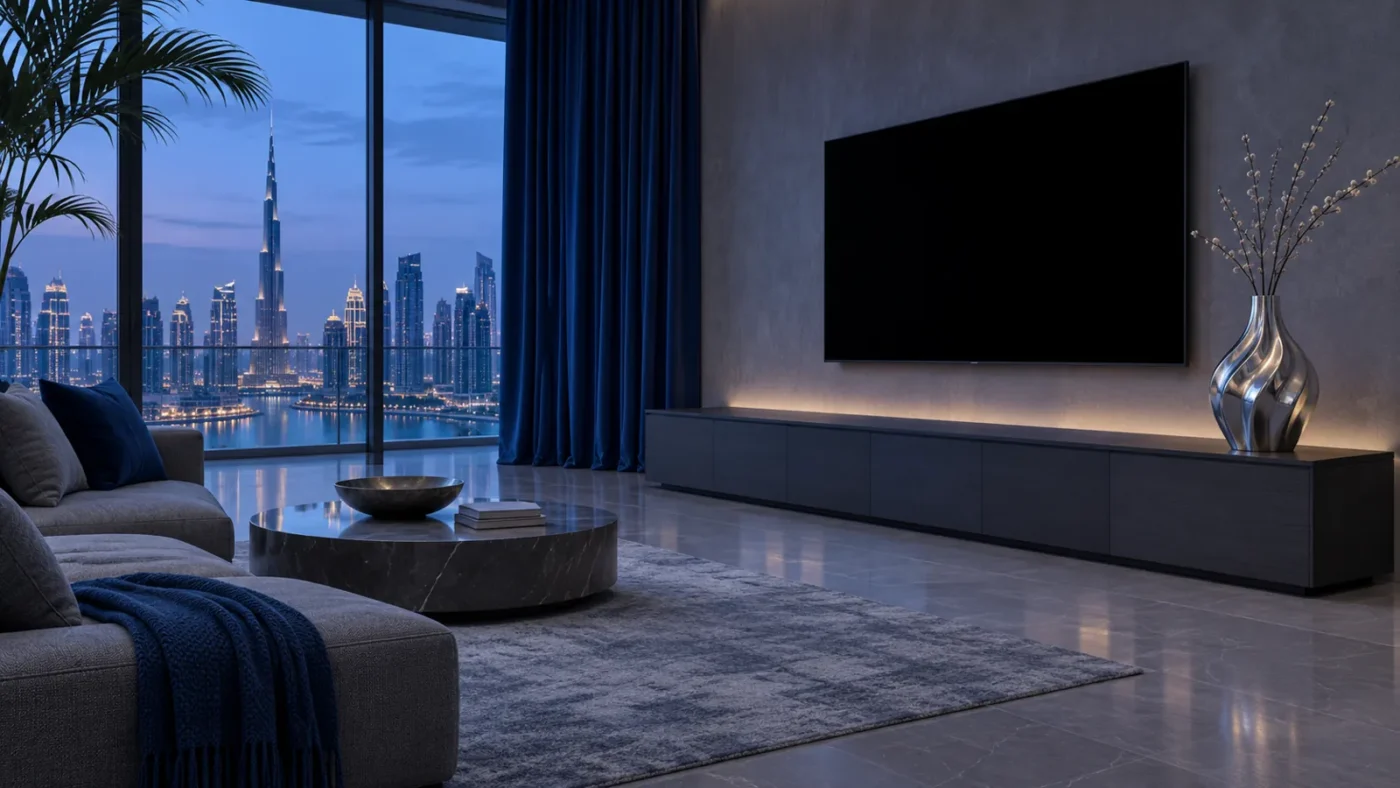
TL;DR: Choose a TV stand in Dubai around your actual equipment, its ventilation instructions and rear cable access, not the television width alone.
Key takeaways
- Internal compartment dimensions matter as well as the cabinet's external dimensions.
- Ventilation requirements belong to the equipment model, not a universal furniture rule.
- Rear connectors and cable bends need space beyond the device casing.
- A closed-door demonstration should be part of the buying brief if equipment will be concealed.
What should a TV stand accommodate?
A TV stand should accommodate the complete equipment arrangement you intend to use, including the connections and access around it.
Start with a device list: television, receiver if used, streaming box, games console, router if it lives there, and any speaker you plan to conceal. Record each model rather than writing only “console” or “amplifier”. Then ask for usable compartment dimensions, door opening details and shelf positions.
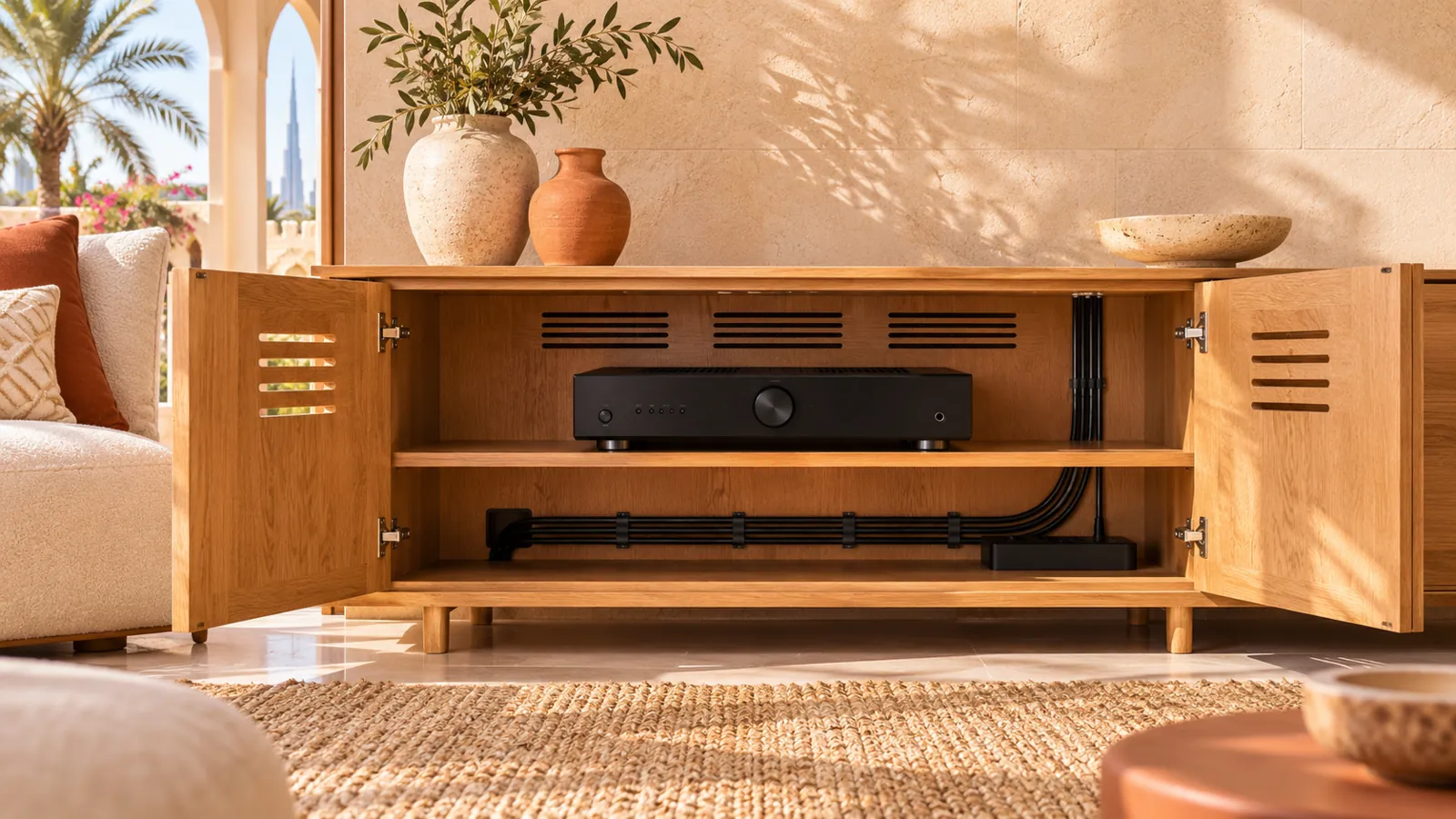
For a Dubai apartment living room, our recommendation is to resolve the equipment arrangement before matching the cabinet to the sofa. A beautiful low unit is still the wrong specification if the receiver cannot be installed as its manufacturer requires.
Use the TV stand collection as a starting point for a shortlist. Treat the exact model's technical information, not a lifestyle photograph, as the basis for approval.
How much ventilation does a media cabinet need?
A media cabinet needs the ventilation and clearance required by each device inside it; there is no single clearance that suits every setup.
For example, Sony's installation guidance for its STR-AZ7000ES, STR-AZ5000ES and STR-AZ3000ES receivers says not to install the receiver in a confined space such as a bookcase. It also specifies space around the receiver and an open rack rear. Those instructions concern those receivers, not every amplifier or cabinet. Read the model-specific Sony guidance.
The buying implication is straightforward: send the installer the equipment manual before selecting a concealed compartment. Ask them to explain how the proposed arrangement follows it. Do not assume an attractive slot pattern proves that a particular device can operate behind those doors.
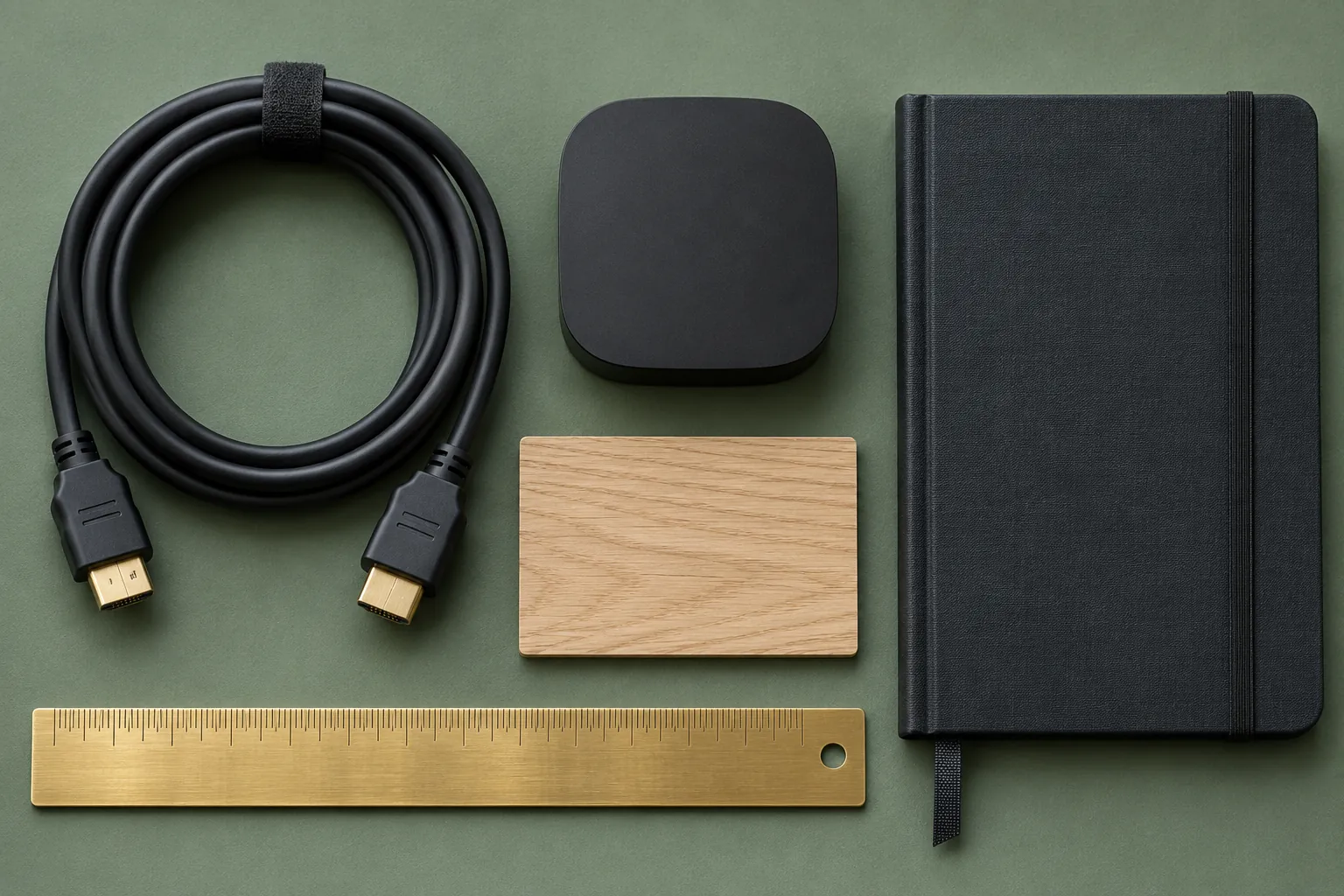
A cabinet should conceal the wiring, not the unanswered questions.
Why is cable access part of the furniture brief?
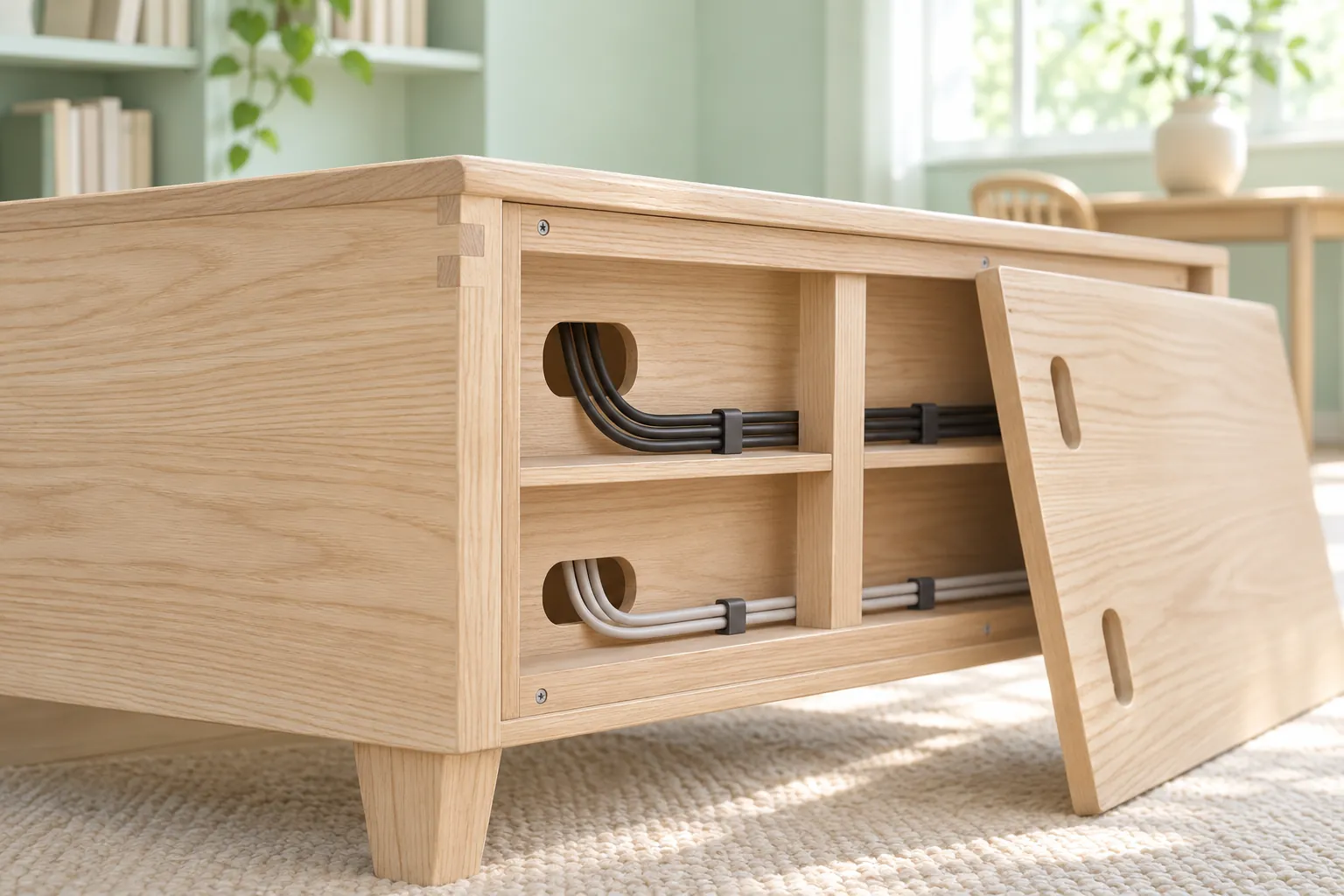
Cable access determines whether the equipment can be connected, checked and changed without dismantling the installation.
Ask for a drawing that shows the sockets, cabinet rear, device connectors and proposed cable route together. A device depth measurement stops at its casing; the installed arrangement also includes whatever plugs and cable bends sit behind it.
Choose how future access will work. Will a rear panel be removable? Can the installer reach the connection points without disturbing a wall-mounted screen? Is there an accessible route between compartments? These are questions to settle for the selected cabinet, not features to assume.
Our preference for a family living room is an access method the owner can explain clearly at handover. “Someone will sort it out later” is not a cable-management system.
Should speakers and streaming devices sit behind doors?
Concealed equipment should be approved only after its operation has been checked in the proposed closed-door arrangement.
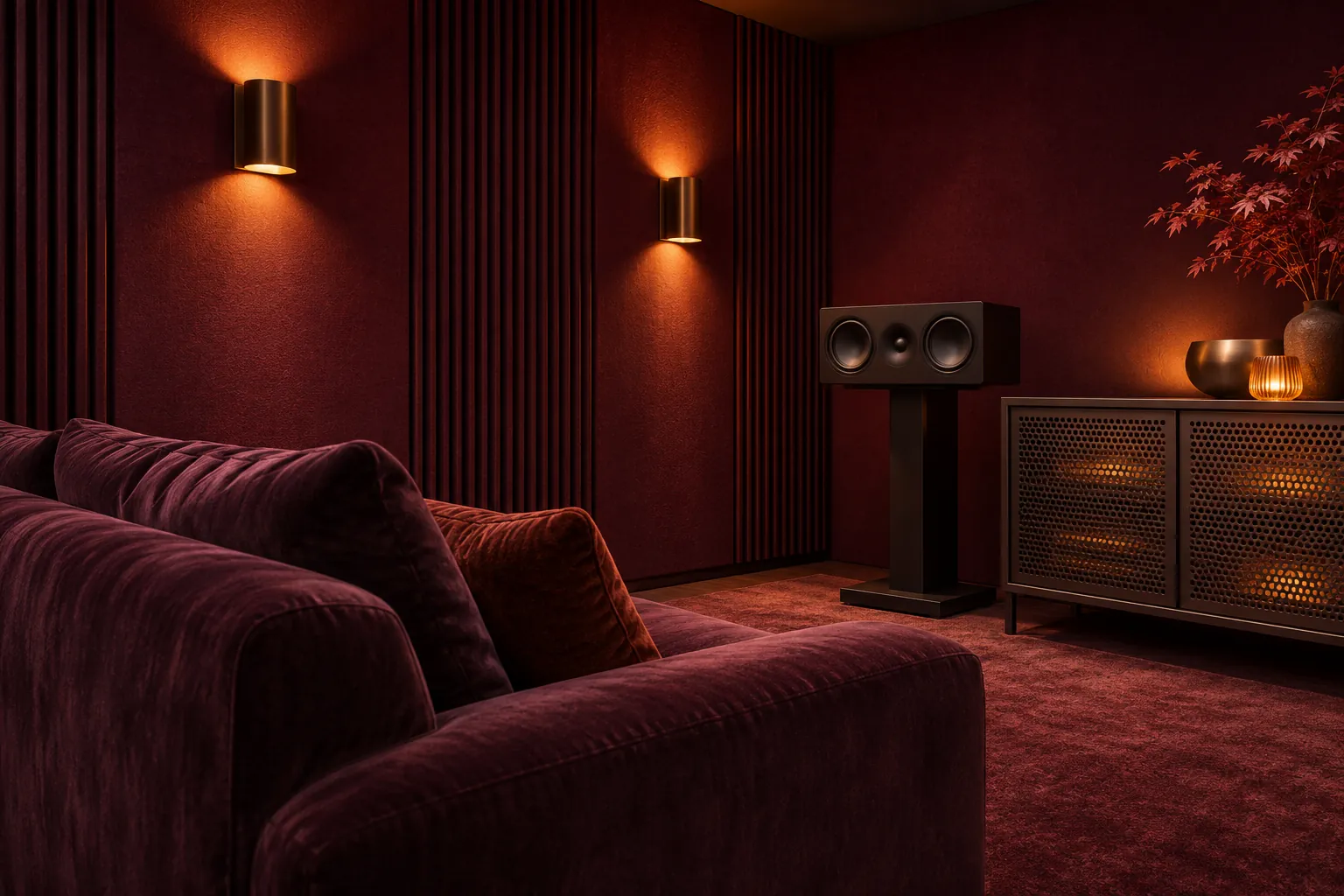
Ask the AV installer to demonstrate control of each device using the remote or app you actually intend to use. If a speaker is meant to sit inside the cabinet, ask the installer and equipment supplier to agree its position before approving the furniture. A convenient empty compartment is not automatically a suitable speaker location.
Also distinguish a television resting on the cabinet from one independently mounted on the wall. Request the furniture's applicable load information and the installation requirements for the chosen arrangement. Do not infer either from the cabinet's width.
What should you send before requesting a quote?
Send the room information and the equipment list together so the furniture proposal can address both.
Include photographs of the wall, socket positions, the proposed screen location, equipment model numbers, and your preference for visible or concealed devices. Add any access restrictions affecting delivery or installation, and identify who is responsible for AV commissioning.
Then contact FCI AE with that brief and ask for a proposal tied to a named cabinet and equipment arrangement. Confirm the specification, availability and installation scope in writing before ordering.
Limitations
This is a furniture-planning guide, not an electrical design, AV commissioning plan or confirmation that a listed cabinet suits your equipment. The Sony example cannot supply clearances for another model. Ask the relevant equipment supplier and installer to approve your particular setup.