


TL;DR: Choose a luxury rug by mapping the complete furniture arrangement, daily use, material, pile and care plan before falling for the pattern.
Key takeaways
- Size the rug against the whole furniture group, not an empty patch of floor.
- Test dining chairs in both seated and pulled-back positions.
- Match fibre and pile to foot traffic, spills, sunlight and cleaning expectations.
- Specify an appropriate underlay and confirm how doors and furniture will clear the finished surface.
- Approve the exact size, colour, construction and care instructions in writing.
How large should a luxury rug be?
A luxury rug should be large enough to organise the furniture group without obstructing doors, circulation or adjoining zones. Mark the proposed edges on the finished floor, then place the sofa, chairs, tables and consoles around that outline.
The current FCI London UAE luxury rugs guide recommends sizing a living-room rug from the room and furniture arrangement rather than treating it as a decorative island. The useful question is not whether the rug fits between the sofa legs. It is whether the entire composition looks deliberate when people actually use it.
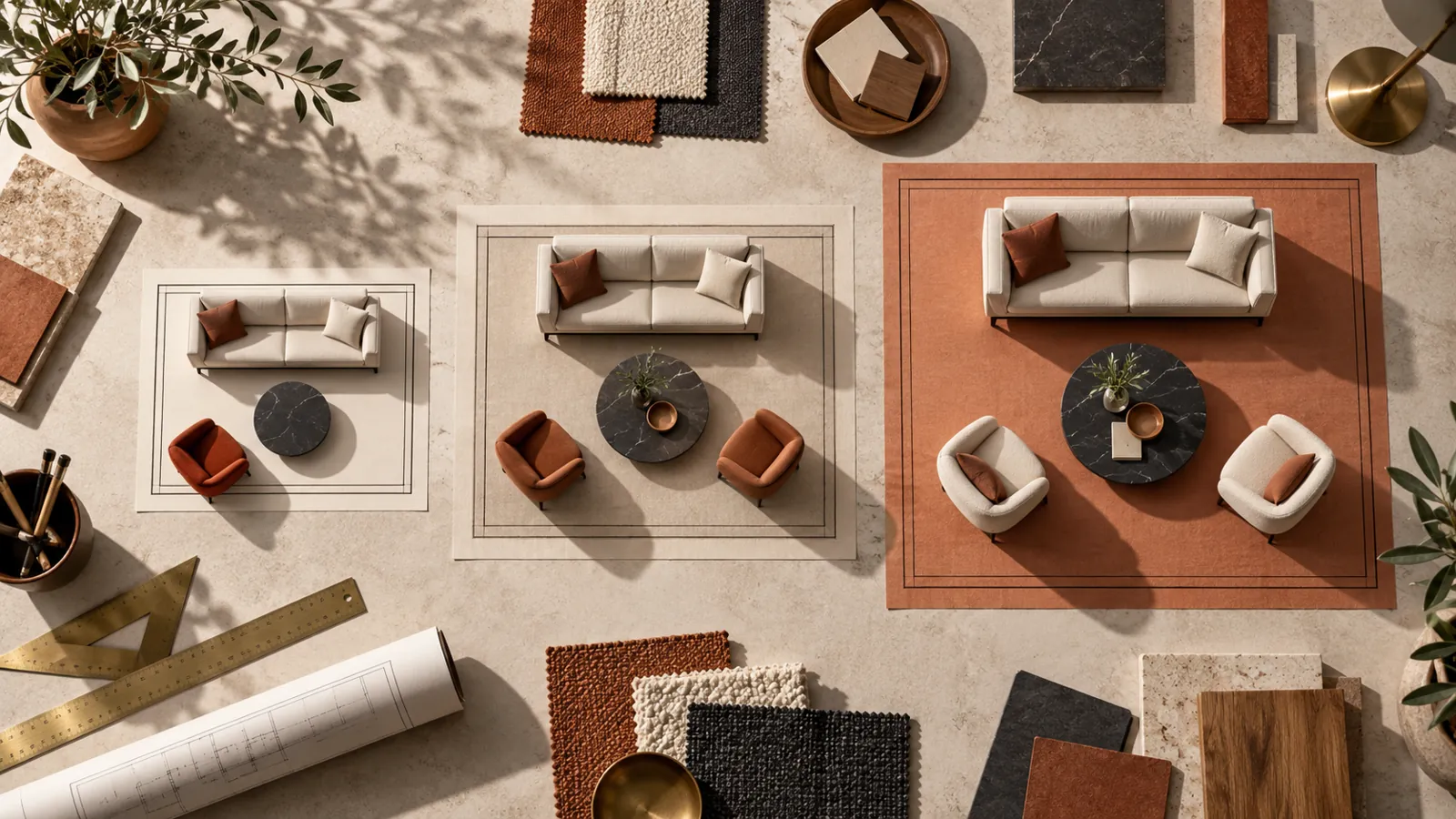
In an open-plan Dubai apartment, a rug can define the seating zone while preserving a clear route to glazing, dining and terraces. Check every edge from the main approach. A beautiful rug that creates a daily slalom course has been given rather too much authority.
Where should furniture sit on the rug?
Furniture should sit on the rug in a consistent arrangement that supports balance and stability. In many living rooms, placing at least the front legs of the sofa and chairs on the rug creates a more connected group than leaving a small rug floating beneath the coffee table.
There is no universal placement rule for every room. A large rug may carry the full seating group, while a smaller formal arrangement may use a controlled front-leg placement. What matters is that similar pieces follow the same logic and that the rug does not stop at an awkward point beneath a chair.
Coordinate the rug with the complete seating plan and nearby storage. The sideboard Dubai guide explains why cabinet doors, drawers and standing space belong in the room footprint too.
How should a dining rug be measured?
A dining rug should remain beneath the chairs when they are pulled back for someone to sit or stand. Mark the table position, draw each chair in use, and measure the resulting envelope rather than the table top alone.
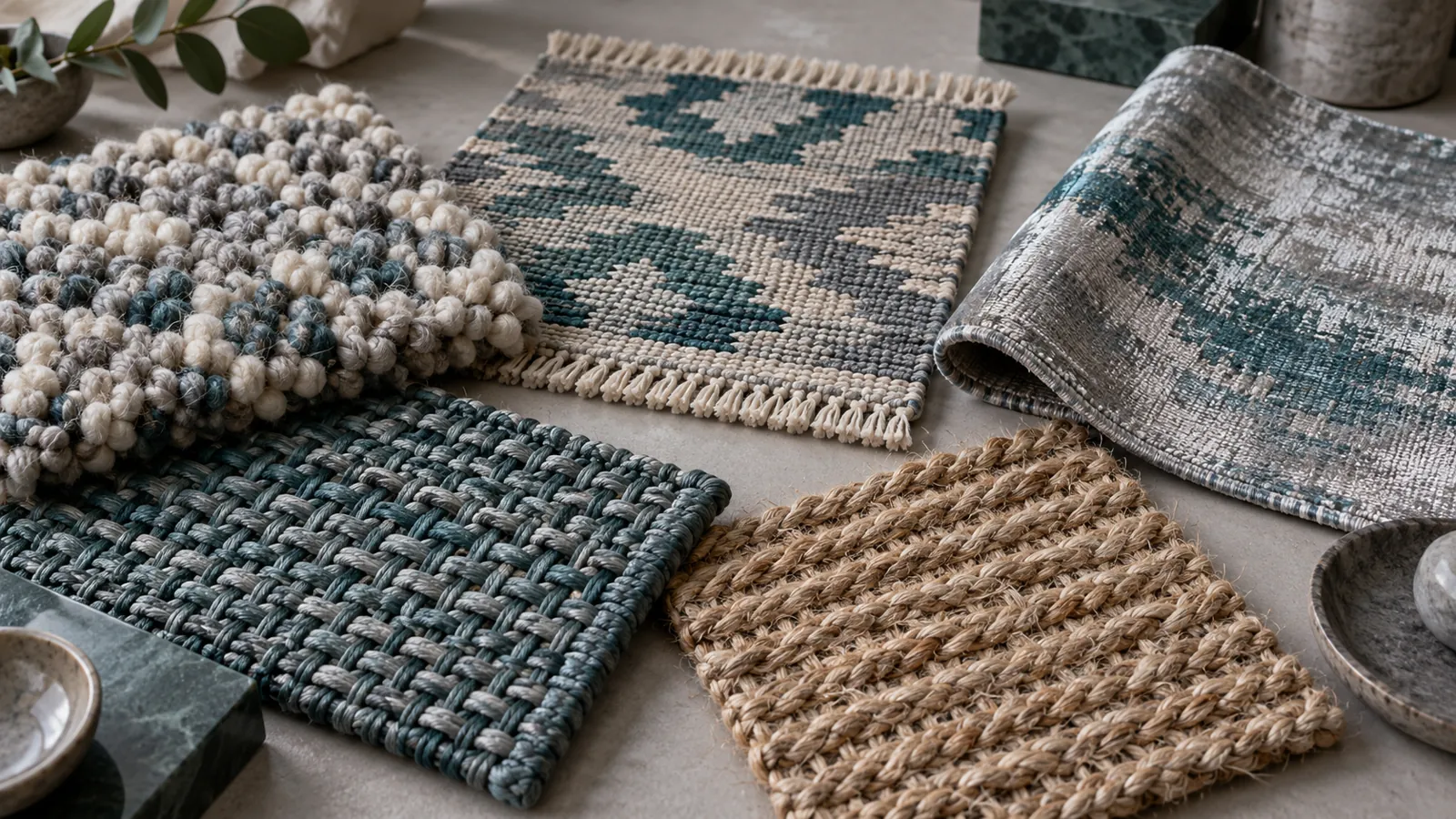
Check the chair feet across the rug edge. Repeatedly catching a rear leg on a raised border is neither elegant nor especially kind to the rug. A low, stable pile is usually easier beneath moving dining chairs than a very deep surface, but the exact construction and care requirements should come from the supplier.
Also inspect pendant positions, sideboards and serving routes. A rug may visually centre the table while the room's fixed lighting or circulation tells a different story.
Which rug material suits the room?
The right rug material is the one that matches traffic, touch, exposure and realistic maintenance. Ask where shoes are worn, whether food or drinks are served, how much direct sunlight reaches the floor, and how often professional cleaning is practical.
FCI London UAE's rug guide distinguishes natural and synthetic options and advises starting with function before style. Treat general material descriptions as a shortlist, then request the construction, fibre content, backing, colourfastness information and care instructions for the exact rug.
Pile height matters as much as fibre. Deep pile can feel generous in a low-traffic room but may complicate chair movement, door clearance and cleaning. A label saying luxury does not negotiate with a vacuum cleaner.
What should you inspect before ordering?
Inspect the actual sample, edge finish, weave or knot structure, backing and colour in the intended room light. A small digital image cannot show scale, sheen, pile direction or how the colour changes from morning to evening.

Record the finished dimensions and acceptable tolerance. Confirm whether the rug is stocked, made to order or bespoke, how it will be transported, and what preparation the floor needs. If it must pass through a lift or turn, agree how it will be rolled and protected.
Coordinate curtain stacks and daylight because both change how the floor reads. The luxury curtains Dubai guide provides a useful room-level checklist for glazing, furniture and circulation.
Does a rug need an underlay?
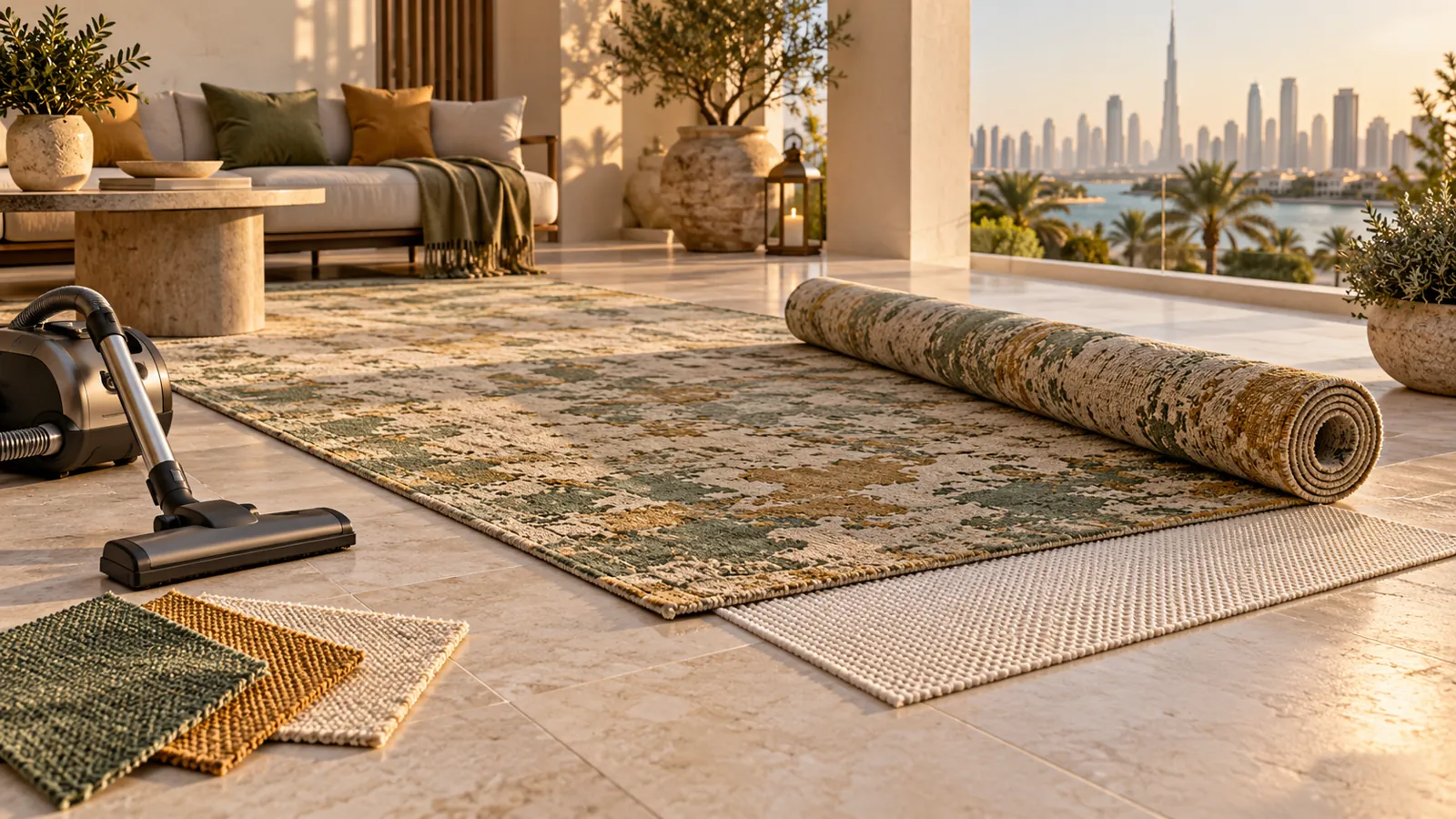
A rug may need an underlay to reduce movement, protect the floor and improve how it sits, but the correct product depends on the rug and finished flooring. Ask the rug supplier and flooring manufacturer to confirm compatibility rather than improvising with a generic pad.
Check thickness at doors, floor outlets and furniture feet. The underlay should remain concealed and should not create a raised perimeter that catches shoes or cleaning equipment.
Limitations
This guide cannot select a rug, underlay or cleaning method for a particular home. Fibre performance, colourfastness, fire requirements, floor compatibility and care depend on the exact product, room and building rules. Generated images are design illustrations, not completed FCI projects or proof of product performance.
What is the next sensible step?
Tape the proposed rug boundary on the finished floor and test the furniture in every normal position. Take the room plan, photographs, material palette and use brief to FCI London UAE for a project-specific rug review.
Sources
- Discover Luxury Rugs in the UAE, FCI London UAE. Current rug sizing, room use, material and care guidance.
- Luxury Curtains Dubai: Plan the Stack, FCI London UAE. Verified related room and daylight planning guide.
- Sideboard Dubai: Make It Earn Its Space, FCI London UAE. Verified related storage and clearance guide.