

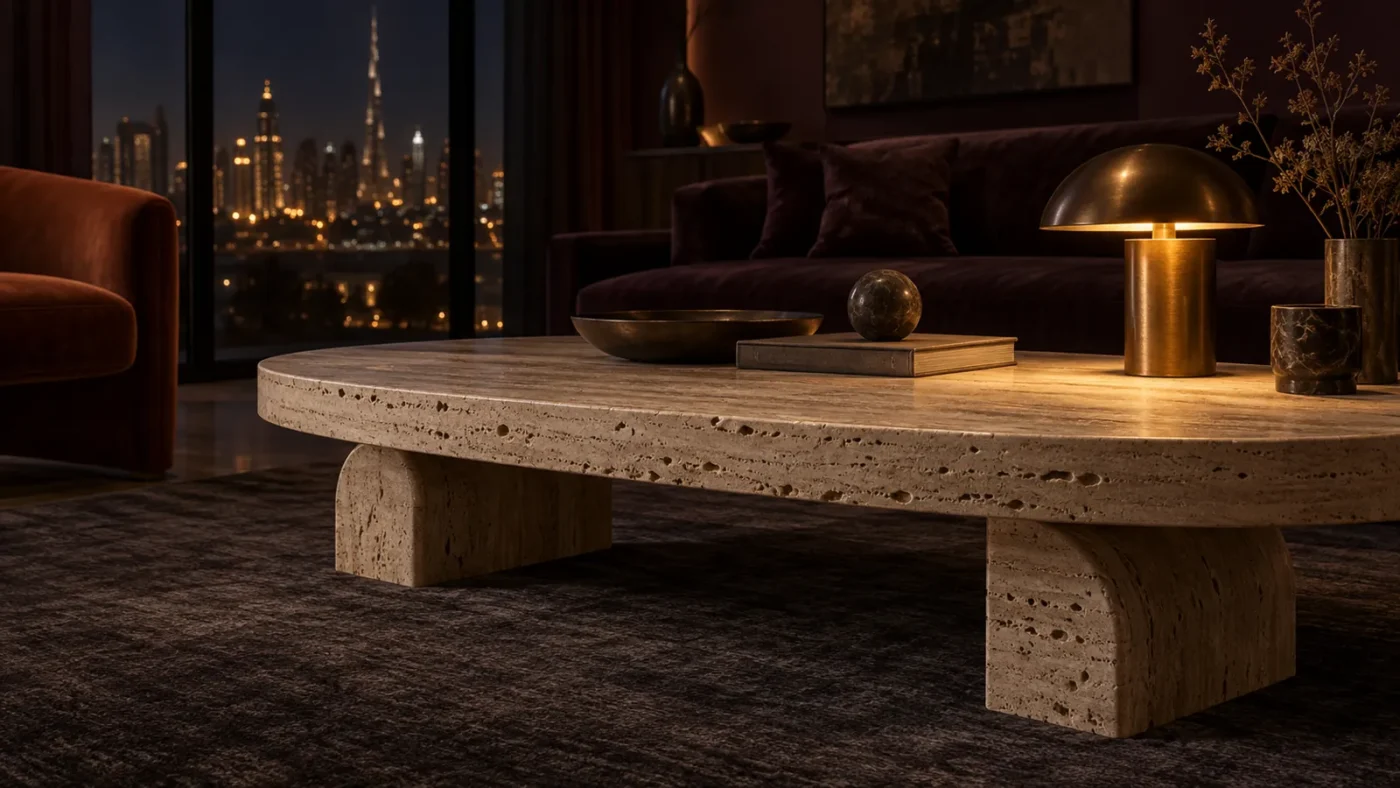
TL;DR: Choose a travertine coffee table for a Dubai home only after checking its finish, care instructions, construction and delivery route, not just its colour.
Key takeaways
- Travertine is a type of limestone and is vulnerable to mild acids, according to the Natural Stone Institute.
- Sealing can improve stain resistance, but it does not make natural stone stain-proof: Natural Stone Institute care guidance.
- Acid etching and staining are different problems; some substances can do both, as the same care guidance explains.
- A sensible buying brief records the actual surface finish, supplier-approved cleaning method, assembled dimensions and handling requirements before the order is agreed.
Is a travertine coffee table practical for everyday use?
A travertine coffee table can be a considered choice if you accept a care routine rather than expect a maintenance-free surface. The Natural Stone Institute identifies travertine as calcium-carbonate-based stone that is vulnerable to mild acids, with absorption varying across the wider limestone and travertine group.
That matters more than the word luxury on a product page. A photograph shows the table before anyone has put a drink on it.
Our buying judgement is to start with the room's real job. Is this a formal sitting room used occasionally, the family television room, or the place where guests put coffee and citrus drinks? Then decide whether using coasters and responding to spills is a routine the household will actually follow.
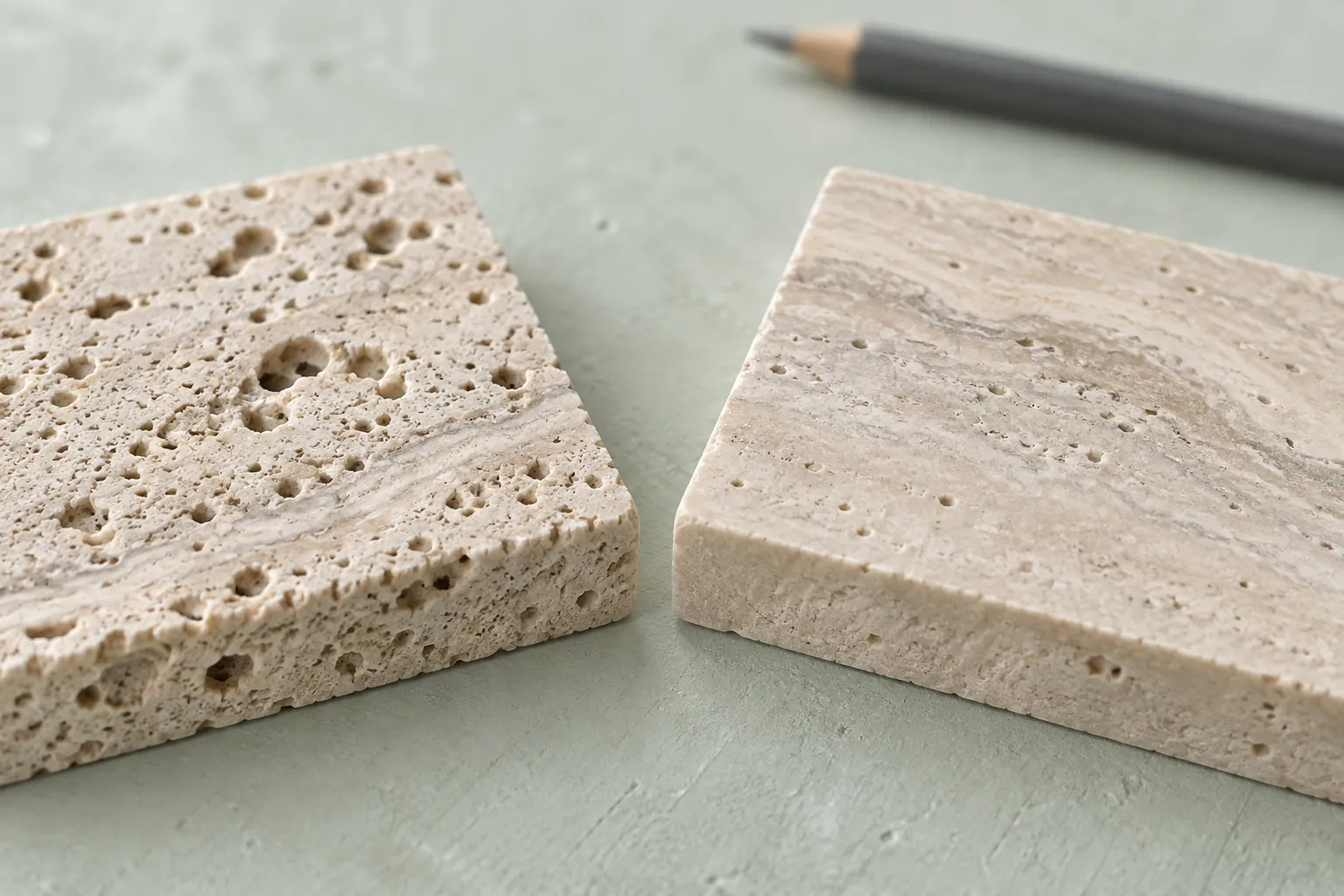
For a Dubai apartment or villa, include everyone who looks after the room in that decision. A care sheet understood by the owner but never passed to the cleaner is not much of a care plan.
Does sealing make travertine stain-proof?
No, sealing does not make natural stone stain-proof. The Natural Stone Institute describes impregnating sealers as repellents that improve resistance to staining and says the supplier should advise on the appropriate product and frequency of use.
Do not turn that into a promise that any sealed table will resist every drink, cleaning product or length of exposure. The same guidance warns that lemon, vinegar and other acids can dull or etch calcareous stone.
Ask the supplier to distinguish three things in writing: the stone itself, any treatment of its pores, and the protective treatment applied to the finished piece. Request the care instructions for that exact combination. We would not choose a sealing schedule from a generic calendar or apply an extra coating without approval.
If a supplier calls a surface easy-care, ask what that means in ordinary use. Which spills need immediate attention? Which cleaners are excluded? Who assesses damage if it occurs?
What should you inspect beyond the colour?
Inspect the surface, edges and underside, and ask how the whole table is constructed. These are our specification checks, not a claim that every travertine table is built in the same way.
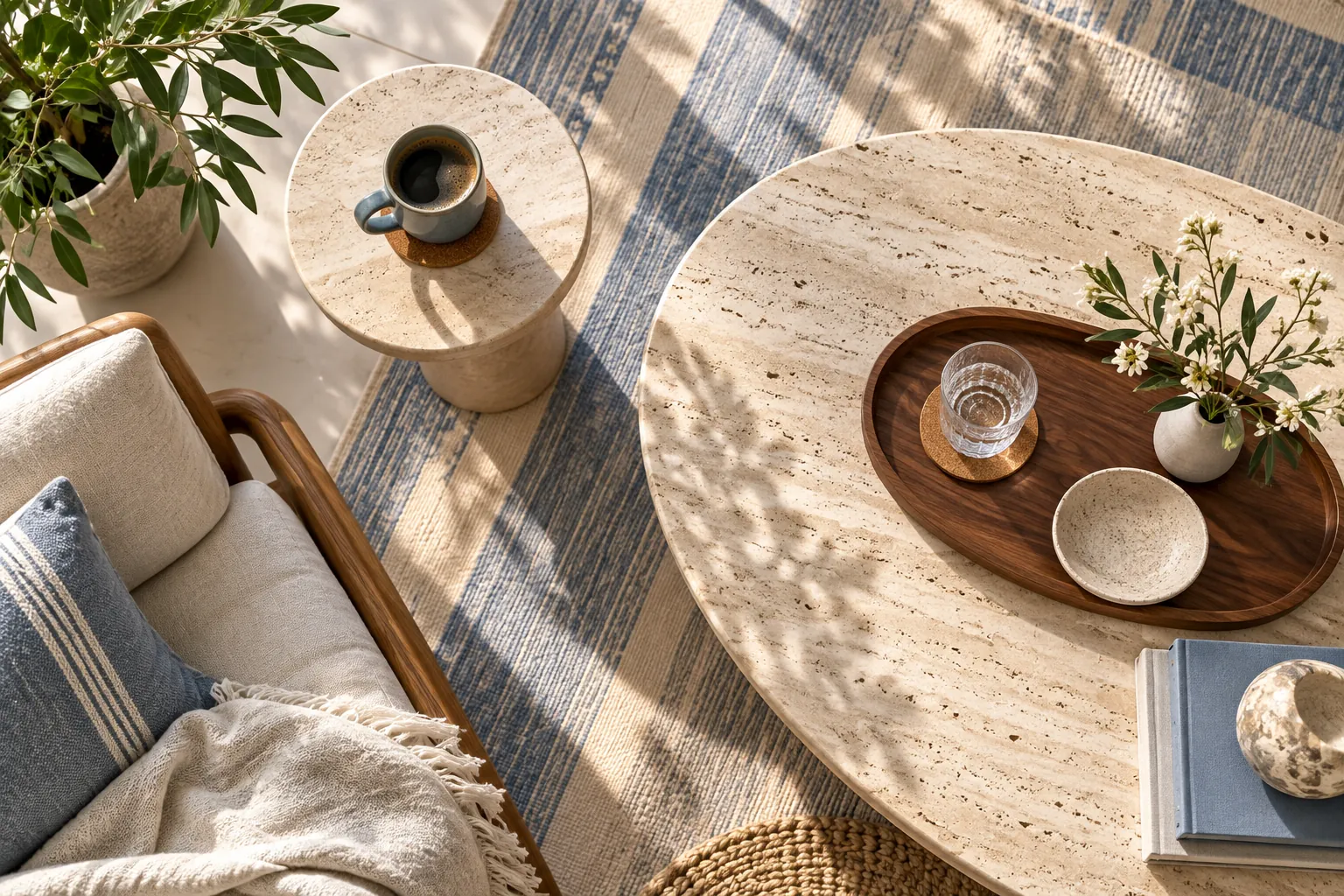
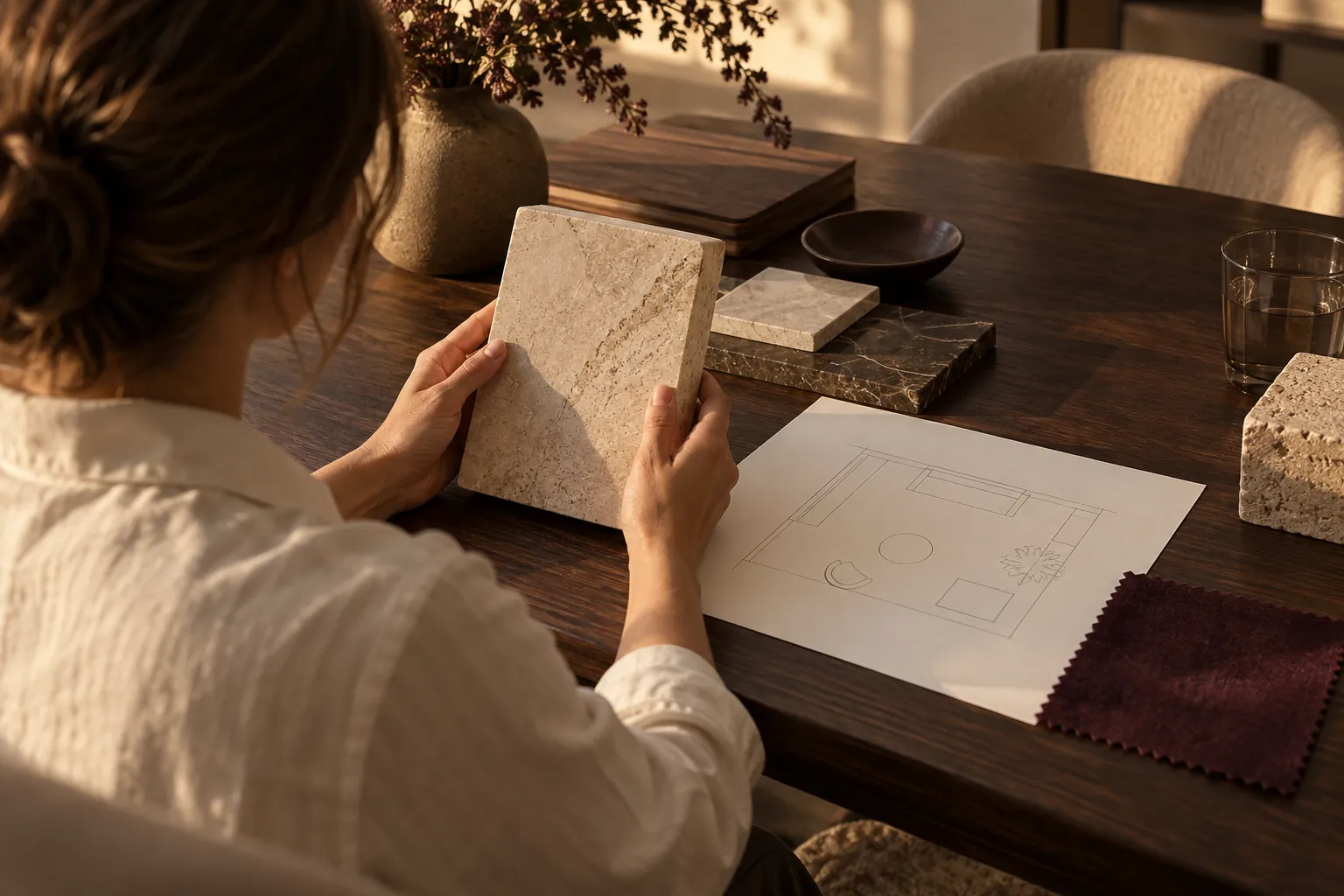
Use a physical sample to discuss the amount of visible texture you want. Ask whether the supplied piece has open or filled pores, how the finish will look under side lighting, and what variation the supplier expects between the sample and the finished table.
Also request an underside photograph or construction drawing. Establish whether you are buying solid stone components, stone over a supporting structure, or another construction. Ask about the top-to-base connection, approved handling points and any assembly required after delivery.
A reassuring material name is not a substitute for that information. For wider comparison, our marble dining table guide considers another natural-stone buying decision. It does not establish the specification of a particular travertine product.
How should you plan the table around your seating?
Plan from the space people use, not just the empty rectangle between the sofas. Our recommendation is to mark the proposed footprint on the floor, sit in each regular seat and rehearse reaching, standing up and walking past it.
Check the base as well as the top. A top that appears visually light may have supports occupying the place where someone wants to put their feet. If the table is not intended to be moved regularly, test the layout with the seating in its normal position rather than relying on rearranging the room for every gathering.
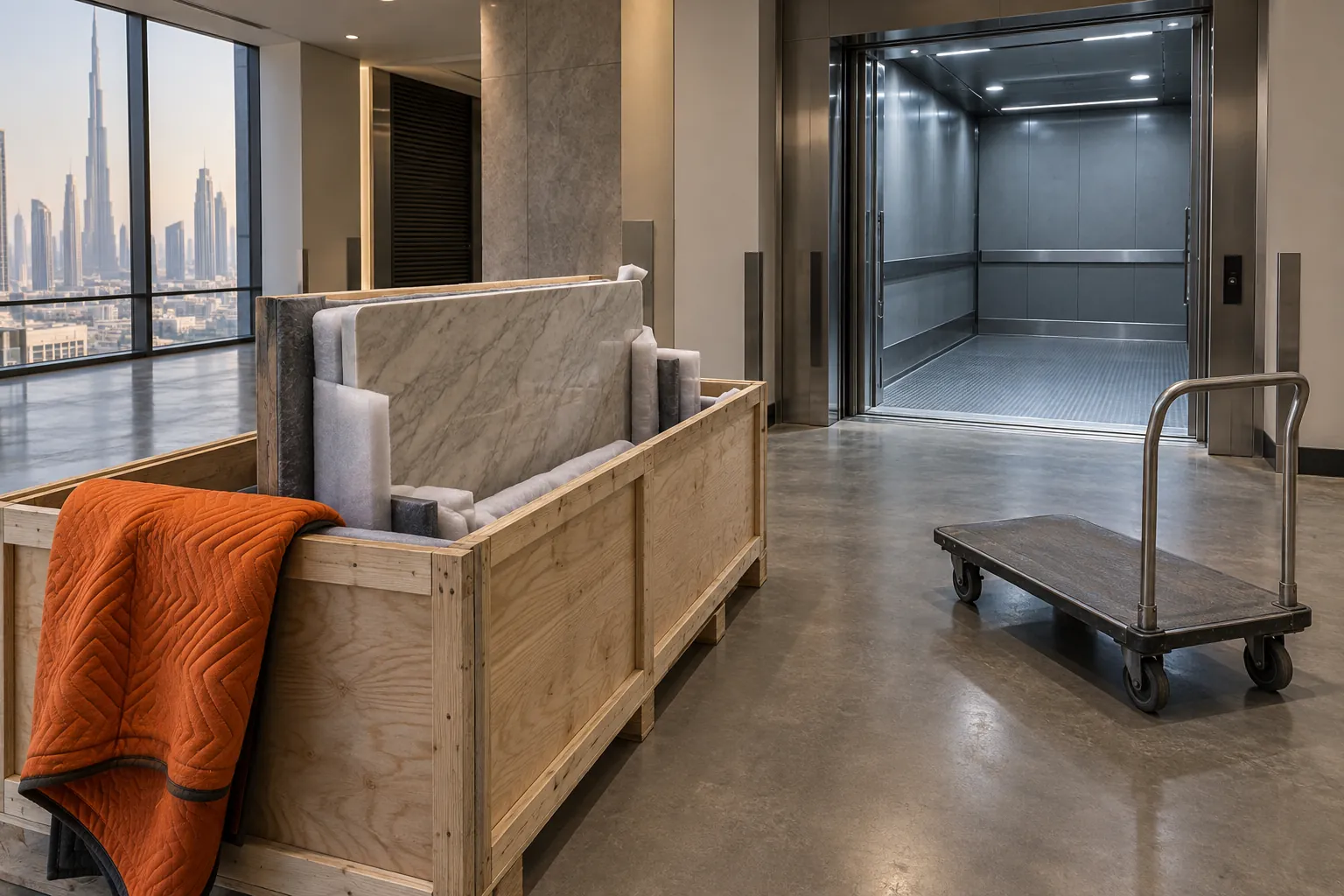
For apartment access, give the supplier the service-lift opening, cabin dimensions, corridor turns and final doorway. Ask for the packed dimensions and handling plan. A table fitting in the living room does not establish that its crate will reach it.
Browse the FCI UAE coffee-table collection to develop a shortlist, then request the exact materials and dimensions for the pieces you are considering. The category page alone is not confirmation of a travertine finish or current availability.
What care routine should you agree before delivery?
Agree a short, product-specific routine covering drinks, spills and cleaning. The Natural Stone Institute recommends coasters, blotting spills promptly, and appropriate neutral or mild cleaning products, while warning against acidic and abrasive cleaners.
Follow the furniture supplier's instructions where coatings or other components require particular treatment. Do not use a general stone-restoration recipe on an unfamiliar finished table.
Our practical handover suggestion is one page containing the approved cleaner, spill procedure, restrictions and supplier contact. Keep it with the order record. If a mark develops, record what happened and ask for an assessment before trying polishing compounds or a stronger chemical.
Limitations
This is a selection framework, not a durability test, repair prescription or inspection of an FCI product. The stone-industry sources describe general material behaviour, not the performance of every tabletop, filler, coating or construction.
We have not verified a particular model's weight, stock, price, warranty or delivery arrangements. Generated images are conceptual illustrations, not catalogue photographs or completed FCI projects.
What should you send with an enquiry?
Send a room photograph, seating dimensions, delivery-access details and a clear description of how the table will be used. Include whether visible surface changes would bother you and who handles cleaning.
Ask FCI UAE to review your shortlist against those requirements before agreeing a specification. The useful outcome is a table and care routine that fit the household, not simply the most photogenic stone in the showroom.
Sources
- Travertine, Limestone, and Dolomitic Limestone, Natural Stone Institute. Material classification, acid sensitivity and variation in absorption.
- Care & Cleaning of Natural Stone, Natural Stone Institute. Coasters, spills, cleaning, sealing and etch marks.
- Coffee Tables, FCI UAE. Commercial browsing route, not confirmation of a specific material or stock position.
- Is a Marble Dining Table Practical?, FCI UAE. Related reading.
- Contact FCI AE, FCI UAE. Product and project enquiry route.