


TL;DR: Choose a glass dining table by its documented glass specification, edge condition, base clearance and care requirements, not transparency alone.
Key takeaways
- Tempered glass is not scratch-proof: Calligaris advises against dragging hard tableware across its glass tops.
- Calligaris also advises avoiding very hot or very cold objects on its glass surfaces and replacing a chipped or broken top.
- For your Dubai room plan, record the table, base and chair positions separately; a transparent surface does not remove their physical footprint.
- Ask for the exact model's care and assembly instructions before ordering, rather than transferring guidance from a different glass finish.
- Confirm packed dimensions, delivery access and responsibility for assembly as part of the purchase brief.
Is a glass dining table practical for a Dubai home?
A glass dining table can be a sensible choice if its care requirements suit your household and the complete table fits your room. Our recommendation is to judge it as a working piece of furniture first and a visual statement second.
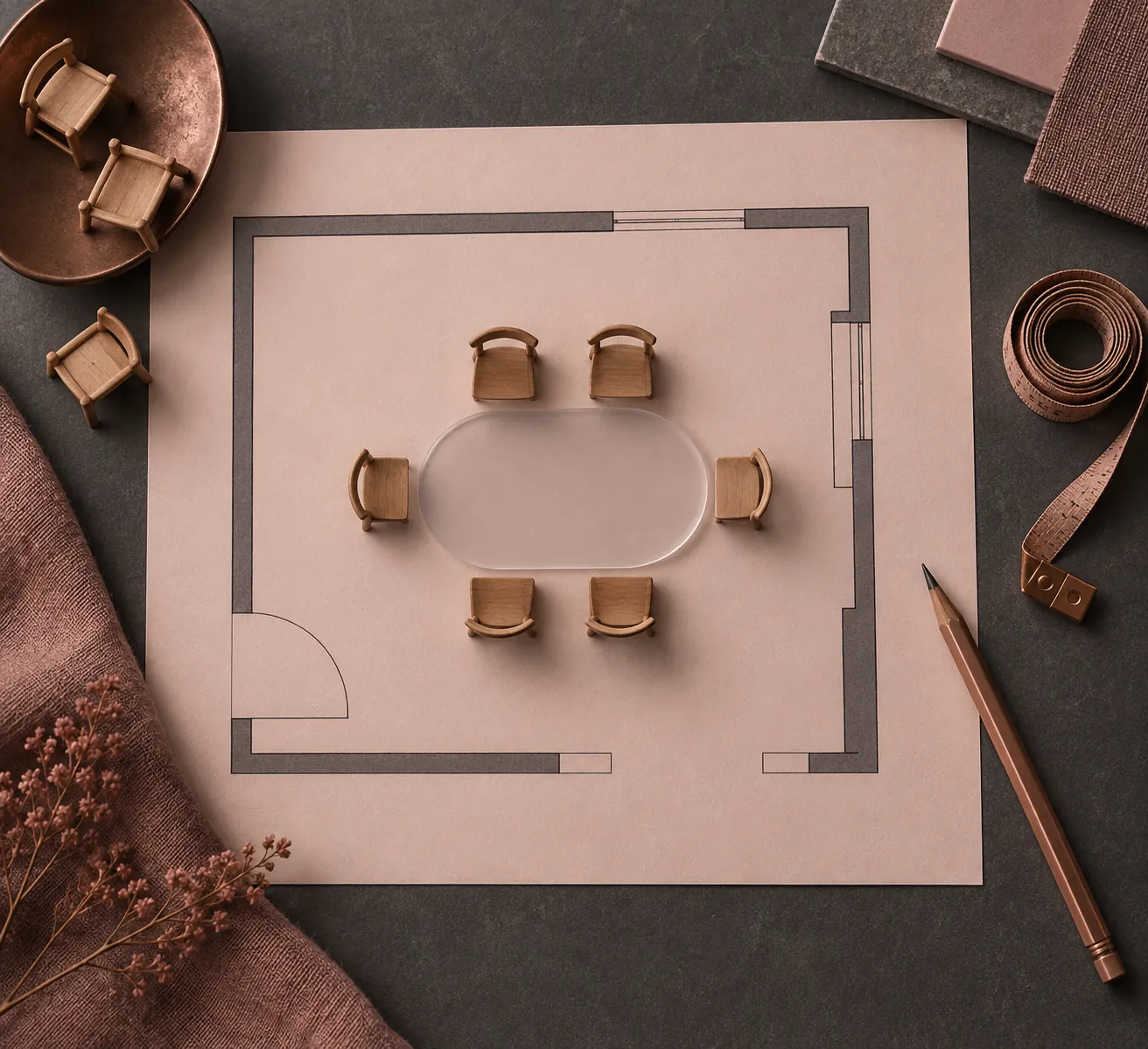
In an open-plan Dubai apartment, transparency may be part of the design brief. Treat that as an aesthetic preference, not extra floor space. The chairs still pull out, the pedestal still occupies room beneath the top and the route to the balcony still needs checking.
For a villa dining room used for frequent entertaining, we would prioritise comfortable place settings and a manageable clearing-up routine over the largest top the room can accommodate. Start with FCI UAE's dining-table collection, then request specifications for the actual model and finish you shortlist.
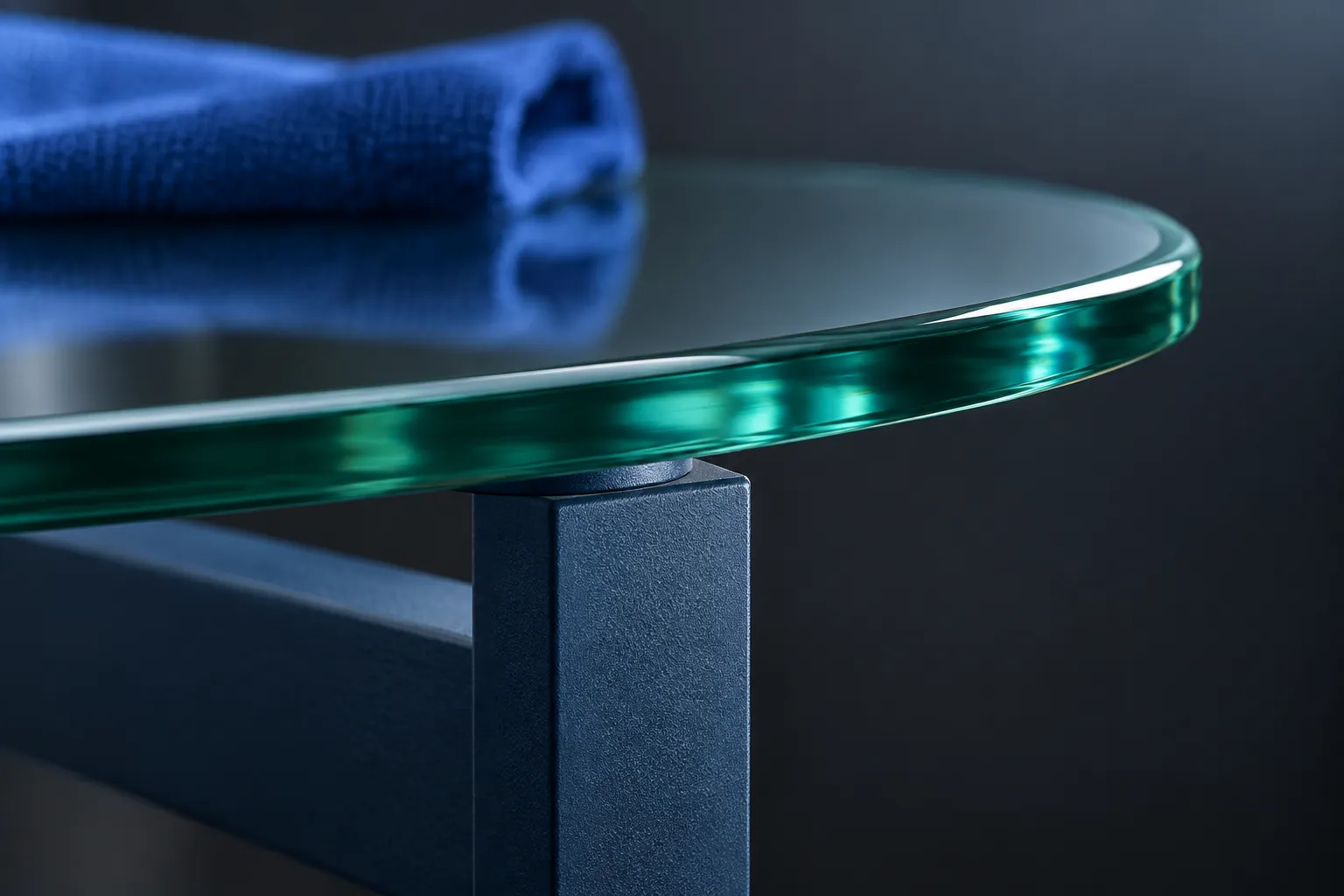
A transparent table has many virtues. Making furniture disappear from a floor plan is not one of them.
Does tempered glass mean scratch-proof or unbreakable?
No, tempering should not be read as a promise that a dining table cannot scratch or break. Calligaris's care guidance explains that its tempered glass breaks into many small fragments if broken, while still warning against impact and temperature extremes.
The same guidance describes glass as having good, but not exceptional, scratch resistance. It advises against dragging ceramic, porcelain, crystal and metal objects over the surface. That is a useful distinction between a material characteristic and permission to use the table carelessly.
Ask the seller to identify the glass treatment and finish in writing. Clear, tinted, textured and coated descriptions are not, by themselves, a complete technical specification. We would also ask which cleaning guidance applies to the top, underside, edges and base.
Do not infer a product's safety certification, permitted load or suitability for your household from its appearance. Request the manufacturer's relevant documentation for the exact model instead.
What should you inspect around the edges?
Inspect the entire accessible perimeter and ask the supplier to resolve any chip or damage before you accept the table as ready to use. Calligaris explicitly advises replacement if its glass top is chipped or broken.
Our suggested delivery check is straightforward: compare the finish with the order, look at the edges under good light, check the top's installed position and ask the assembly team to explain any supports or fixings. Record an issue with photographs and the delivery paperwork rather than trying a household repair.
A rounded outline and an undamaged edge are separate questions. Choosing a softer shape does not establish that a particular table is safe for every use or every household.
If there is visible damage, stop using the table and ask the supplier for the manufacturer's next steps. Do not attempt to polish out a chip or modify the glass yourself.
Will the base leave enough space for your chairs?
The useful test is whether your chosen chairs and seated users fit around the actual base, not whether a listing calls the table a six-seater. Our advice is to test every intended seating position with the chair model you plan to use.
Check the following together:
- The chair's width and how far it pulls back for someone to sit down.
- The height of chair arms relative to the tabletop and any frame underneath.
- The pedestal or leg position beside each person's feet.
- The passage behind occupied chairs, including doors and access to adjoining rooms.
These are planning checks, not universal clearance standards. A broad central pedestal and a four-leg arrangement need different drawings. If you are still deciding on the outline, our round dining-table guide considers shape and layout in more detail.
For a Dubai apartment, our preference is to mark the whole arrangement on the floor before approving the order. Include the chairs in use, not merely tucked in for the photograph.
How should you clean and protect the surface?
Follow the care instructions supplied for the specific table and finish. For its glass surfaces, Calligaris recommends glass-cleaning liquid or neutral soap and a clean, dust-free cloth, while warning against abrasive substances.

The same manufacturer recommends protecting the top during use and avoiding very hot or very cold objects directly on the glass. Its instructions should not be treated as permission to use the same cleaner on an unrelated lacquered base, decorative coating or different manufacturer's product.
Our practical buying question is whether you are comfortable with the prescribed care routine. If you want to place serving dishes directly on the surface, ask the supplier what protection is required before choosing the finish.
A showroom reflection is lovely. A care sheet is rather more useful after dinner.
What belongs in the delivery and order brief?
Include the exact table specification and the route from the delivery vehicle to its final position. For a Dubai tower, ask building management about the service lift, booking arrangements and permitted delivery route; requirements should be confirmed for your building, not assumed from another development.
Our suggested order record includes the model code, dimensions, glass description, base finish, packed dimensions, assembly arrangements and procedure for reporting damage. Ask who handles a replacement top and whether availability would need to be checked at the time.
Calligaris's delivery guidance recommends checking the assembled product with the operators, asking for a mechanism demonstration where relevant, and keeping the instructions and documentation. Those are useful questions to put to your chosen supplier, not a promise about a particular UAE delivery service.
Limitations
This is a buying framework, not a glass safety assessment or a certification of any table. Manufacturer guidance cited here concerns Calligaris products and must not be assumed to apply unchanged to every glass construction, coating or brand.
We have not tested the pictured furniture, confirmed stock or quoted delivery times. Generated images are editorial illustrations, not FCI projects, actual shipments or product-specification evidence.

What should you send FCI UAE first?
Send a room plan, chair dimensions, photographs of the intended position and delivery-access details when you contact FCI UAE. Add your preferred glass finish and the care routine you are comfortable following.
Ask for a shortlist supported by model-specific dimensions, care instructions and assembly information. That creates a more useful conversation than choosing a table by its reflection alone.
Sources
- Frequently Asked Questions, Calligaris. Glass care, tempered-glass precautions, delivery inspection and documentation.
- Dining Tables, FCI UAE. Current commercial category.
- Round Dining Table Dubai: Better Flow?, FCI UAE. Related layout reading, not independent materials evidence.
- Contact FCI AE, FCI UAE. Project enquiry route.