

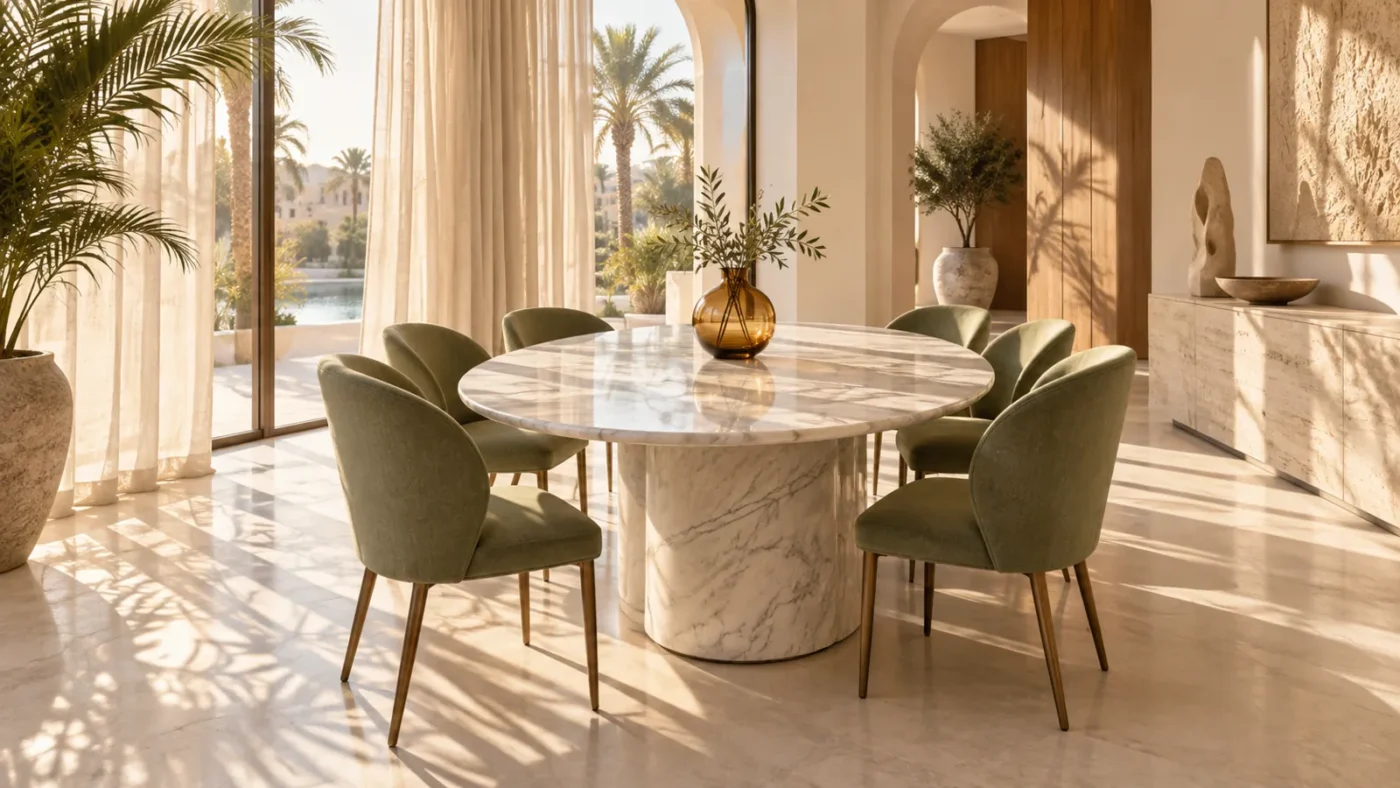
TL;DR: A marble dining table can suit a Dubai home, but choose it for its natural character only after checking the exact surface, care requirements and delivery plan.
Key takeaways
- Confirm whether the top is natural marble, another stone or a manufactured marble-effect surface before comparing quotations.
- Acidic products can etch calcareous stone; sealing improves stain resistance but does not make it stain-proof, according to the Natural Stone Institute.
- Judge the actual finish and edge sample, not just the colour in a showroom photograph.
- Approve the tabletop, base, seating layout and building access as one purchase, rather than four separate decisions.
Is a marble dining table practical for everyday use?
A marble dining table is practical when the household accepts its care requirements and the possibility of changes to the finish. It is less convincing when the brief demands a permanently pristine surface with minimal attention.
For a Dubai buyer, the useful question is not whether marble looks luxurious. That part rarely needs a committee. Ask whether this particular table suits breakfast, homework, frequent entertaining and the way the room is cleaned.
Our buying recommendation is to choose the maintenance routine before the veining. If using coasters, attending to spills and following material-specific instructions feels unreasonable, compare other specified surfaces rather than buying marble and hoping it behaves differently.
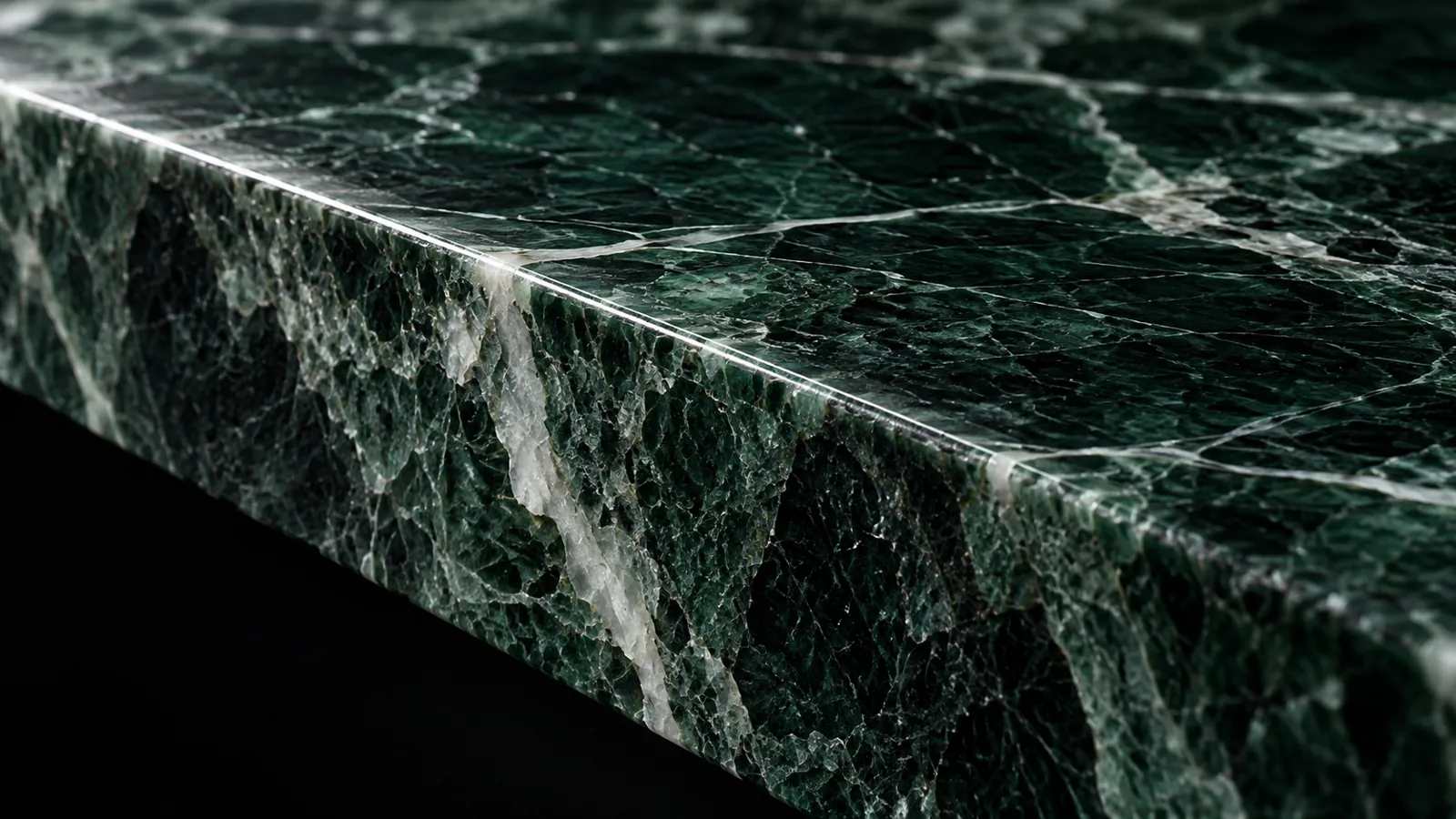
Start with FCI UAE's dining-table collection, then request the exact material and finish details for the shortlisted model. A category photograph is a starting point, not a complete specification.
What does “marble” actually mean on the quotation?
The quotation should identify the material, finish and construction of the top, rather than relying on the word marble alone. Ask for those details in writing before agreeing the order.
Use this short disclosure checklist:
- Surface: the named natural stone or manufactured material, including any coating.
- Construction: whether the top is a stone slab, a layered assembly or another construction.
- Edge: the actual profile and thickness, including any built-up edge.
- Finish: the approved appearance and the supplier's care instructions.
- Support: the specified base, fixing method and assembled weight.
The Natural Stone Institute's care guidance starts with identifying the stone's composition because that affects suitable cleaning. Apply the same discipline to purchasing: a marble-effect photograph does not identify the material beneath it.
Do not assume two similarly patterned tops have the same care requirements. Ask each supplier to explain the exact product, not to give a speech about marble in general.
What is the difference between etching and staining?
Etching changes the stone's surface finish, while staining discolours it; a substance can cause either or both. The distinction matters because cleaning and refinishing are different jobs.
The Natural Stone Institute explains that acids can cause etch marks and that some materials etch without leaving a stain. It also notes that lemon, vinegar and other acids may dull or etch calcareous stone.
A dull patch is therefore not necessarily something that needs a stronger cleaner. The Institute recommends consulting a stone dealer or professional restorer about etched areas. Stronger enthusiasm is not a substitute for the right treatment.
Before buying, ask the supplier what changes are expected with use, what counts as a defect and who handles surface restoration. Keep the care and warranty documents with the approved sample record.
Does sealing make a marble table worry-free?
No: sealing can improve stain resistance, but it does not make stone stain-proof. The Natural Stone Institute describes impregnating sealers as repellents and recommends checking the appropriate product and frequency with the supplier.
That is not a reason to reject marble. It is a reason to reject vague assurances that the table has been “treated”, followed by no explanation of what that treatment does.
Ask whether the proposed top needs sealing, whether it has already been treated, which cleaning products are compatible and what maintenance is expected. Do not adopt a universal resealing timetable from a different stone or finish.
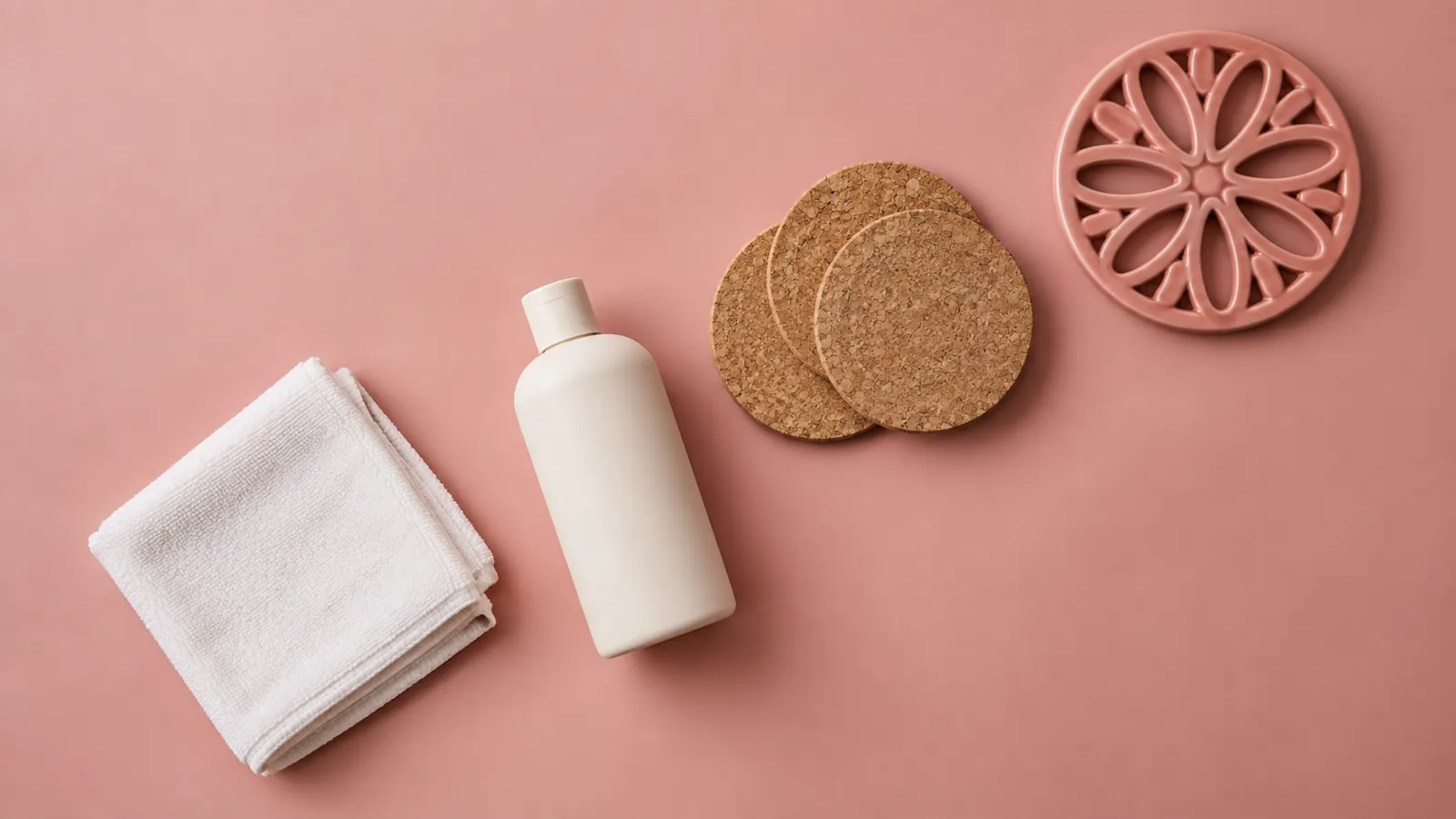
For routine use, the Institute recommends coasters, trivets, blotting spills and suitable mild cleaning. Agree a simple care sheet with everyone who cleans the room. In a household with several people involved, one shared instruction is more useful than several confident guesses.
How should you assess a table in the showroom?
Assess the finish, edge, base and seating together, using the actual specification you intend to order. A dramatic top can distract from an awkward base surprisingly efficiently.

Look across the surface under both direct and oblique light. Ask to see a finished sample that includes an edge, and confirm how the final top's appearance is approved. A sample establishes the agreed finish; ask separately how the supplier handles variation in the supplied material.
Sit in the proposed chairs and check where your knees meet the base. Pull a chair out as you would at home. If shape is still undecided, use our round dining-table guide to compare the room layout before committing to a statement piece.
Our recommendation for frequent hosts is to prioritise comfortable everyday places, not the maximum number of chairs that can be arranged for a photograph. Neither the dinner nor the table improves when everyone is negotiating around a pedestal.
What needs checking in a Dubai apartment or villa?
The delivery plan should match the packaged components, route and installation method, not just the finished table's dimensions. Request the packed sizes, component weights and assembly requirements before access is approved.
For an apartment, ask building management about the service lift, loading area, delivery booking and protection requirements. For a villa, check entrance turns, changes in level and the route to the dining room. These are property-specific checks, not rules that can be inferred from a Dubai address.
Our Dubai apartment delivery checklist provides a separate access brief. Keep material approval and access approval connected: changing the table after one has been signed off may require the other to be checked again.
For a focused shortlist, contact FCI UAE with your room plan, preferred seating arrangement, surface-care expectations and access details. Ask for an itemised specification and a material sample before making the final choice.

Limitations
This is a purchasing framework, not a test of any individual table. Stone composition, coatings, workmanship, warranty terms and building access vary. The cited care guidance addresses natural stone; it does not establish the performance of a ceramic, composite or marble-effect product.
Images are generated editorial illustrations, not photographs of specified FCI products or completed client projects. Confirm the actual finish and construction with the supplier.