

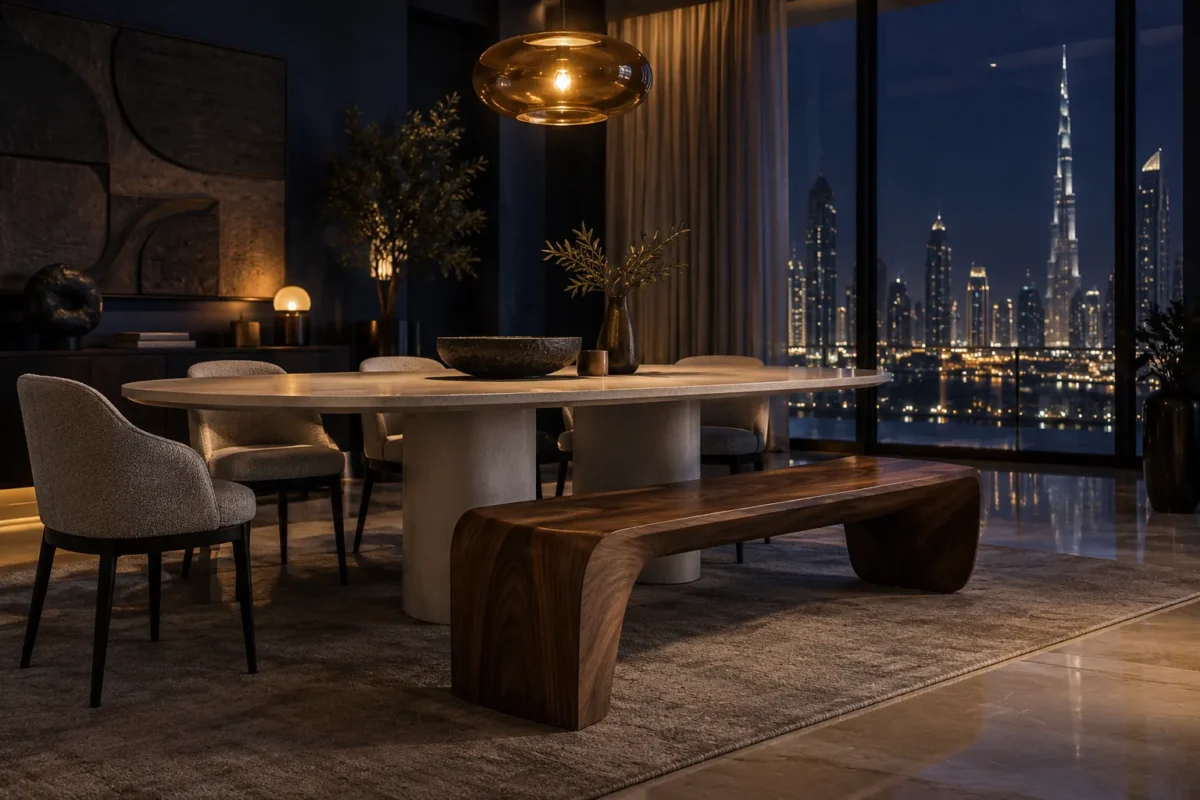
TL;DR: Choose a dining bench by checking its seat height, usable seating length, table-leg clearance and access at every occupied place, not just whether it fits beside the table.
Key takeaways
- Overall bench length is not the same as usable seating length.
- A bench that fits between table legs may still need more room to pull out and sit down.
- Backrests, arms and thick upholstery change how a bench works with a table.
- Compare the bench and table as a complete arrangement before approving either.
Will a dining bench fit your table?
A dining bench fits properly only when its dimensions work with the table's underside, base and intended seating positions.
Start with the table you actually own or plan to order. Record its height, the clear space beneath the top, the position of its legs and any apron below the edge. Then request the bench's overall dimensions and seat height, rather than relying on a room photograph.
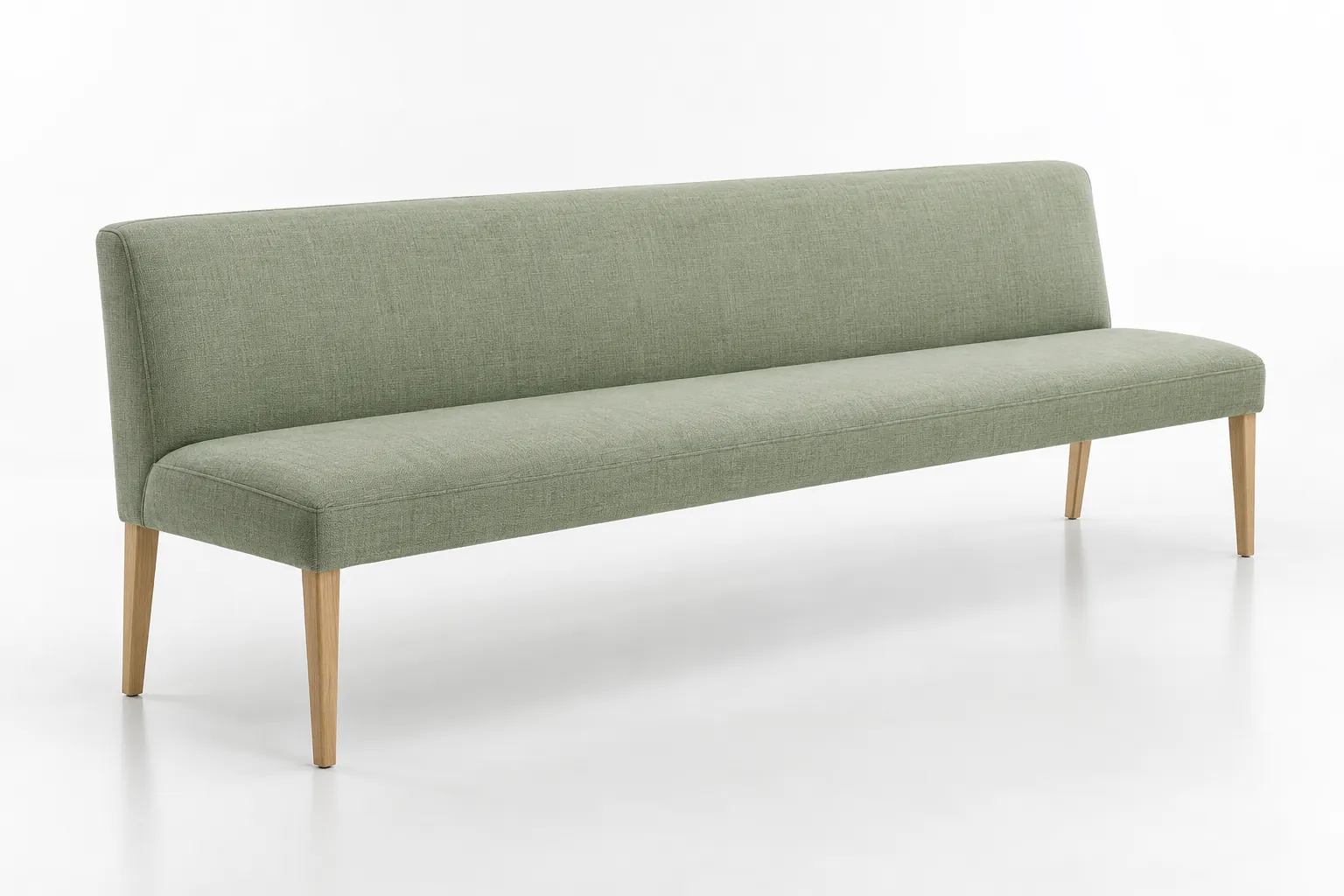
If you want to tuck the bench away, check the clear opening between the table legs and the bench's full depth. A backrest may prevent full storage under the top. A bench can be visually compact while being thoroughly unwilling to disappear.
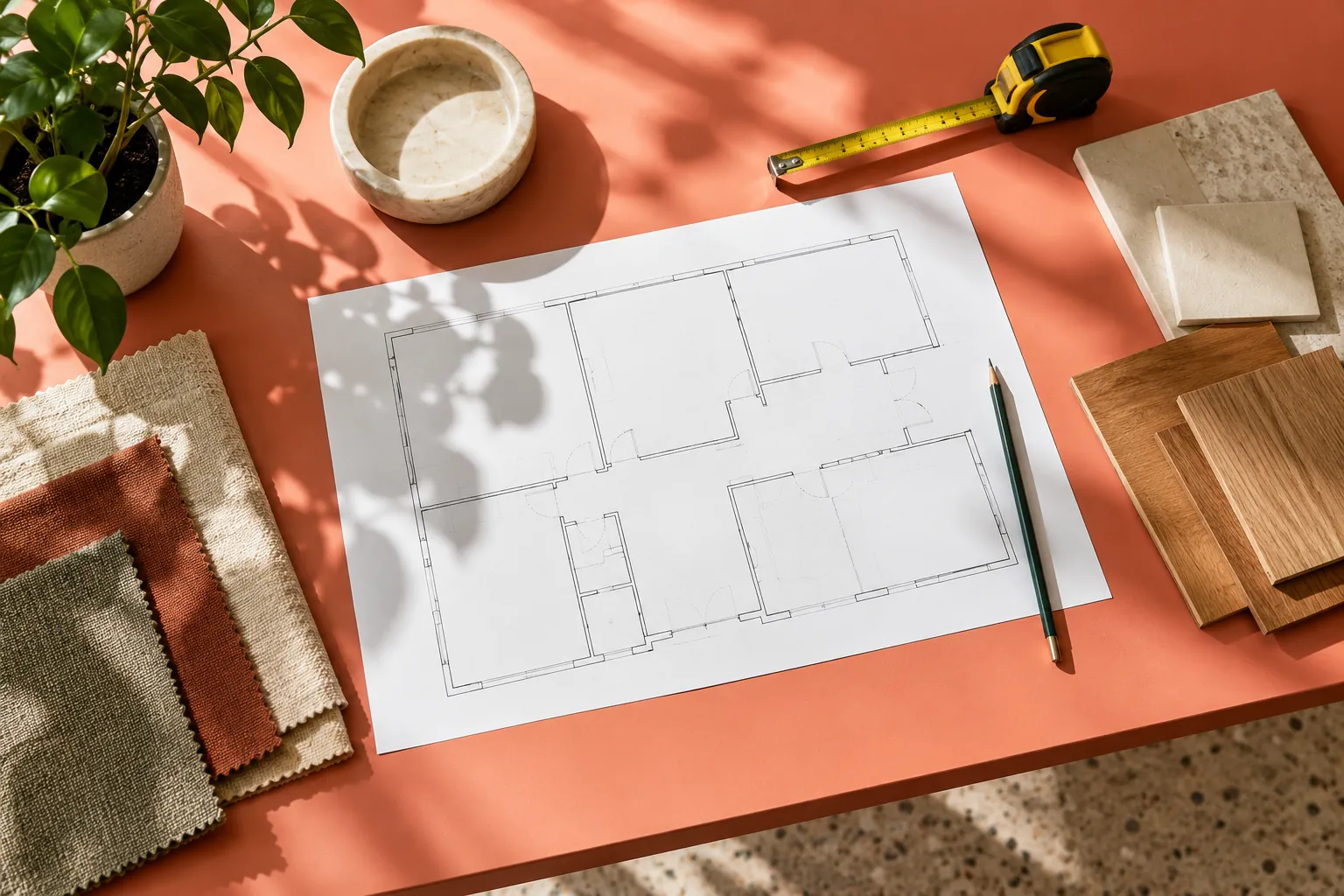
For a Dubai apartment with an open dining area, our recommendation is to draw both the stored and occupied layouts on the same plan. For a villa dining room, do not let the larger footprint replace this check. The question is how the arrangement works when people use it, not how generous the room looks when empty.
How many people can sit comfortably?
Judge capacity from usable seat length and a practical seating trial, not from the overall length alone.
Ask where the seat begins and ends, whether arms or raised edges reduce that span, and where table legs meet occupants' knees. A sculptural central base needs the same attention as corner legs. Its position may matter more than the number of legs.
Try the intended combination with the people who will use it where possible. Check whether each person can reach the table, sit naturally and leave without requiring everyone else to stand. Do not assume a bench sold as a particular number of seats offers identical comfort to that number of separate chairs.
Our judgement: choose the daily arrangement first, then assess occasional extra seating separately. A dining room should not operate at its theoretical maximum capacity every Tuesday.
Should you choose a backrest or backless bench?
Choose a backrest or backless design according to how you sit, how you enter the seat and whether the bench needs to tuck away.
A backless form leaves a different visual outline from an upholstered bench with a back. Neither shape establishes comfort by itself. Seat depth, upholstery, posture and the relationship to the tabletop still need a trial.
Collection styling is useful, but it is not a dimensional specification. Calligaris's 2026 collection page presents an Oleandro bench as an extension of the wider furniture family. That illustrates a design relationship, not a guarantee that any coordinated bench will fit your existing table.
Use FCI UAE's benches collection to shortlist forms, then ask which specific models are appropriate for dining use. Confirm availability, finish options and dimensions for the selected item rather than transferring details from another model.
What should you check around the bench?
Check the space needed to approach, pull out, occupy and leave the bench, including the route behind it.
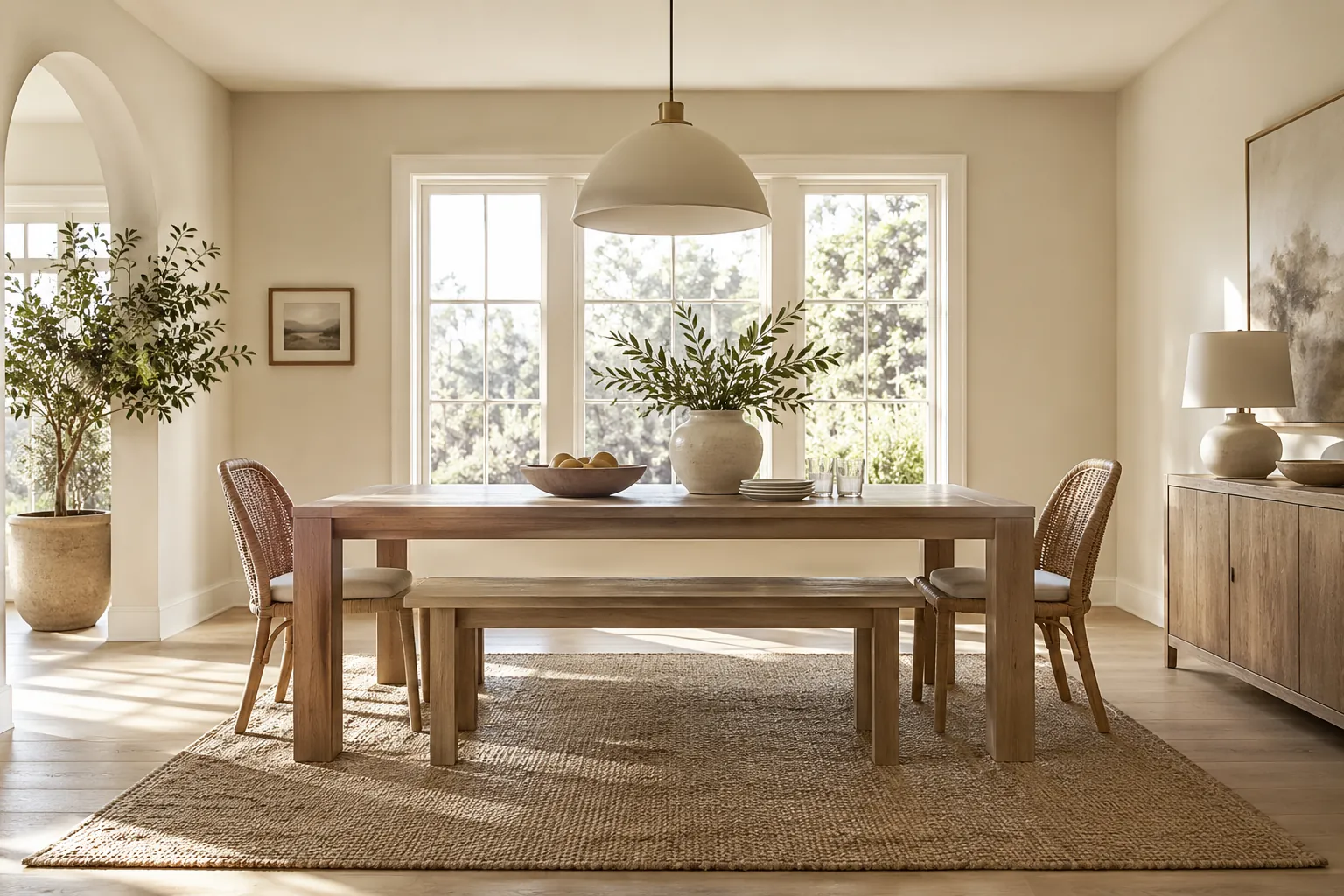
Mark the furniture footprint on the floor. Walk the route to the kitchen, balcony or living area with the bench in its occupied position. If a bench sits against a wall, rehearse entry at both ends. If it shares a rug with the table, consider the pulled-out position when reviewing the layout.
Avoid choosing a layout solely because the bench can slide under the table. Stored furniture and occupied furniture are different planning problems. In a Dubai home where the dining area also forms part of a route through the room, give that route equal billing with the furniture.
What should your buying brief contain?
Your brief should pair the room plan with the table specification and the way you expect to use the seats.
Include room photographs, table dimensions, base position, normal seating count, preferred bench style and access constraints. Request the exact covering, care instructions, assembly requirements and a written quotation for the chosen configuration. Ask how the item will reach the room, including lift and doorway checks where relevant.
Contact FCI UAE with that brief before finalising the order. Ask for a bench-and-table comparison, not simply a shortlist of attractive benches.
Limitations
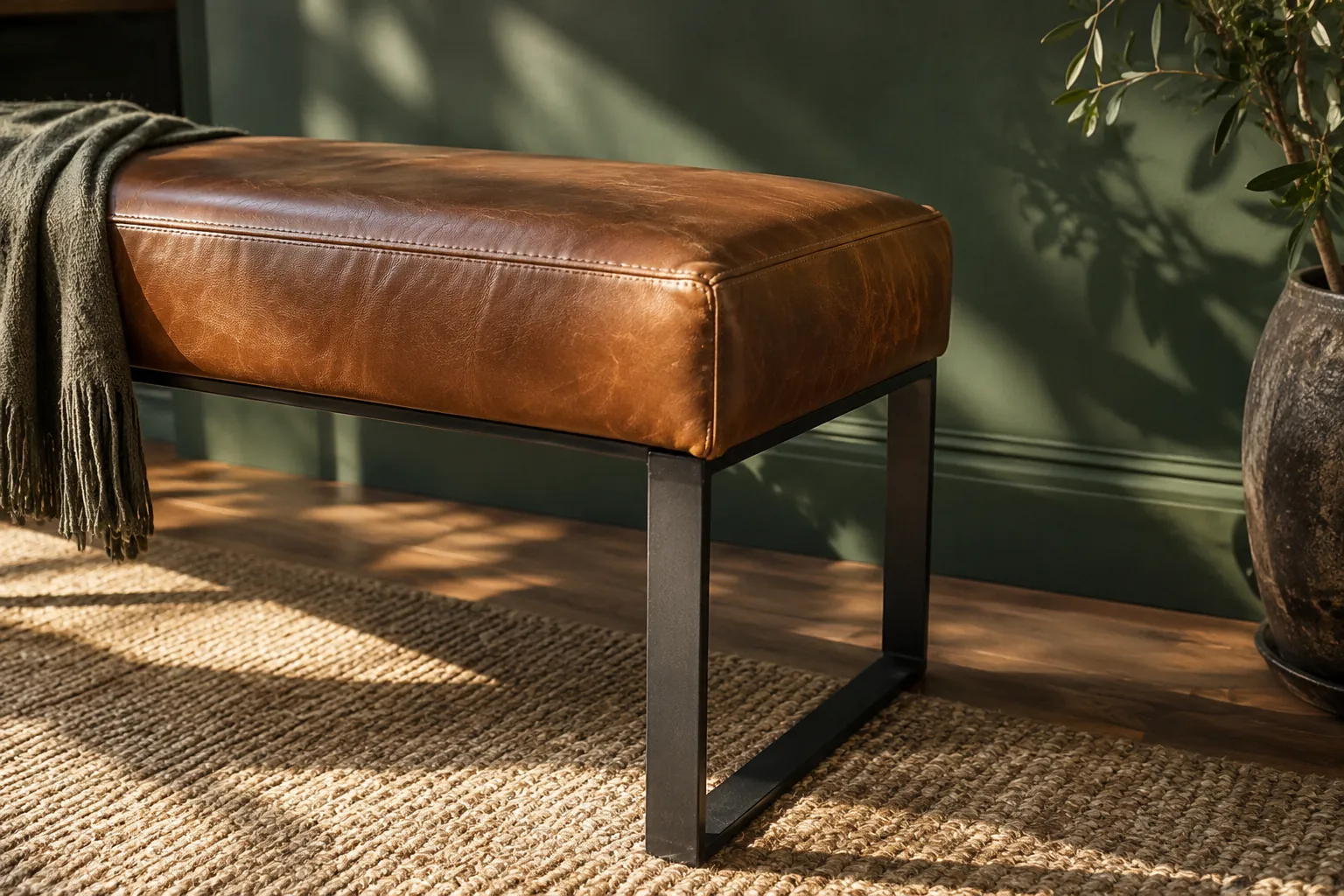
This is a planning guide, not a universal clearance standard or a product recommendation. Comfort, capacity, suitability and installation depend on the actual bench, table, room and users. The illustrated scenes are design concepts, not catalogue specifications or confirmation of local stock.