


Written by: Emma Cyrus, Senior Copy, Content & Editorial Writer
Reviewed by: Benjamin Ibanez, General Manager & Interior Designer at FCI
Edited by: Zoona Sikander, Interior Design Writer & Social Media Content Creator
The discerning Dubai homeowner’s guide to contemporary elegance and timeless sophistication
Summary
In 2025, Dubai’s luxury living room interior design embraces authenticity, with a focus on craftsmanship, rich colours, and seamless tech integration. Spaces are designed for flexibility, blending functionality and style with tactile materials and curated eclecticism, creating environments that reflect personal expression and timeless design.
Table of Contents
After two decades of guiding discerning clients through the ever-evolving landscape of luxury interiors across the Dubai market, one develops a rather well-calibrated radar for distinguishing between fleeting fashions and genuine evolutions in living room interior design. As we move through 2025, the living room, that quintessential canvas for personal expression, continues to reflect deeper cultural shifts rather than merely seasonal whims.
The Return to Considered Craftsmanship
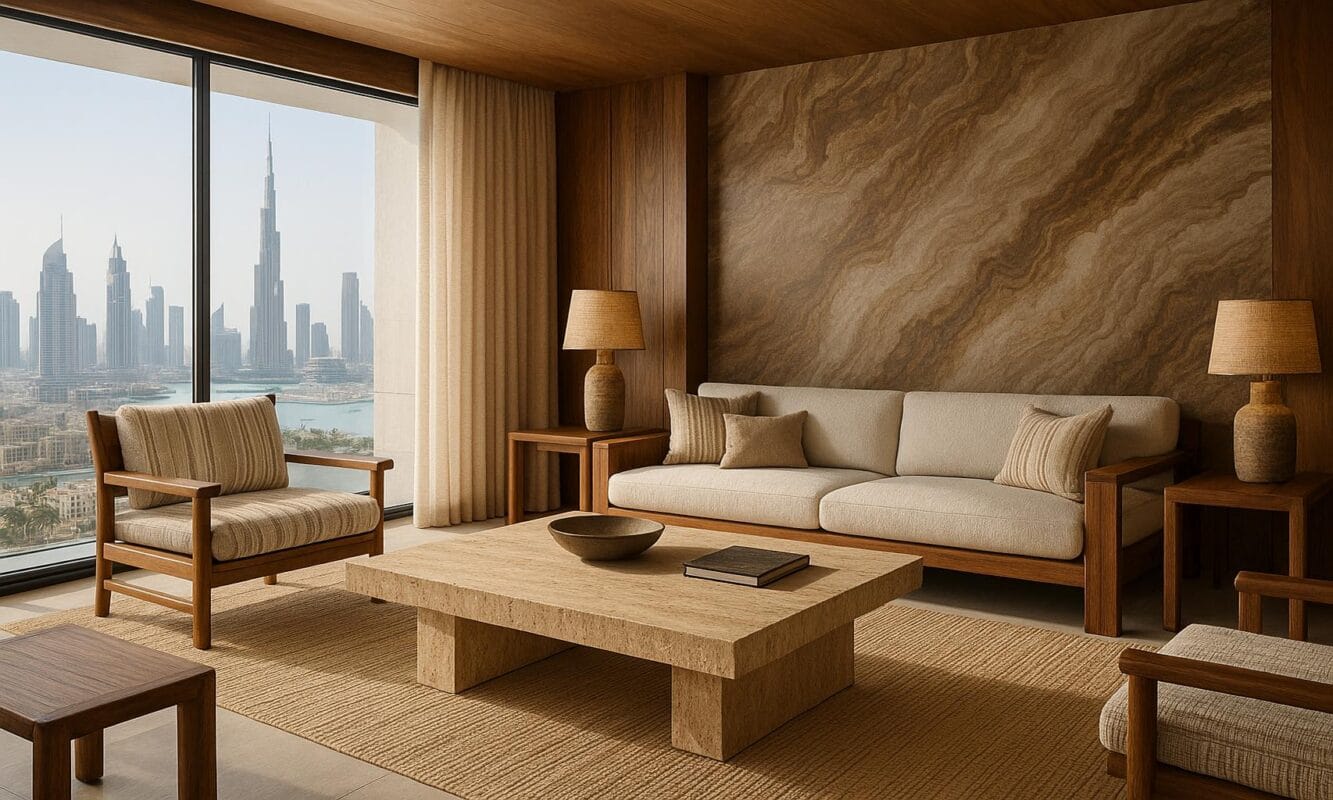
The pendulum has swung decisively away from mass production, with the truly discerning now prioritising provenance over convenience. This year’s most compelling room interior design embraces what I call “considered craftsmanship”, pieces created with intention, expertise, and genuine materials.
Those who frequent the design districts will have noticed the quiet disappearance of formulaic furniture in favour of pieces with narrative and substance. B&B Italia’s latest collections exemplify this shift, showcasing joinery techniques that would have been familiar to 18th-century cabinet makers, albeit realised through contemporary methods.
The modern interior design language for living rooms now speaks in the dialect of authenticity, hand-finished woods, natural stone with visible geological character, and textiles woven on traditional looms. These elements create spaces that feel simultaneously current and enduring, the antithesis of disposable design.
Key Takeaways:
- Prioritise “considered craftsmanship” for a timeless and authentic living room.
- Choose materials and techniques that blend traditional expertise with contemporary design.
Chromatic Sophistication Beyond Neutrals
The tyranny of greige has, mercifully, come to an end. The living room interior design ideas that truly resonate in 2025 embrace what can only be described as chromatic sophistication; colours with complexity, depth, and historical resonance.
The Power of Deep, Layered Colours
We’re seeing deep aubergines with undertones of grey, moss greens that shift subtly with the light, and ochres that bring warmth without garishness. These hues create layered, nuanced environments that respond beautifully to both natural and artificial light throughout the day.
For those with art collections, these richer backdrops provide a more dynamic dialogue between architecture and artwork, a consideration often overlooked in simpler living room design schemes. The result is spaces that reveal themselves gradually rather than surrendering all their visual interest at first glance.
Key Takeaways:
- Embrace colours with depth and complexity to create dynamic, nuanced living spaces.
- Rich hues enhance art collections and create a lasting visual impact.
Purposeful Integration of Technology
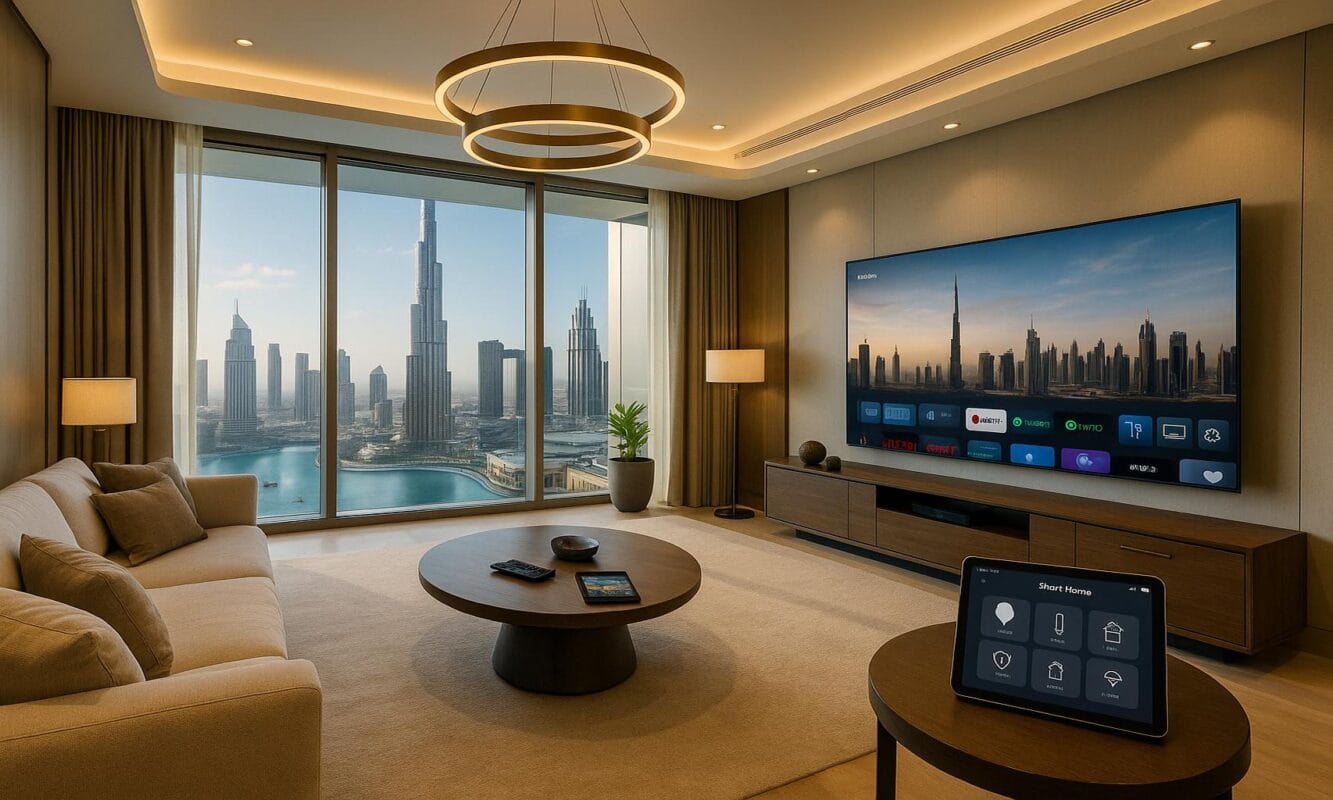
Technology in the luxury living room has matured beyond mere novelty to become virtually invisible yet thoroughly indispensable. The focus has shifted from ostentatious displays of gadgetry to seamless integration that enhances rather than dominates the living experience.
Advanced Home Automation
The most sophisticated homes in Dubai now feature lighting systems that track and complement the natural light cycle, audio solutions that adapt to the room’s current acoustic conditions, and climate controls that maintain perfect comfort without perceptible operation, particularly valuable given the local climate.
Tech-Savvy Living in Smaller Spaces
For interior design for small living room spaces, this technological discretion is particularly valuable. Advanced home automation now allows even modest-sized apartments to transform between multiple functional modes without visual compromise, a significant evolution from previous solutions that often felt like concessions to spatial limitations.
Key Takeaways:
- Seamlessly integrate technology into the living room to enhance comfort without sacrificing style.
- Prioritise subtle, functional tech solutions that blend with the aesthetic of the space.
Spatial Fluidity and Functional Zoning
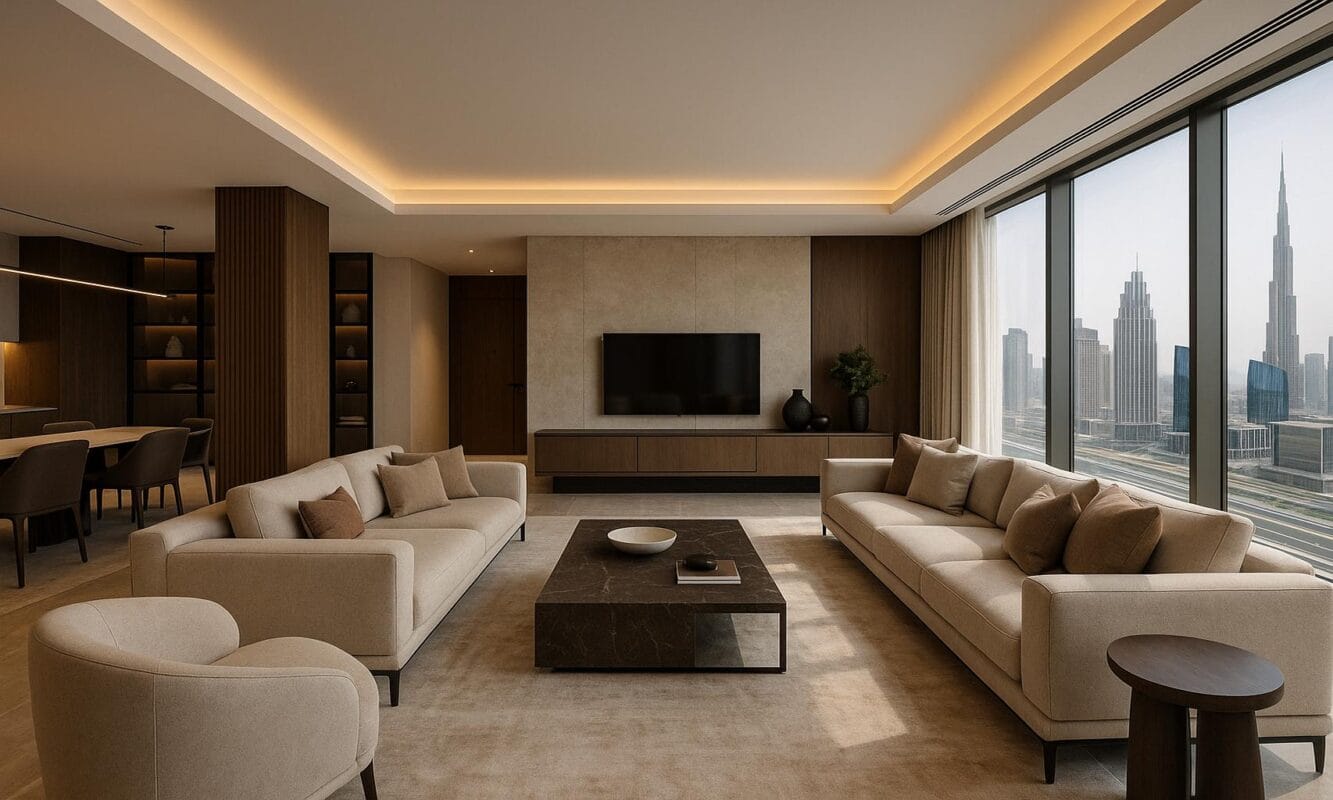
The concept of the living room has expanded beyond a single, dedicated space to become more fluid and adaptable. Today’s most compelling home interior design approaches recognise that living rooms must seamlessly transition between roles, from formal entertaining areas to intimate family retreats, and occasionally to productive workspaces.
Soft Architecture
This has led to what I term “soft architecture”, the use of materiality, lighting, and carefully considered furniture arrangements to create distinct zones without rigid boundaries. A particularly effective technique involves using different textile densities and subtle floor treatments to delineate functional areas while maintaining visual cohesion.
Dubai Projects
In a recent Dubai project, we employed this approach to create five distinct living zones that flow into one another without a single internal door, an approach that honours both local design sensibilities and international aesthetics. The result feels simultaneously spacious and intimate, a balance that previously would have required significant architectural intervention. The Dubai market’s fusion of cultural influences makes it particularly receptive to this nuanced approach to spatial design.
Key Takeaway: Embrace “soft architecture” to create flexible, multifunctional living spaces that seamlessly blend different zones, enhancing both spaciousness and intimacy without the need for rigid boundaries.
Material Authenticity and Tactile Luxury
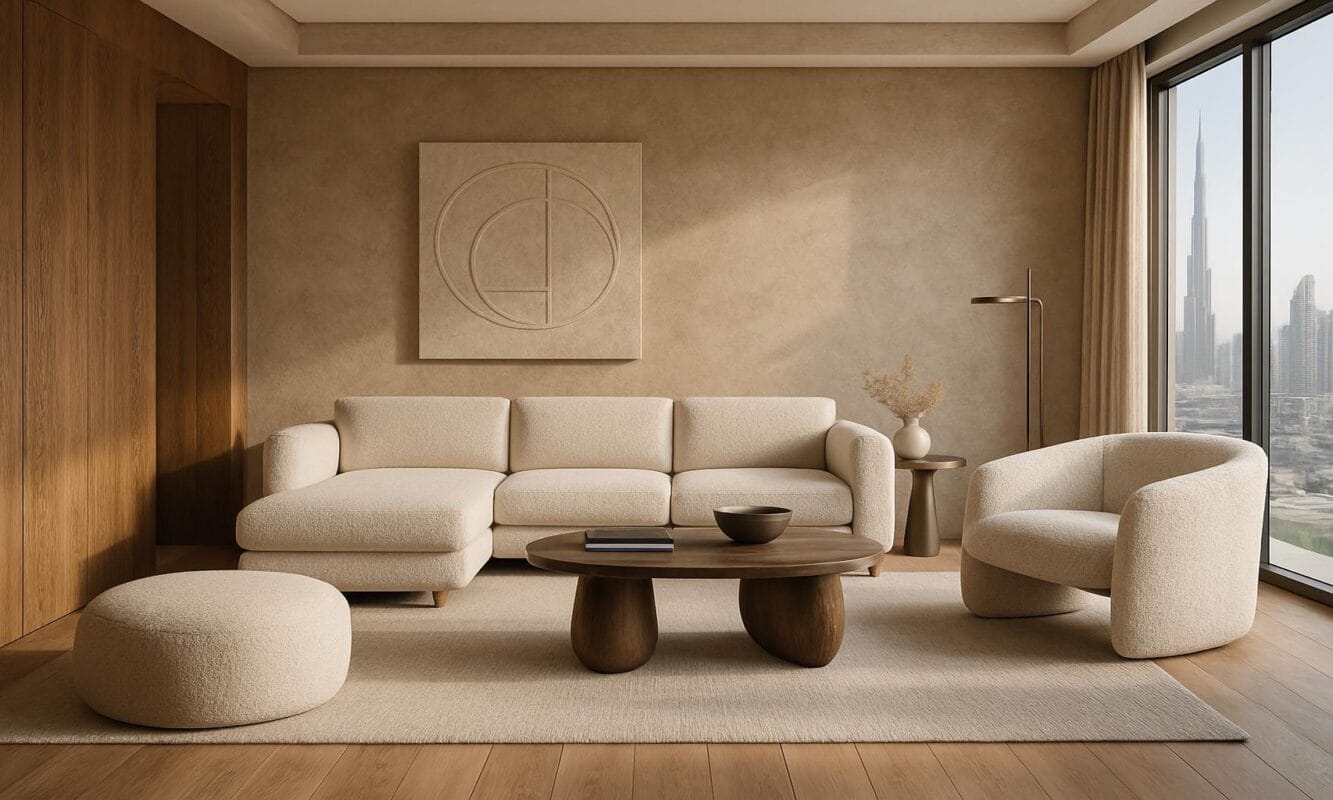
Perhaps in response to our increasingly digital existence, the most resonant living room modern interior design now places unprecedented emphasis on tactile qualities and material honesty.
This trend finds particular expression in Dubai’s luxury residences, where the contrast between contemporary architecture and richly textured interiors creates a compelling narrative. Surfaces invite touch rather than merely catching the eye, creating environments that engage all senses.
Bouclé fabrics, textured plasters, brushed metals, and timbers treated to enhance rather than conceal their grain all feature prominently.
These materials create spaces with sensory richness that simply cannot be captured in photographs, a subtle but important point of differentiation for those who understand that genuine luxury transcends the merely photogenic.
This return to tactile authenticity also addresses a frequent criticism of simple living room interior design from previous decades, that spaces often looked impressive but felt curiously sterile or impersonal when experienced in person.
Key Takeaways:
- Prioritize tactile materials like bouclé fabrics, textured plasters, and natural timbers to create spaces that engage all the senses and offer a richer, more authentic living experience.
- Embrace material authenticity to avoid creating visually striking but impersonal spaces, ensuring that the design feels as warm and inviting as it looks.
The New Eclecticism: Curated Rather Than Collected
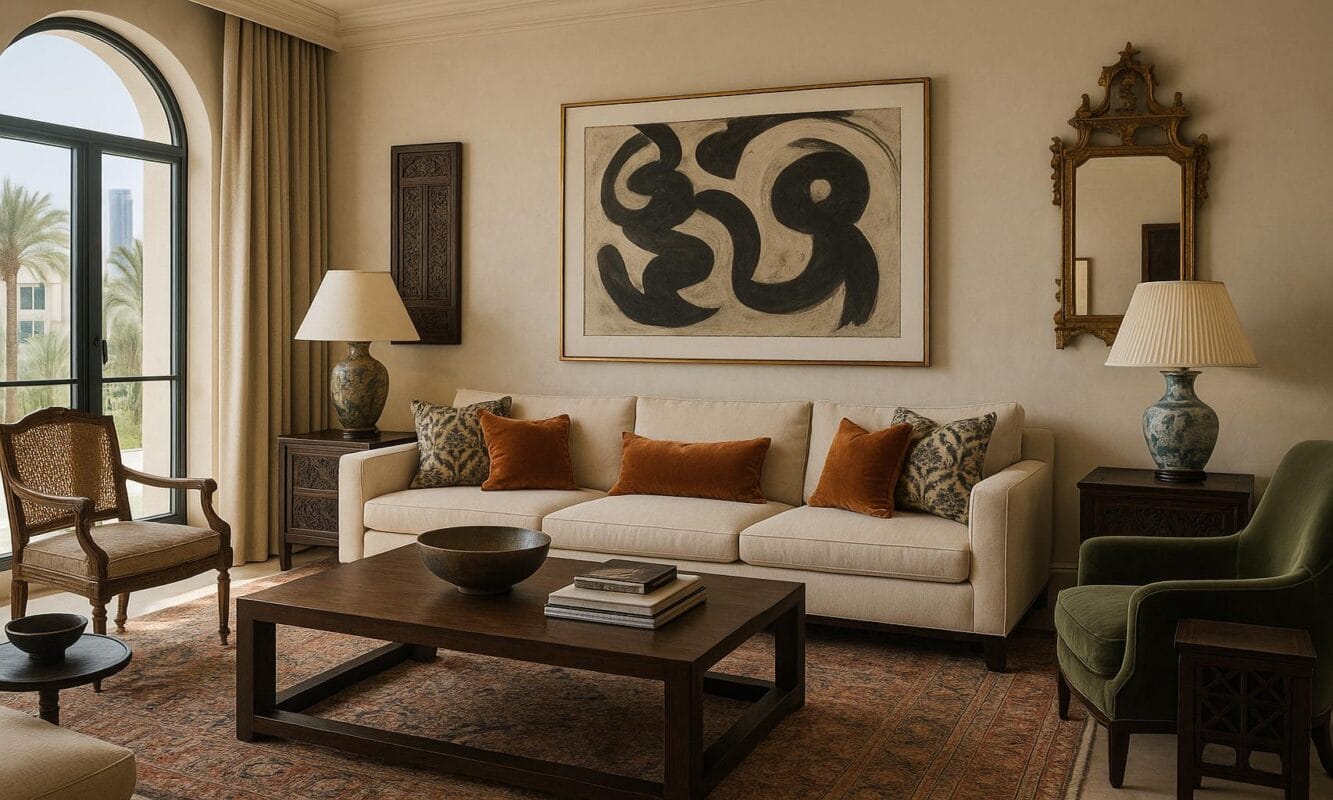
The rigidly matched suite of furniture has given way to more nuanced, personally curated collections that tell a story about their owners. Today’s most sophisticated living room home interior design reflects a cultured eclecticism, pieces from different periods and traditions brought together through thoughtful curation rather than arbitrary collection.
This isn’t about haphazard mixing of styles, but rather creating dialogues between pieces that might, at first glance, seem unlikely companions. A 19th-century English bureau might converse with a contemporary Italian sofa, united by proportional harmony rather than stylistic similarity.
This approach requires significant expertise and restraint, knowing precisely when to create juxtaposition and when to establish continuity. When executed with conviction, the result transcends conventional interior design ideas for living room spaces, creating environments With intellectual as well as aesthetic appeal.
Key Takeaways:
Curated over Collected: Sophisticated living rooms blend pieces from different periods, selected with care rather than accumulated randomly.
Harmony over Style: True eclecticism creates balance between contrasting items, unified by proportional harmony and a shared design philosophy.
To Conclude
While these observations reflect current directions in living room design, the most compelling spaces will always transcend mere trend-following. True luxury lies in creating environments that reflect their occupants’ authentic lives and values rather than conforming to external expectations.
For those embarking on living room transformations in 2025, I would suggest focusing less on replicating specific trends and more on developing spaces that respond to your actual patterns of living. Genuine sophistication comes not from adhering to design dictates but from creating environments that enhance your daily experience in subtle, meaningful ways.
After all, the truly exceptional living room isn’t one that announces itself as fashionable, but rather one that feels so perfectly aligned with its owners’ lives that they cannot imagine living any other way.
FAQs
What is “soft architecture” and why does it matter?
It’s zoning with light, rugs, textures and furniture rather than walls, letting spaces flex between hosting, lounging, and work while reading as one cohesive room.
Best lighting approach for a sophisticated living room?
Layer it: architectural (downlights/wall washers), ambient (pendants/floor), task (reading lamps), and scene controls that follow the day-night cycle.
What sofa style suits “considered craftsmanship”?
Architectural yet comfortable frames with tailored upholstery, quality suspension, and repairable/renewable covers from reputable makers.
How to style living room interior design with TV?
Incorporate the TV seamlessly into cabinetry or wall panels made from authentic materials like timber or stone. Use lighting and tactile finishes to ensure it blends in, reflecting purposeful technology integration.
How to style living room interior design with plants?
Use plants as sculptural accents with natural stone or metal planters. Choose low-maintenance varieties like ficus lyrata or olive trees to enhance your tactile, chromatic sophistication.
How to create living room interior without false ceiling?
Define spaces with lighting and materials instead of ceilings. Use concealed lighting and textured walls to create soft architecture, making the room feel cohesive and refined.
Get in touch
Want to get in touch? We'd love to hear from you. Email us at [email protected]
Sign Up for Newsletter