


TL;DR: Choose a console table for a Dubai home by checking its projection into the room, everyday storage and model-specific wall-fixing requirements before choosing the finish.
Key takeaways
- A console's depth matters as much as its width when it sits beside a doorway.
- Cattelan Italia specifies necessary wall anchorage for its Varenne console.
- A floor-standing base does not establish that a console can be used without wall fixing.
- A useful order brief includes the wall construction, skirting, nearby switches and full furniture dimensions.
What should you measure before buying a console table?
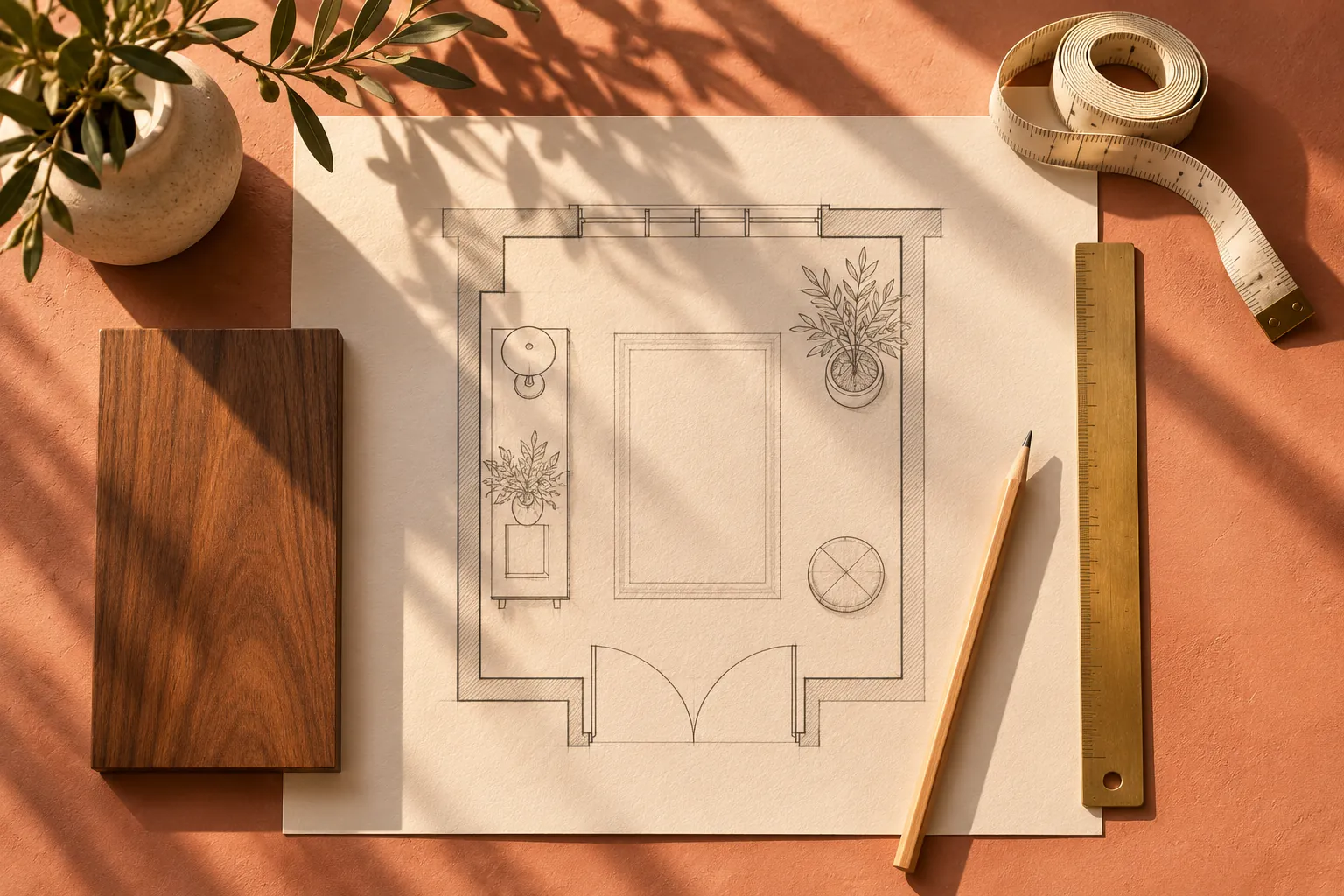
Measure the usable wall, the console's full projection and the route people need to take past it. Our recommendation is to test the proposed footprint on the floor before deciding how much furniture the entrance can accommodate.
Include the top's overhang, projecting handles and any curved or angled ends. A photograph taken square-on can make a deep piece look remarkably discreet. Your front door will not be judging it from that angle.

In a Dubai apartment, assess the route from the entrance towards the living space with the door open. In a villa foyer, check the approach from adjoining rooms rather than relying on the generous-looking centre of the space. These are layout checks for your particular property, not assumptions that all apartments or villas share a standard plan.
Mark where people pause to put down bags or find keys. Then check whether a person standing at the console blocks someone entering. The aim is a useful landing point, not a reception desk that nobody asked for.
Does a console table need wall fixing?
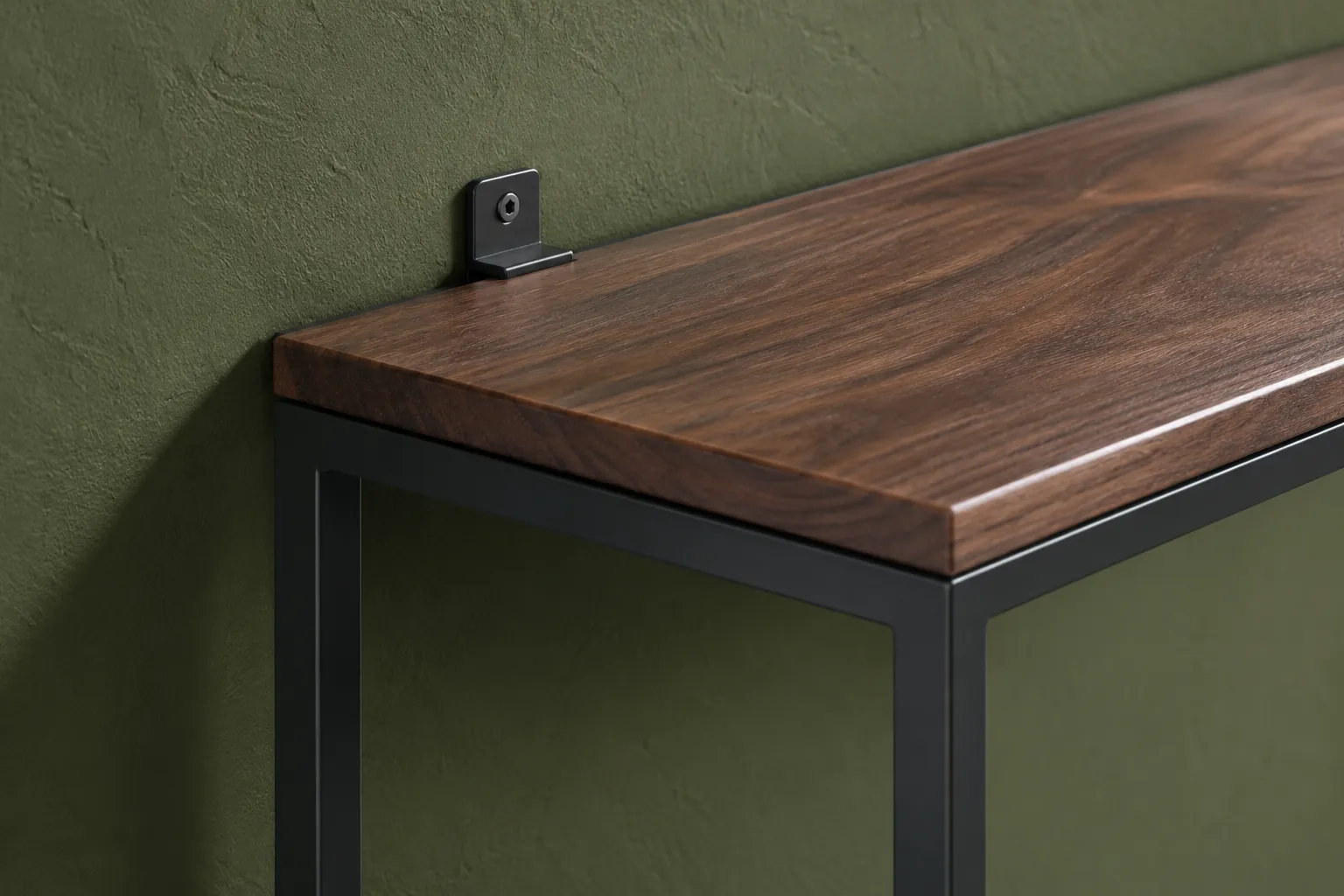
Some console tables require wall anchorage even when they have a substantial-looking base. The answer must come from the selected model's installation requirements, not its appearance.
Cattelan Italia's Varenne specification explicitly states that wall anchorage is necessary. That requirement belongs to that product; it is not a universal instruction for every console.
Before ordering, ask the supplier and installer to agree the fixing arrangement for the actual wall. Include wall material, any lining or cladding, skirting projection and relevant property permissions in that conversation. Do not choose fixings from an inspiration photograph or assume the delivery team can resolve an unknown wall on arrival.
Our judgement: if a model requires anchorage and the proposed location cannot accommodate its approved installation, change the location or the model. Do not turn a required fitting into an optional accessory.
Should you choose drawers or an open console?
Choose drawers when the console has a defined storage job, and an open design when the surface and silhouette are the main purpose. Start with the objects rather than the furniture category.
For keys, access cards and sunglasses, ask for usable internal drawer dimensions and check whether a liner is included. If you want to store a bag, establish its actual footprint and weight, then ask whether the chosen shelf or top is suitable. Do not infer a load allowance from stone, steel or a reassuringly heavy photograph.
Our suggested test is to bring the everyday items to the design discussion. Compare them with the internal space and opening movement, not just the console's external width. Drawers should also be assessed open, because the person using them occupies space too.
How should the console relate to the rest of the room?
Treat the console as part of a sightline and movement plan, not as an isolated strip of styling. Review it from the entrance and from the room beyond.
If it is visible from the dining area, coordinate proportions and material samples with that scheme. Our dining-chair fit guide explains the same broader principle: assess furniture in use, not only when everything is neatly parked.
For a lamp, agree cable access and socket position before finalising the layout. For artwork above the top, review the complete composition at the proposed height. These are design decisions to settle before installation, rather than extra holes to explain afterwards.
Limitations
This is a planning framework, not a structural assessment or installation specification. It does not establish current stock, UAE availability, lead times, permitted loads or fixing compatibility for a particular console. The selected manufacturer's instructions and a property-specific installation assessment take priority.
What should you send for a console-table consultation?
Send a dimensioned entrance sketch, wall photographs and a short list of what the console must hold. Add the proposed product and finish, door movement, socket positions and any known installation restrictions.

Ask FCI Dubai to review the console brief before placing an order. A useful response should address the exact configuration, available technical information and installation questions, not simply whether the finish looks good.