


TL;DR: When buying sideboard hardware in Dubai, keep the furniture reference, mechanism details and supplier's service route together, rather than assuming a visible hinge number identifies a replacement.
Key takeaways
- Record the sideboard model and order reference separately from its hardware markings.
- Ask who identifies, supplies and fits replacement hinges or drawer components in the UAE.
- Blum's US replacement instructions distinguish hinge component numbers from part numbers and request photographs for identification.
- Confirm the service arrangements for your particular order; a manufacturer's overseas support page is not a UAE warranty promise.
Why should sideboard hardware matter before purchase?
Sideboard hardware deserves attention before purchase because the buying decision should include how the doors and drawers will be supported after installation. Our recommendation is to ask about serviceability while you can still compare alternatives, not only when a door starts catching.
Start with the FCI UAE sideboard collection, then request the technical and aftercare information for the specific shortlisted model. A collection page is a starting point, not confirmation that every piece shares the same hinges, drawer runners or support arrangements.
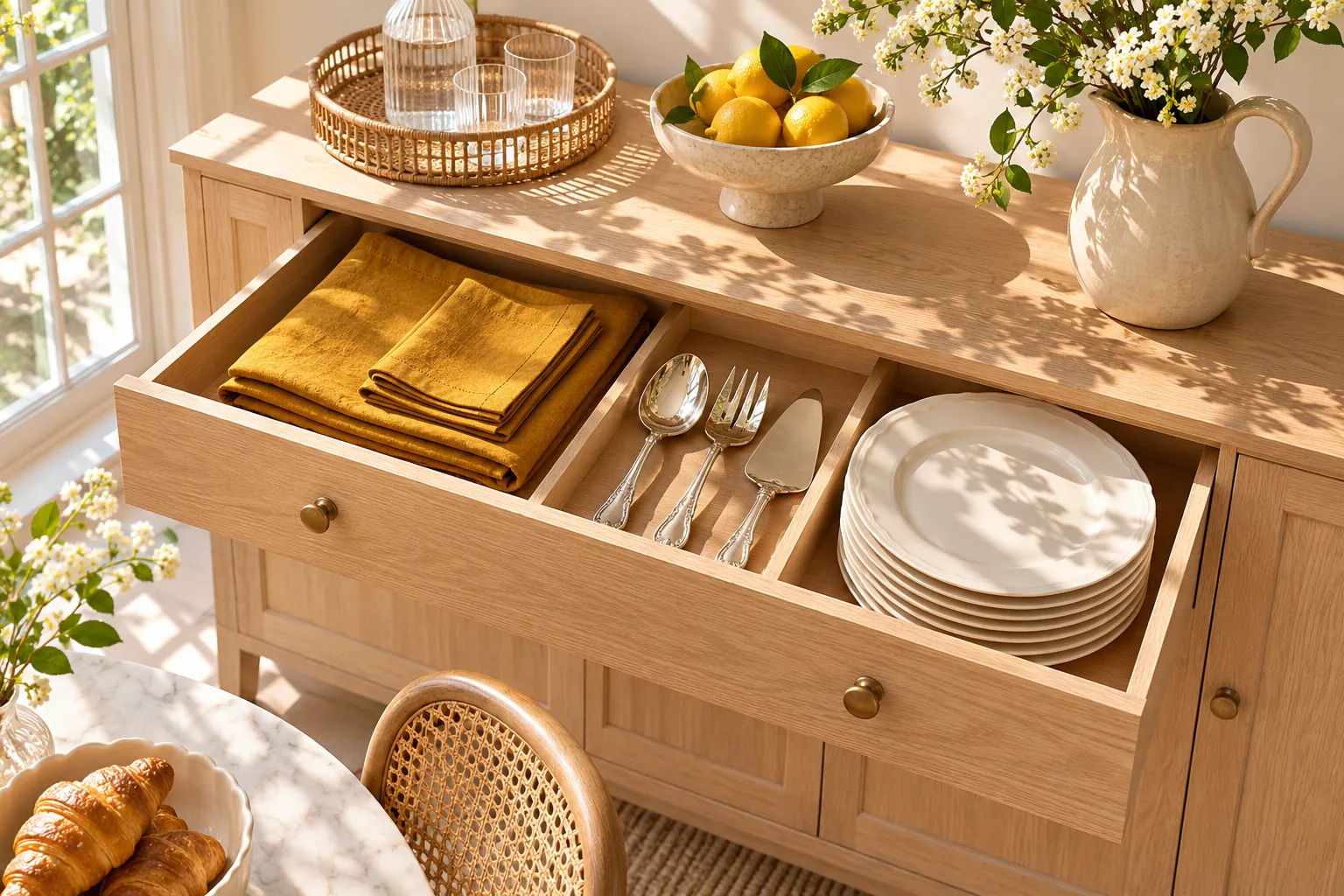
For a Dubai dining room, ask which compartment will hold frequently used items. The door you open every evening deserves at least as much attention as the finish you admire from across the room.
Is the number on a hinge enough?
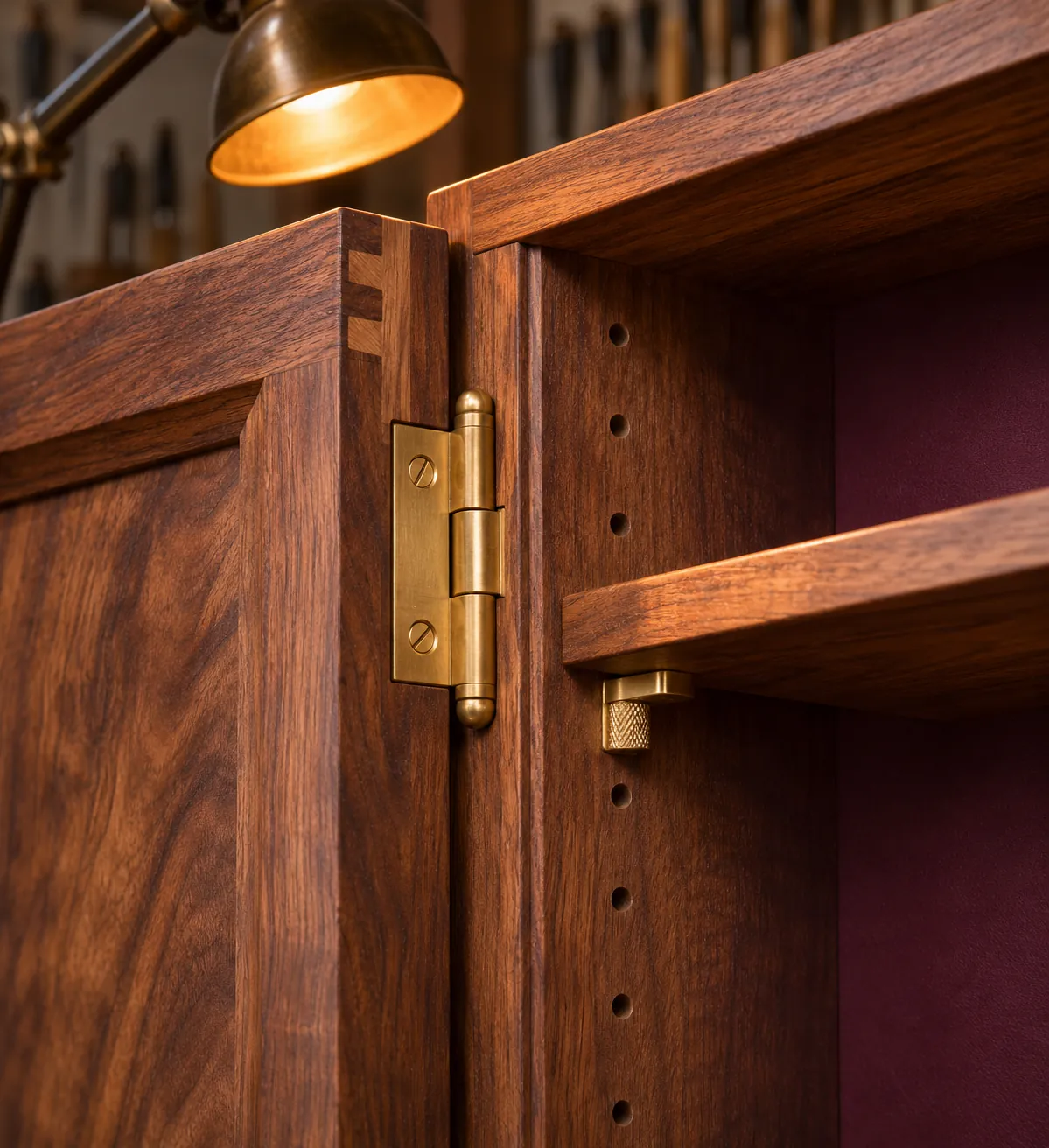
A number on a hinge is not necessarily the replacement part number. Blum's US warranty and replacement instructions explicitly say that the numbers on its hinges are component numbers and that photographs are needed for identification.
This is a useful manufacturer example, not a claim that a shortlisted sideboard uses Blum hardware. Nor does it establish that Blum's US replacement terms apply to a Dubai order.
Ask the furniture supplier to identify the actual mechanism and tell you what reference to retain. Keep a clear distinction between the furniture maker's model, the hardware maker and the supplier's order number. Three references can describe three different things. Luxury is allowed to be complicated; your service request need not be.
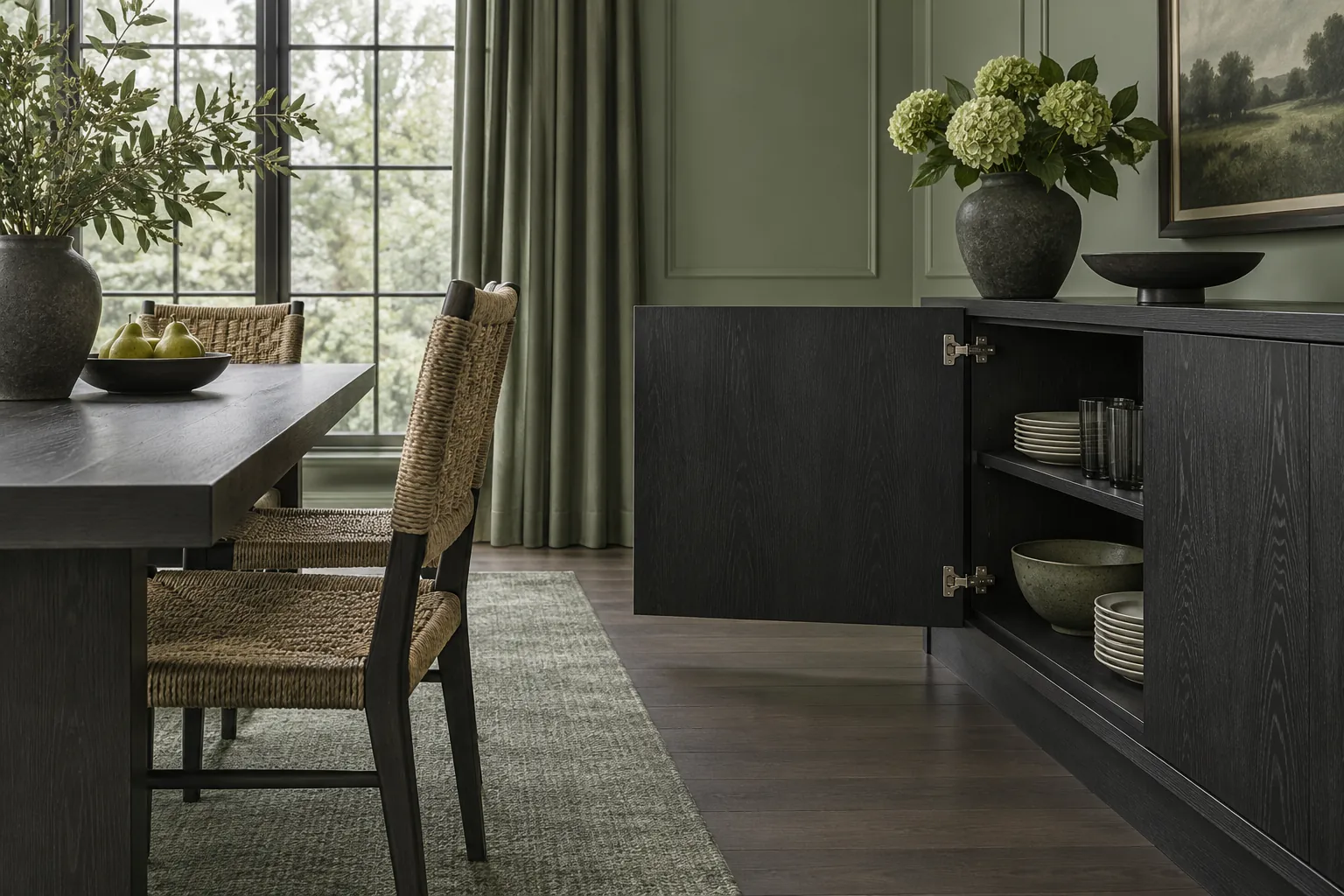
What should the handover record contain?
The handover record should make it possible to identify the furniture and describe a problem without dismantling it. We suggest keeping the following in one digital folder:
- Furniture maker, model, finish and order reference.
- A full photograph of the installed sideboard.
- Supplier-provided hardware references and care instructions.
- Photographs of accessible hinge and runner markings.
- The agreed contact for aftercare, including any separate installer.
- Written terms covering parts, labour, call-outs and exclusions.
Blum's US instructions ask for top, side and back photographs of hinges. Use that as an illustration of why a single close-up of a stamped number may not answer an identification question. Ask your own supplier what they need; do not remove a door or mechanism merely to complete a photograph set.
Which service questions belong in the quotation?
The quotation discussion should establish responsibility, availability and cost boundaries, not simply whether the door has soft closing. Ask who assesses a fault, whether a site visit is needed, and who approves a replacement before it is ordered.
For an imported piece, we recommend asking whether parts are sourced locally or requested from the furniture maker. Request a current estimate if a part is needed later, rather than treating today's furniture delivery estimate as a future spare-parts commitment.
Separate parts from labour. A replacement component, diagnosis, fitting and making good a damaged cabinet are different tasks. Ask which, if any, are covered by the applicable written terms. Do not assume that a named hardware brand makes the furniture supplier responsible for every repair.
What should you do if a door catches?
A catching door should lead to a supplier assessment rather than a guessed hardware order. Our practical recommendation is to record which door is affected, when the problem occurs and whether it is new, then share a short video if it can be taken safely.
Avoid presenting your own diagnosis as the fault report. “The left door touches the adjacent front near the bottom” is more useful than confidently ordering a hinge that happens to look similar.
For a new project, discuss the furniture procurement brief with FCI UAE and ask for the model-specific service information alongside the finish selection. If the sideboard is part of a wider scheme, include the same requirement in your interior design brief.
Limitations
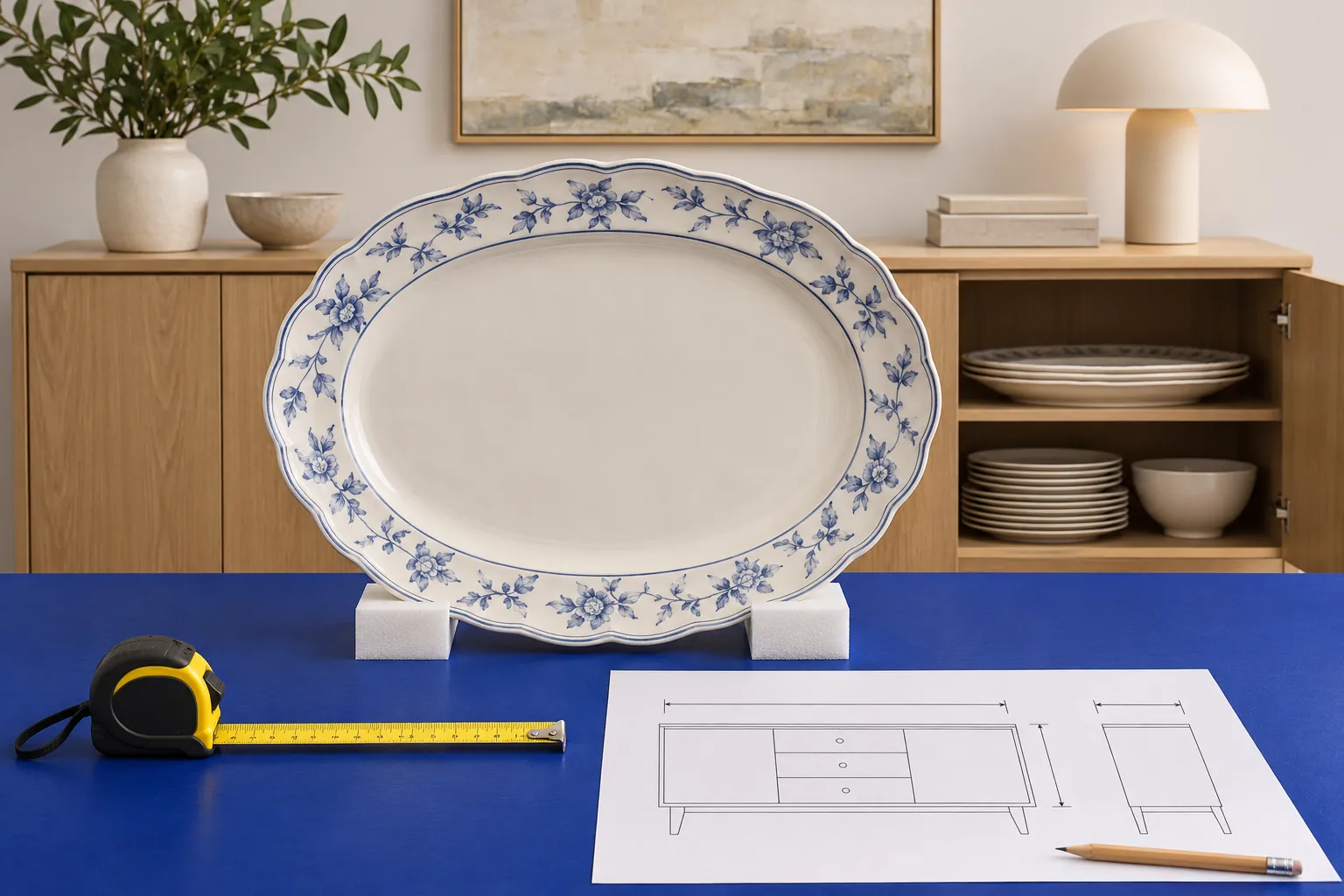
This is a purchasing and record-keeping guide, not a repair manual or a diagnosis of a hardware fault. It does not confirm the mechanisms used in any particular sideboard, spare-parts stock, repair pricing or UAE warranty eligibility. Those details require the supplier's written response for the actual order. Images are illustrative concepts, not product specifications or completed FCI projects.