

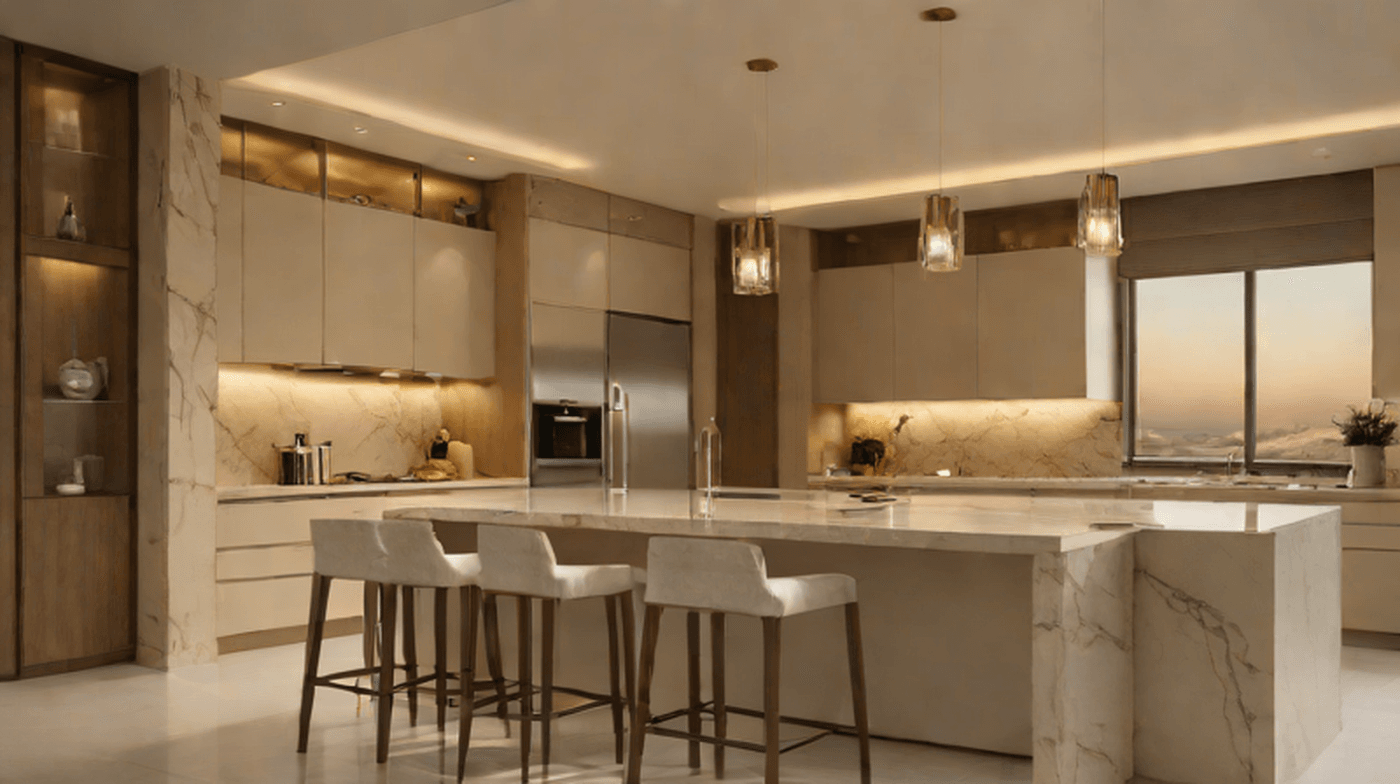
The kitchen in a Dubai villa is rarely just a kitchen.
It is where breakfast happens before the day heats up. Where guests gather during dinner parties while someone finishes the last dish. Where children do homework on the island while dinner simmers. Where a quiet coffee at six in the morning feels like the only sane hour.
The architecture gives you the room. The furniture decides whether it works.
Start with the island
The kitchen island is the gravitational centre of a Dubai villa kitchen. It anchors the space, provides the main work surface and often doubles as a breakfast bar, homework station, buffet surface and informal entertaining spot.
An island that is too small makes the kitchen feel unfinished. Too large and traffic flow suffers. The right island proportion depends on kitchen dimensions, but a useful starting guide for Dubai villas is to leave at least 120 centimetres of clearance on all working sides and 100 centimetres on the seating side if bar stools will live there.
The island surface material matters more in a Dubai kitchen than in many other rooms. It needs to handle heat, condensation, food preparation, coffee spills, children’s homework supplies and the occasional wine glass that tips over during a dinner party. Quartz, granite, marble and engineered stone are common in high-end Dubai villa kitchens because they are durable and easy to maintain. Marble is beautiful but more porous and needs regular sealing in a working kitchen.
Bar stools at the island: the entertaining layer
Bar stools turn a kitchen island from a work surface into a social surface.
In a Dubai villa where hosting matters, the right bar stools let guests sit at the island while the host finishes cooking, or give family a casual breakfast spot without moving to the formal dining table.
Stool height must match the island. For a standard island at roughly 90 centimetres, counter height stools around 65 centimetres work well. For a raised bar section at roughly 105 to 110 centimetres, bar height stools around 75 to 80 centimetres are better. The mistake to avoid is stools that leave guests hunched forward or dangling their feet like children at a restaurant they did not choose.
Upholstered seats in leather or performance fabric add comfort for longer sitting. Backrests matter if the island is used for meals, not just quick coffee. Swivel mechanisms help conversation flow but need a smooth, quiet action. Footrests should be solid and positioned so feet land naturally rather than searching for a rail that is two centimetres too high.
For Dubai villas where the kitchen opens to the living or dining area, the bar stool material and colour should connect to the dining chairs, the living room seating or both. The island is visible from multiple angles. Stools that clash with the dining table or sofa read as furniture that arrived from a different project.
Breakfast bars and secondary seating
In larger Dubai villas, a separate breakfast bar or peninsula may sit between the kitchen and the dining or family area. This is useful when the main island is primarily a work surface and the household wants a dedicated casual eating spot.
A breakfast bar with two or three stools can handle morning coffee, quick meals, children’s snacks and informal conversations without competing with the island or the formal dining table. The breakfast bar should feel like an extension of the kitchen furniture family, not an unrelated piece. Matching timber, metal tones and stool upholstery keeps the look coherent.
Storage that works for a Dubai villa kitchen
Kitchen storage is not only about cabinets and drawers. Freestanding furniture has a role, especially in open plan Dubai villa kitchens where the kitchen merges with living and dining.
A freestanding larder cabinet or pantry unit can hold dry goods, serving pieces, table linens or less frequently used appliances. A sideboard or console placed between the kitchen and dining area can hold glassware, bar tools, coffee service and decorative objects. A wine cabinet or drinks trolley can sit near the dining table or lounge without taking up kitchen worktop space.
The key is choosing freestanding pieces that connect to the island and bar stools rather than looking like they were bought from three different shops in an afternoon of optimism.
How kitchen furniture connects to dining and home bar furniture
Kitchen furniture does not exist in isolation in an open plan Dubai villa. The island and bar stools sit within sight of the dining table. The breakfast bar may be visible from the home bar or majlis. The freestanding storage pieces may share wall space with dining room sideboards.
This is where FCI London UAE’s approach to whole-room planning helps. Instead of choosing kitchen furniture as a standalone project, consider how the island, stools, breakfast bar and storage pieces sit alongside the dining table, chairs, sideboard, home bar furniture, lighting and rugs.
A kitchen island in dark walnut with brass bar stools should share a material language with the dining table and sideboard. A breakfast bar in light oak with neutral upholstered stools should read as part of a larger palette that includes the dining chairs and living room shelving. Kitchen furniture that ignores the rest of the open plan volume creates visual noise. Furniture that belongs to the same thoughtful plan creates calm.
Lighting: task and atmosphere in one room
Kitchen lighting needs to do two things at once. Task lighting for food preparation and cooking. Atmosphere lighting for breakfast, coffee, homework and evening entertaining.
Pendant lights above the island are the most visible lighting decision in the kitchen. They define the island zone and set the mood. In a Dubai villa kitchen, warm dimmable pendants above the island work better than a single bright ceiling light that turns the whole room into an operating theatre.
Under-cabinet task lighting keeps worktops usable without adding glare. Shelf lighting inside freestanding cabinets or display units can highlight glassware and decorative pieces. If the kitchen opens to the dining room, the island pendants and dining table chandelier should relate to each other in tone and height so the two zones feel connected rather than competing.
Materials for Dubai villa kitchens
Dubai’s climate and lifestyle affect kitchen furniture choices in practical ways.
Timber should be solid hardwood or high-quality engineered wood, not veneer on particle board, because Dubai’s heat and occasional humidity can cause delamination. Metal hardware and stool frames should be solid brass, stainless steel or powder-coated steel, not plated, to avoid tarnish. Stone tops should be sealed and maintained. Upholstery should be easy to clean because kitchen seating takes more food and drink exposure than living room seating.
Luxury is not only about appearances. It is about furniture that still looks good after two years of daily use.
How FCI London UAE can help
FCI London UAE supports homeowners planning furniture for Dubai and UAE villas through consultation led choices, not physical showroom claims.
That matters for kitchen furniture because the right island, stools, breakfast bar and storage pieces depend on kitchen dimensions, open plan flow, hosting habits, material durability, lighting and the way the kitchen connects to the dining, living and outdoor spaces. A well planned kitchen furniture layer can make an open plan villa feel coherent rather than fragmented into zones that do not talk to each other.
The island is the anchor. The stools are the invitation. The storage is the calm.