

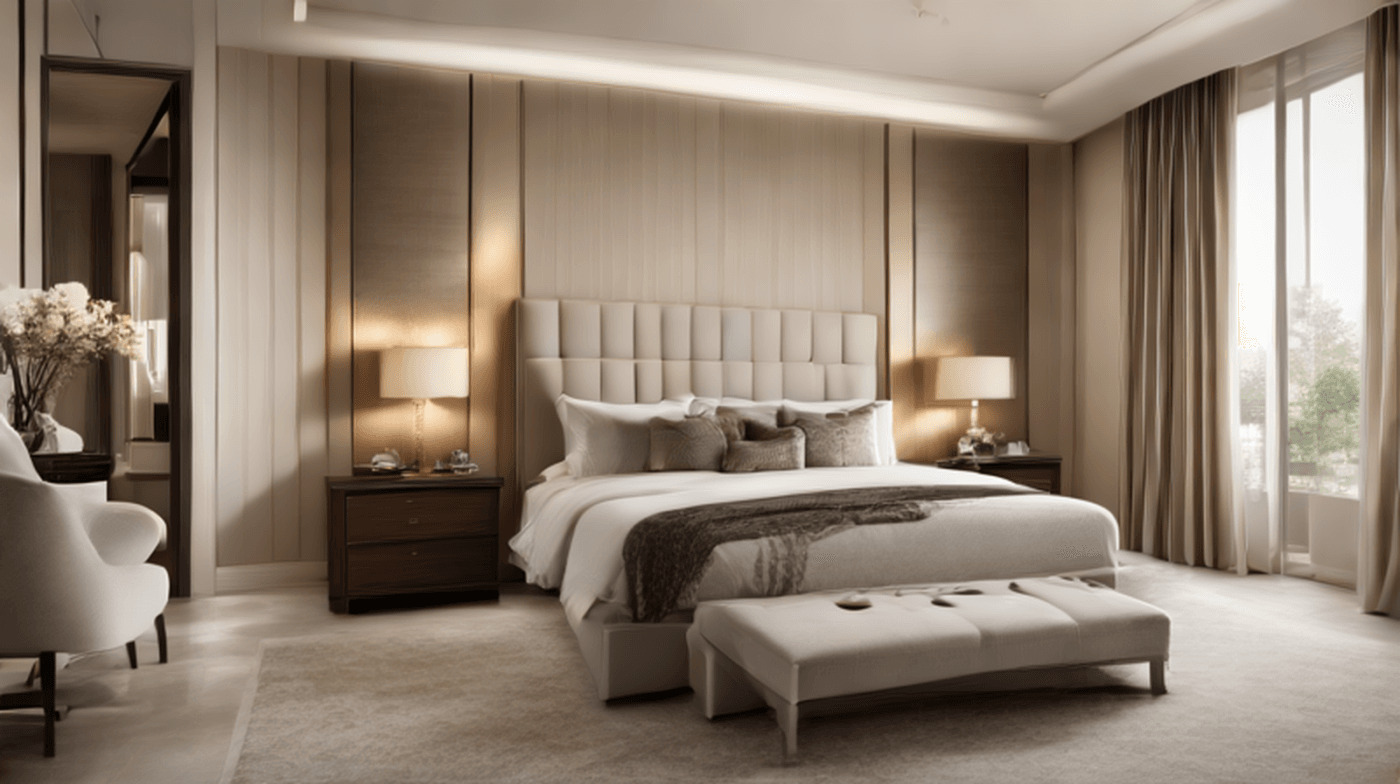
A luxury sideboard in a Dubai villa is more than a storage cabinet. It controls how the dining room works before guests arrive, during service and after the table is cleared. The best sideboards look calm because the practical decisions have already been solved.
In UAE homes, dining rooms and open-plan reception spaces often carry formal hosting, family meals, Ramadan gatherings, weekend entertaining and occasional overflow from the majlis or living room. A sideboard should support all of that without making the room feel crowded.
Start with the role of the sideboard
Before choosing a finish or shape, decide what the sideboard needs to do.
Common roles include:
- Storing crockery, glassware and serving pieces.
- Holding drinks, coffee service or dessert during hosting.
- Creating a visual anchor on a long wall.
- Supporting artwork, mirrors or lighting.
- Separating dining from living in an open-plan room.
- Hiding everyday clutter before guests arrive.
A sideboard chosen only for its exterior can become a beautiful inconvenience. The internal layout matters as much as the facade.
Size the piece to the room, not the catalogue
Dubai villas can carry generous furniture, but scale still needs discipline. A sideboard that is too small looks accidental. A piece that is too large blocks service routes and makes the dining room feel heavy.
Check:
- Wall width and clear space on both sides.
- Distance from dining chairs when pulled out.
- Door swings, sliding panels and drawer clearance.
- Relationship to dining table length.
- Sightline from the living room or entrance.
- Height compared with mirrors, art and wall panelling.
A useful rule: the sideboard should support the table, not compete with it. If both pieces try to dominate, the room loses hierarchy.
Plan storage around real hosting
Sideboards work best when storage follows real use. A villa that hosts regularly needs different internal planning from a family dining area used mostly in the evening.
Useful storage zones:
- Wide drawers for cutlery, linens and placemats.
- Shelves for plates, bowls and serving dishes.
- Deeper compartments for trays and larger pieces.
- Closed storage for items that do not need display.
- A protected area for glassware.
- Cable access if lamps or service appliances are used nearby.
Avoid filling the whole piece with open display. A sideboard should make the room calmer. Too much visible styling turns storage into another surface to manage.
Choose materials for Dubai conditions
Dubai interiors deal with strong sunlight, dust, air conditioning and regular cleaning. Material choice should reflect that.
Strong options include:
- Timber veneer or lacquer for a refined indoor finish.
- Stone or ceramic tops where serving is frequent.
- Metal details for handles, feet or trims.
- Ribbed, fluted or textured doors for depth without clutter.
- Glass only where maintenance and fingerprints are manageable.
If the sideboard sits near large windows, test how sunlight hits the surface. High-gloss finishes can glare. Very dark finishes can show dust quickly. The right material is the one that keeps looking composed after daily use.
Coordinate with the dining table and chairs
The sideboard does not need to match the dining set exactly. In many villa interiors, exact matching feels flat. The better approach is controlled connection.
Coordinate through:
- Wood tone or metal finish.
- Leg profile or base language.
- Door texture and chair upholstery.
- Stone top and tabletop material.
- Wall colour and rug tone.
- Lighting temperature and fixture style.
A sideboard can bring contrast, but it should not look imported from another room. It needs to feel like part of the dining story, alongside considered dining tables for UAE homes and dining chairs for Dubai villas.
Use lighting to make the wall work
A sideboard often sits below art, a mirror or wall panelling. Lighting decides whether that wall feels finished.
Consider:
- A pair of table lamps for softer evening hosting.
- Wall lights above the sideboard where wiring allows.
- Concealed lighting in nearby shelving or joinery.
- Warm light that flatters food, finishes and faces.
- Avoiding glare on mirrors and polished stone.
Do not over-light the sideboard. It should support atmosphere, not become a display counter. The wider dining room lighting plan should lead the mood.
Keep service flow clear
Dining rooms fail when furniture interrupts movement. In a Dubai villa, service may move between kitchen, dining table, outdoor terrace and living space. The sideboard needs to help that flow.
Plan enough room for:
- Chairs to pull out comfortably.
- People to pass behind seated guests.
- Serving dishes to be placed without crowding.
- Drawers or doors to open during use.
- Staff or family members to move without squeezing.
A sideboard should make hosting feel easier. If everyone has to step around it, the scale is wrong.
Think about open-plan reception spaces
Many villas use a dining area within a larger reception space. In that setting, the sideboard is visible from multiple angles. The back wall, adjacent seating, rugs and circulation lines all matter.
Use the sideboard to create a composed dining zone:
- Align it with the table centre where possible.
- Keep styling lower if the living room sightline is important.
- Use a mirror only if it reflects something worth seeing.
- Avoid cluttered displays that compete with the majlis or living area.
- Keep proportions calm from the main entrance.
Open-plan rooms need visual discipline. The sideboard can give the dining area identity without building walls.
Build in flexibility for changing seasons and gatherings
Hosting patterns change through the year. A sideboard should support small family meals and larger gatherings without needing a full reset.
Flexible planning ideas:
- Keep everyday crockery and formal pieces separate.
- Leave one surface area clear for serving.
- Store seasonal tableware in labelled zones.
- Use internal lighting only where it adds real function.
- Choose hardware that is easy to grip and clean.
The point is quiet capability. The room should be ready without looking staged.
Conclusion
Luxury sideboards for Dubai villas work when scale, storage, materials, lighting and flow are planned together. Choose the sideboard after the dining table, chair clearance, service route and wall treatment are understood. FCI London UAE can help plan the piece as part of a complete dining or reception scheme, with Dubai and UAE needs treated as practical design inputs, not afterthoughts. Explore luxury sideboards for Dubai villas or browse the FCI London UAE design blog for more practical interiors guidance.